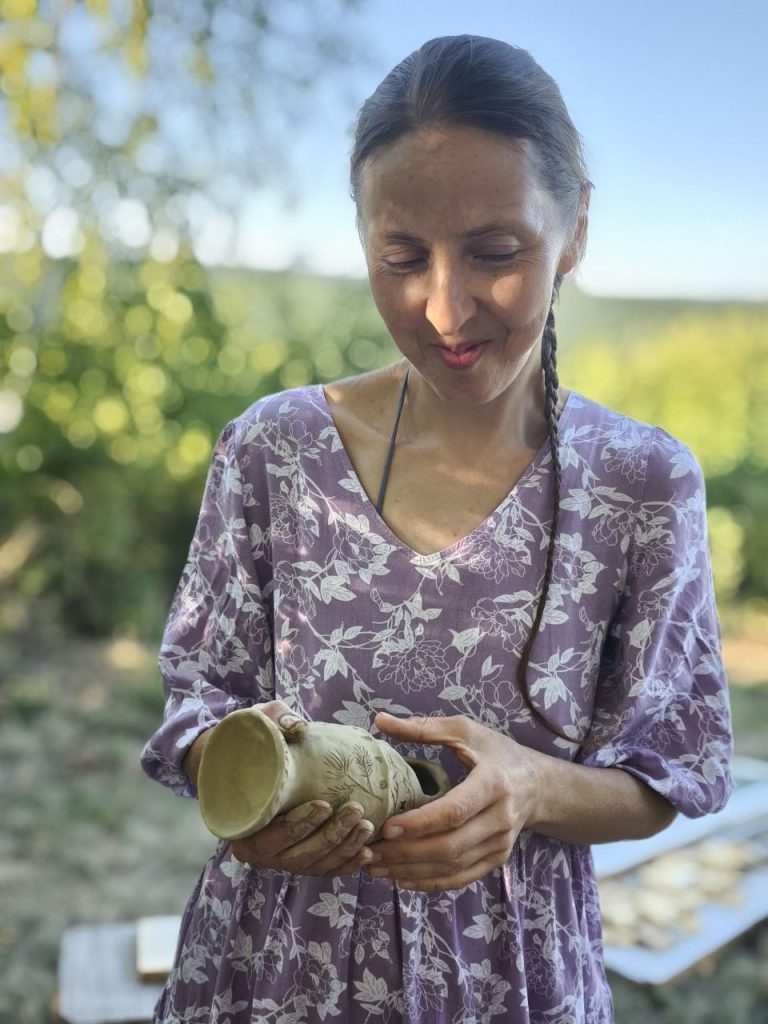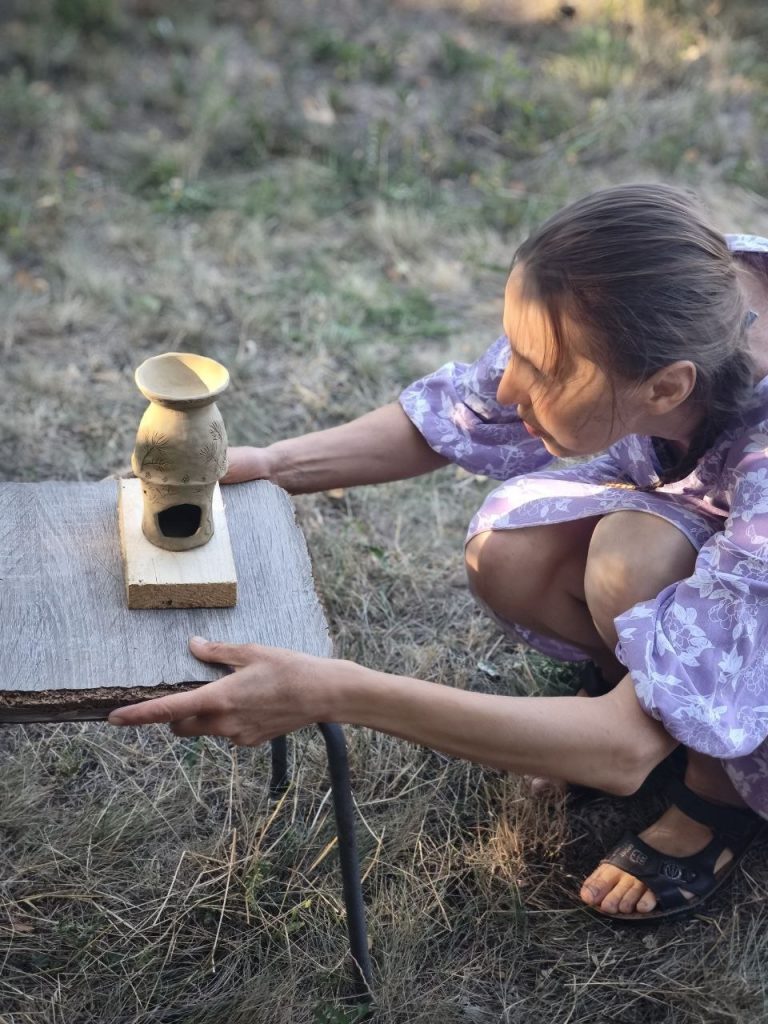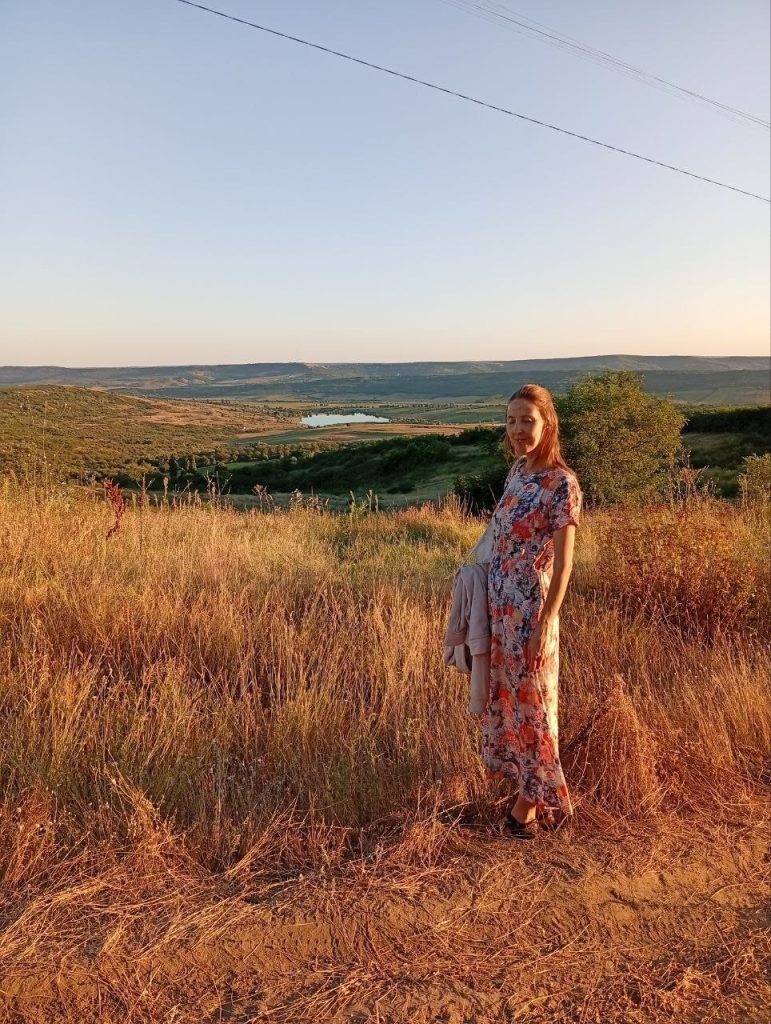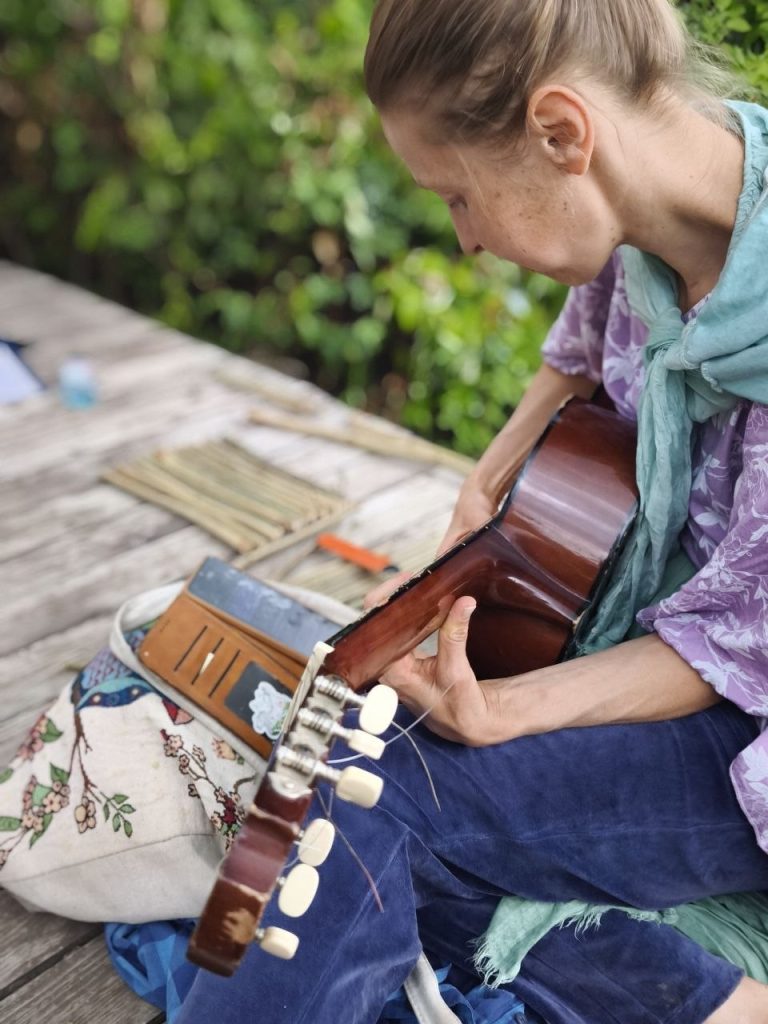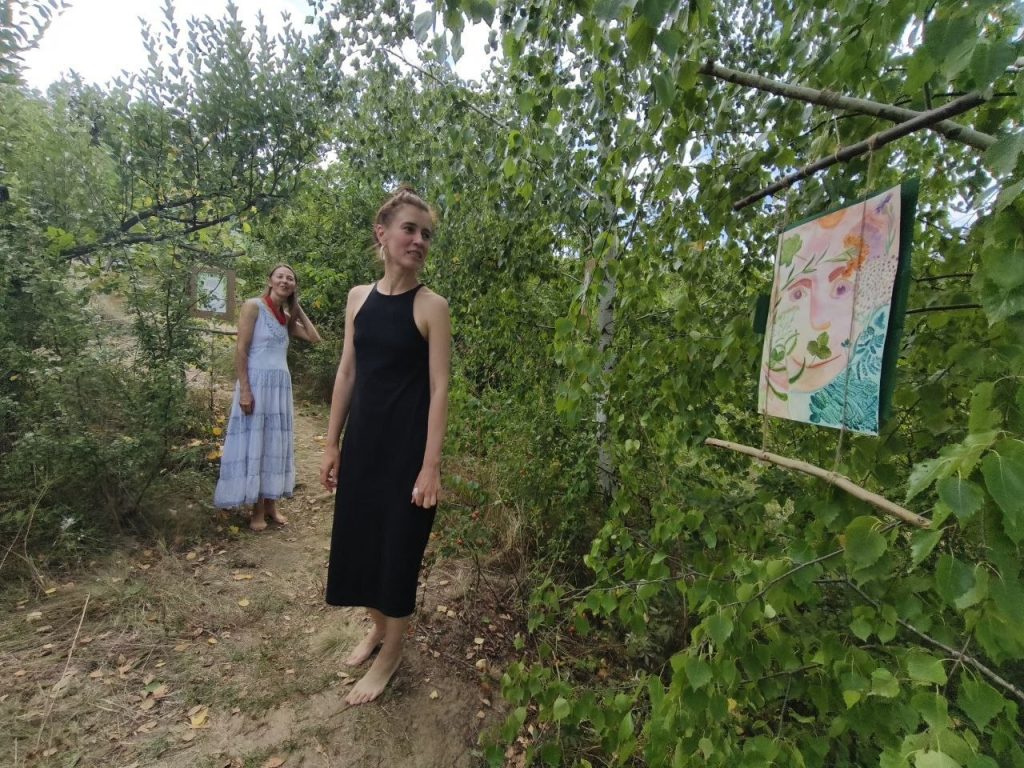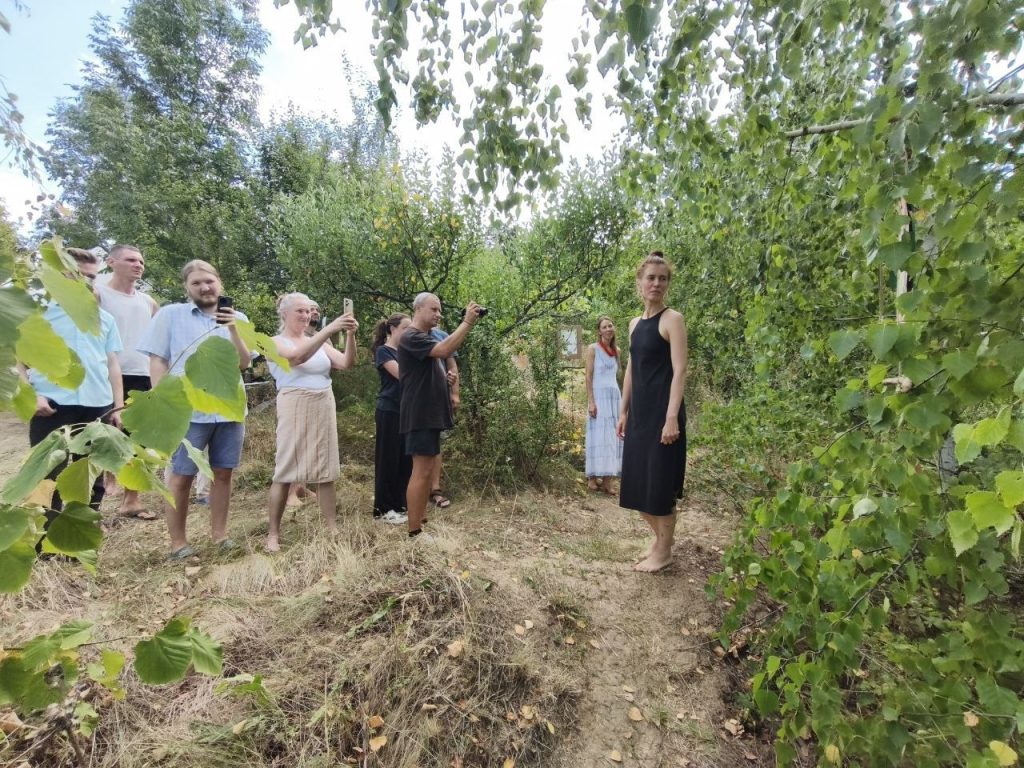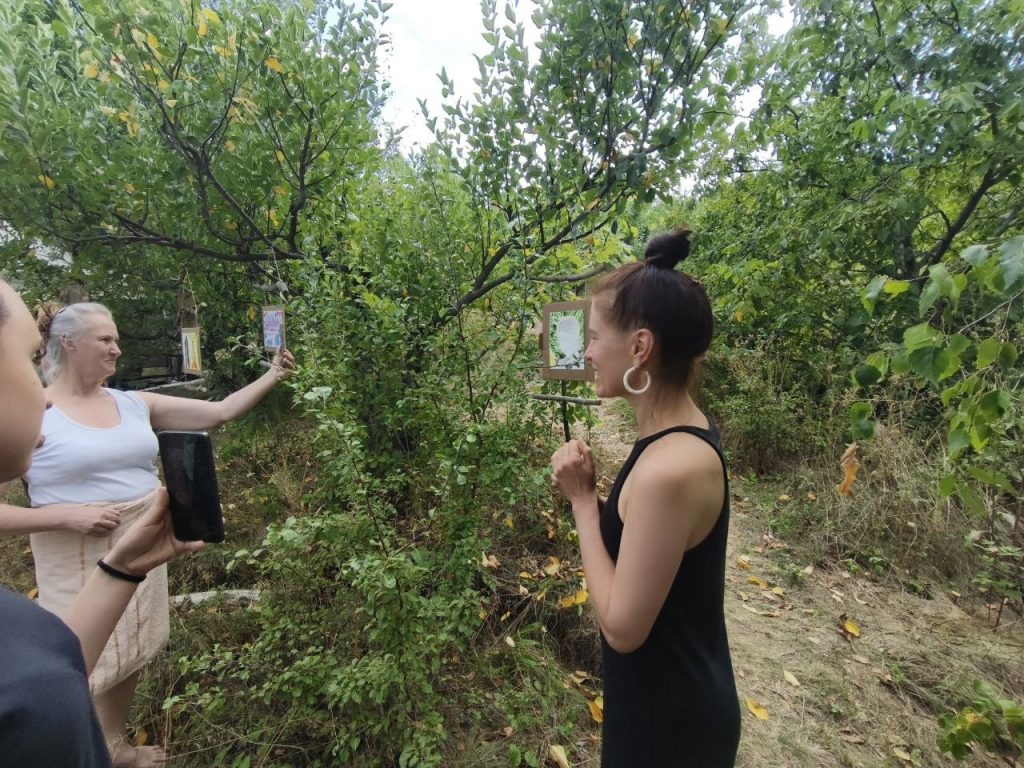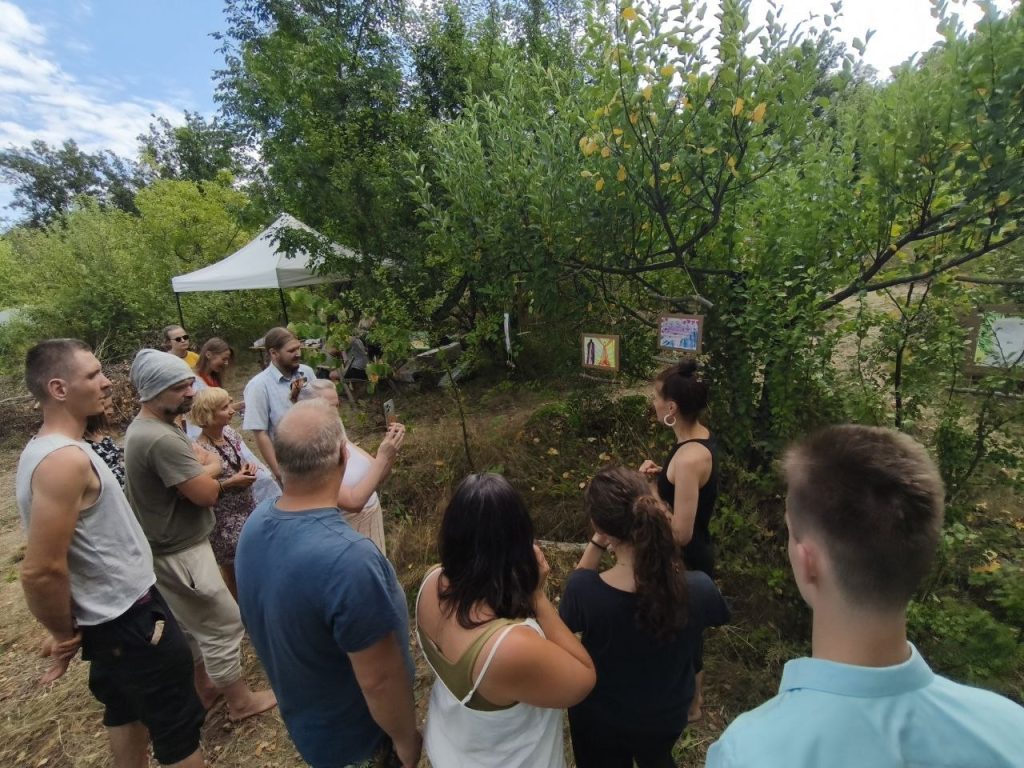
Everything Hidden Inside Comes Out: Dmitry Ryzhak on Forest Memory Lab

Category: EN

Dmitry Ryzhak, musician and composer, talks about his experience participating in the Forest Memory Lab forest art residency, created by AO Pădurea Noastră in collaboration with the Goethe-Institut and Culture Moves Europe.
About music, inspiration drawn from Moldova’s nature and culture, creative experiments, and an experience that helped him better understand himself and those around him.

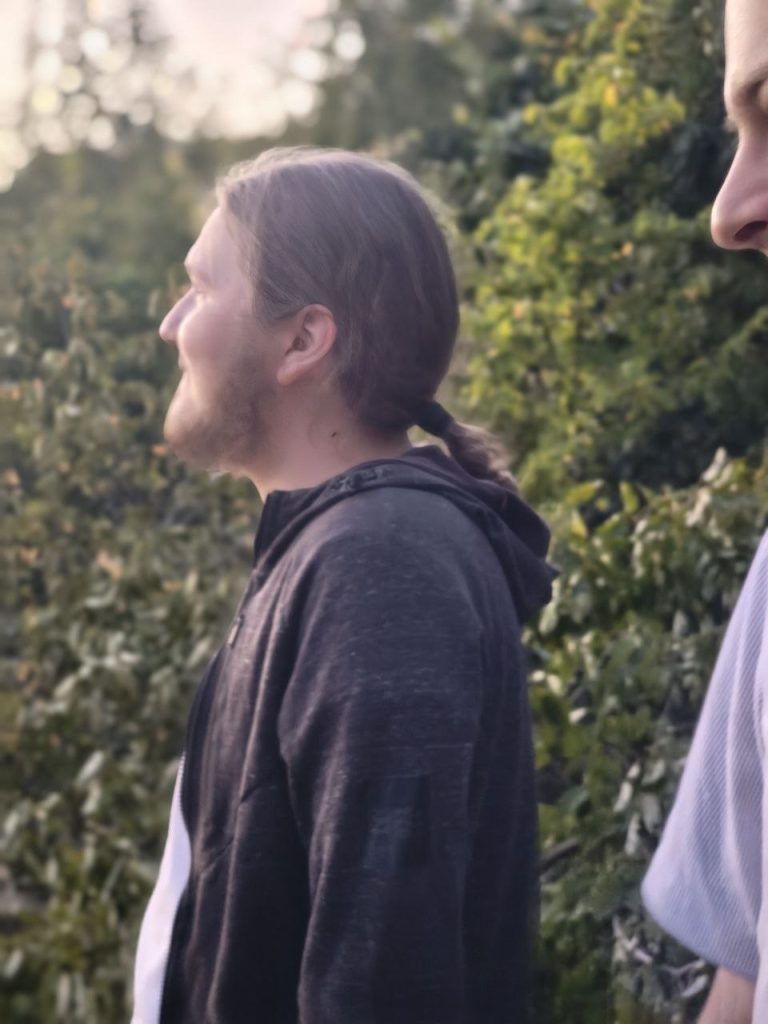
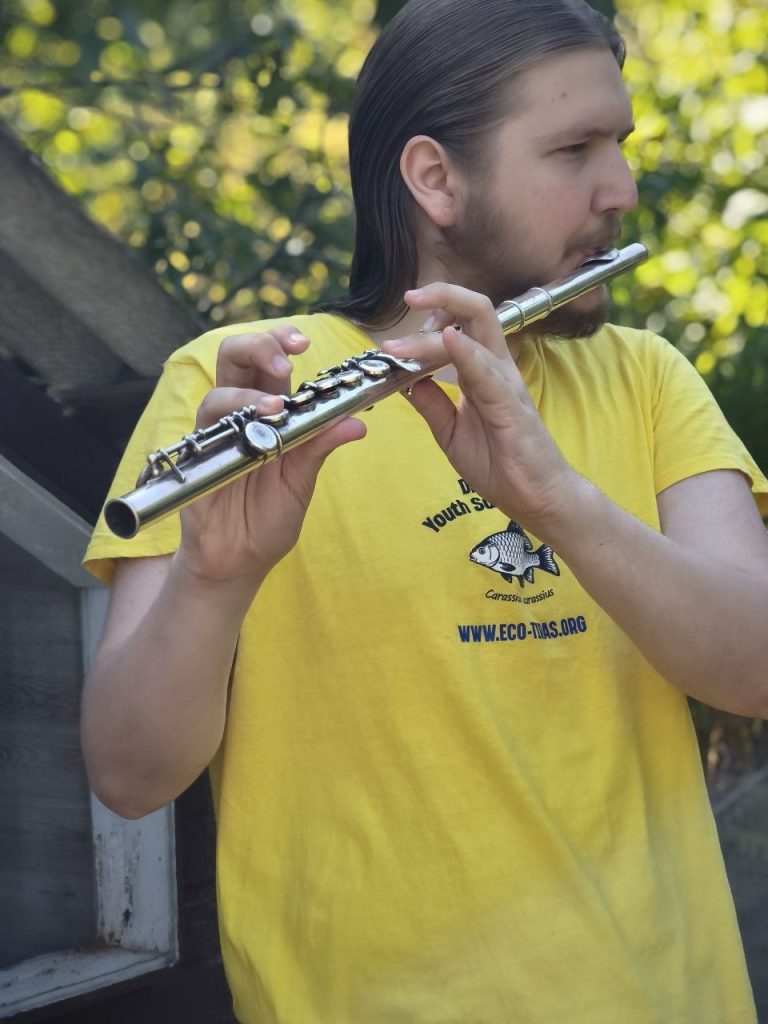
My name is Dmitry Ryzhak, and I am 19 years old. I am a musician: I play the piano and clarinet, and I write my own compositions. I am currently studying clarinet at a music college, and after graduating, I plan to apply to a conservatory to study composition.
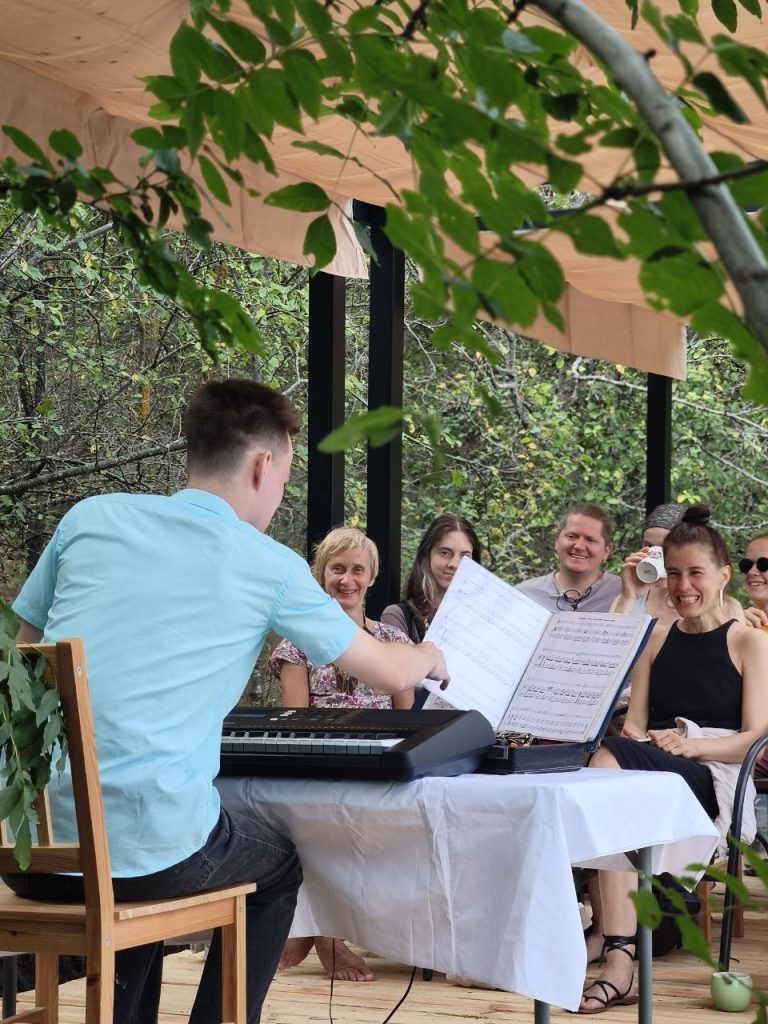
I really liked this place. It is far away from cities and noisy settlements, right in the middle of the forest, on higher ground. There is fresh air, a pleasant atmosphere, and lots of greenery all around. The time I spent at this residency was wonderful.

Here, I created five pieces. Initially, I had planned a cycle called “The Seasons,” but together with my partner, we decided to move away from this concept because it seemed too overused and difficult to perceive. In the end, we reworked the idea and focused on the themes of “Birth,” “Trial,” and “Peace.”
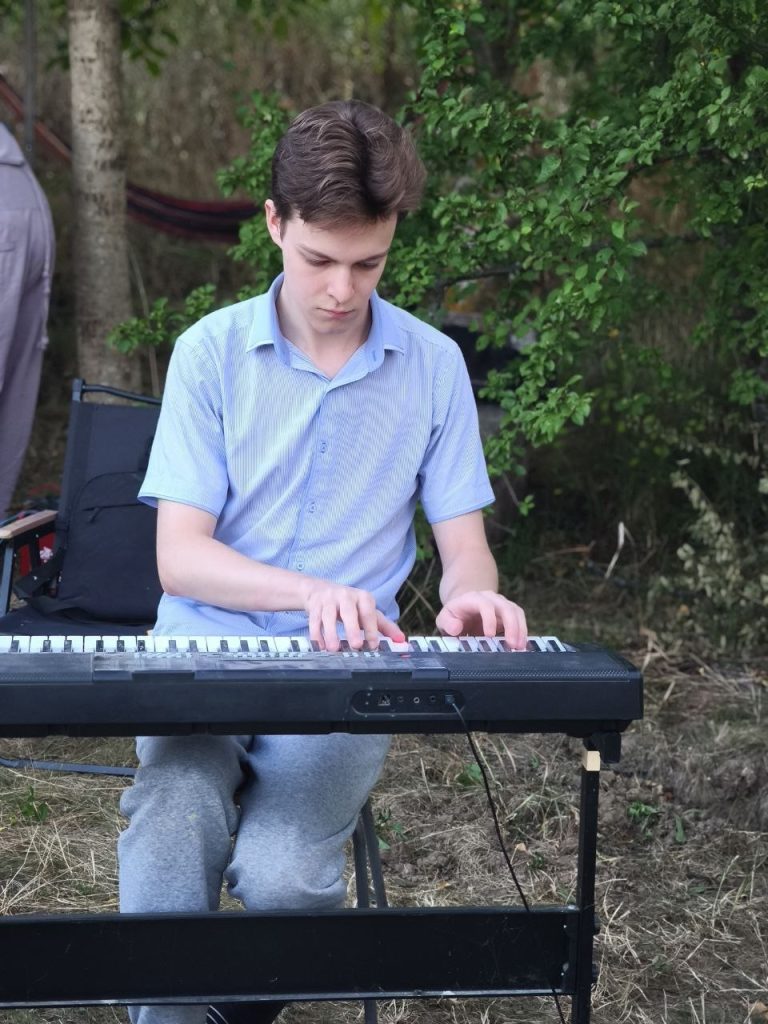
In addition, inspired by the Moldovan national hero Ștefan cel Mare, I wrote a poem in his honor and also composed a short piece in a Spanish style.

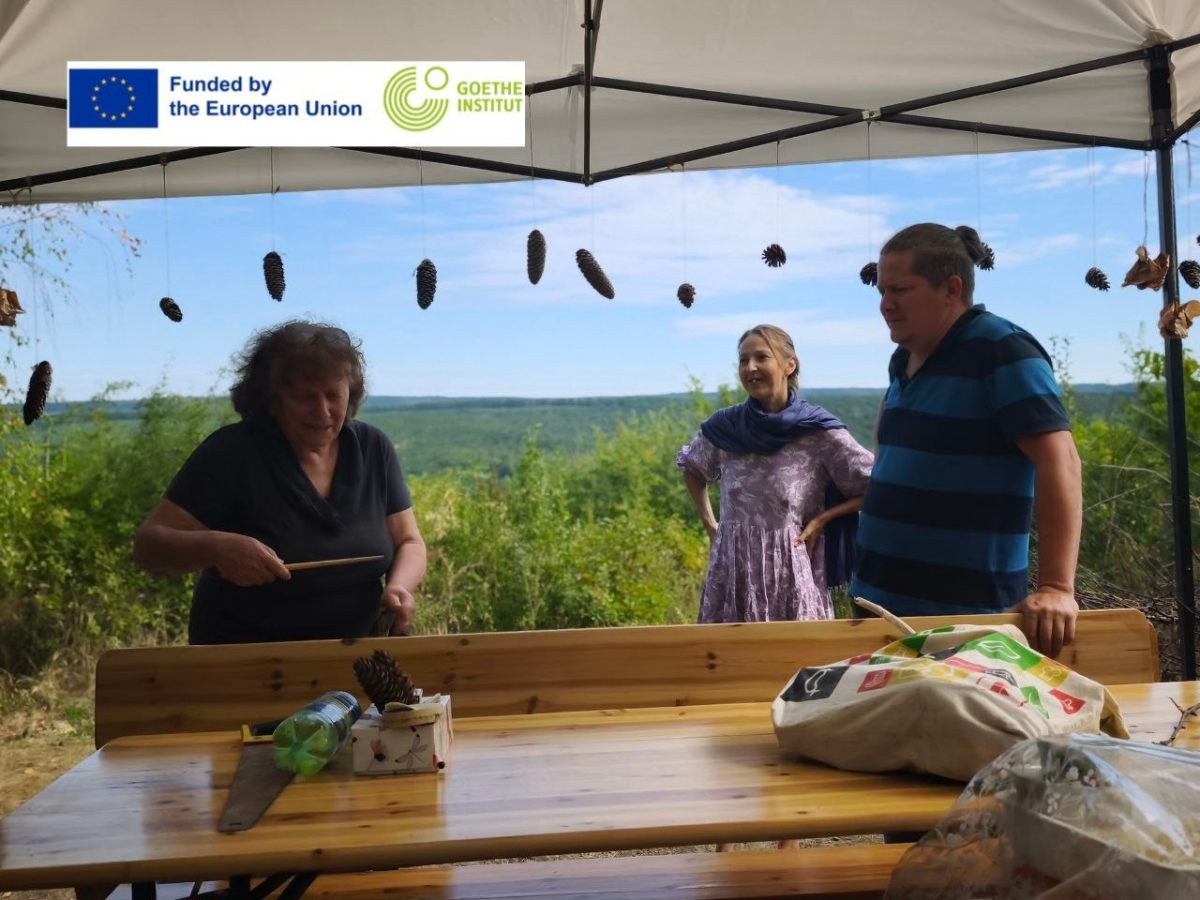
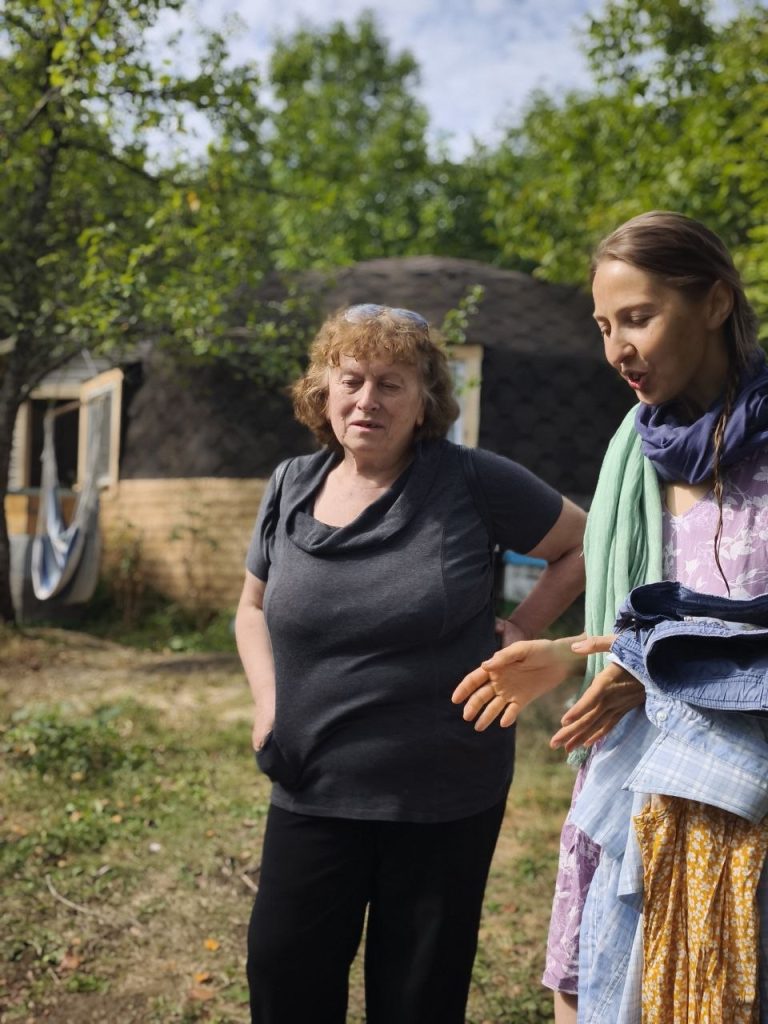
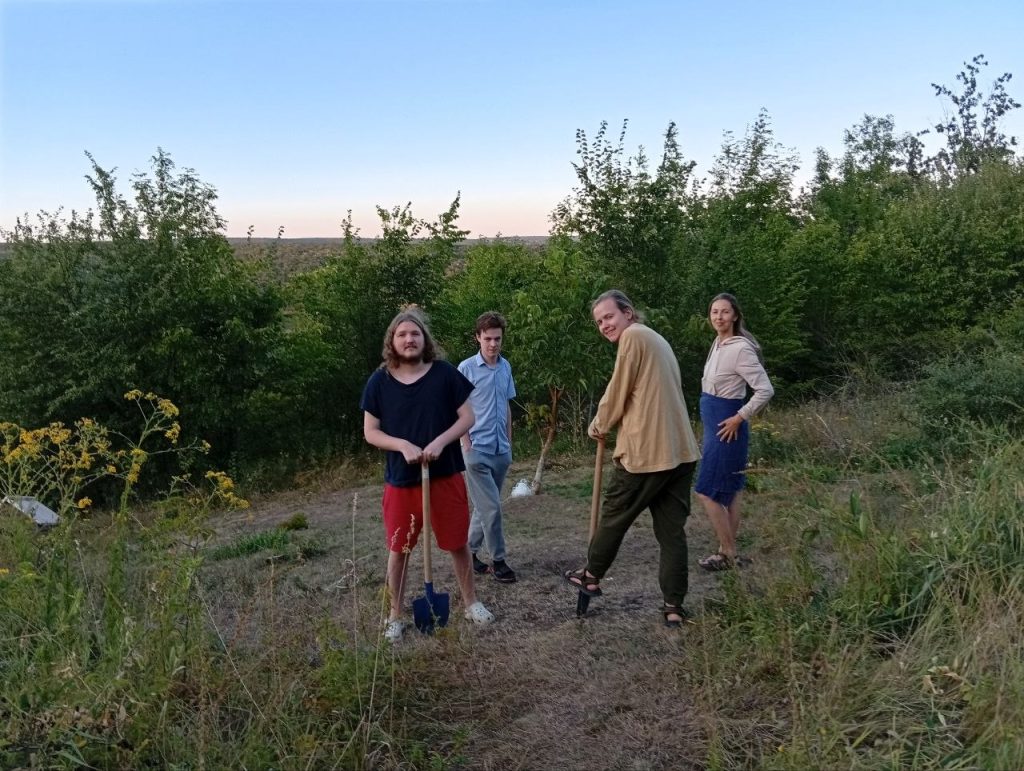
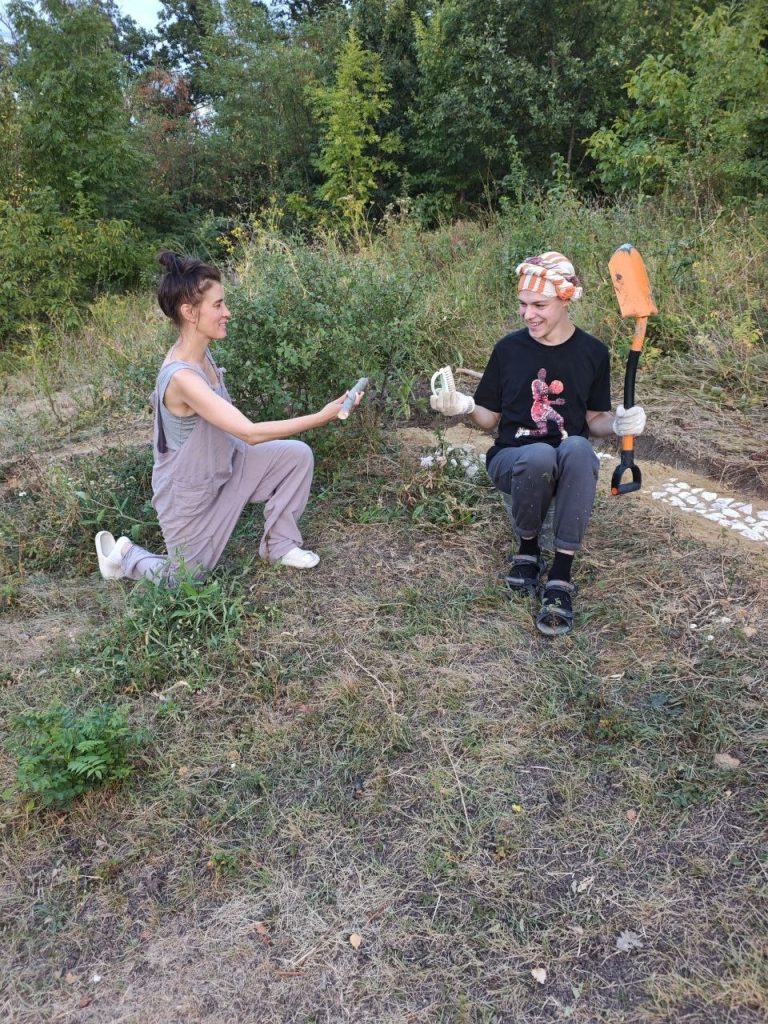
It was a great experience! After about a week, we had all connected with each other and became friends. Together with Dasha, I created the musical accompaniment and worked on the installation: we made a pathway and a bench. With Nina, another participant, I worked with clay, painted, went into the forest for inspiration, and worked on collaborative projects.

This project really brought us together. I learned how to work as part of a team, communicate better with people, and find common ground, especially since we turned out to have so many shared interests. The most important thing I learned from the others was to approach things more calmly and neutrally.
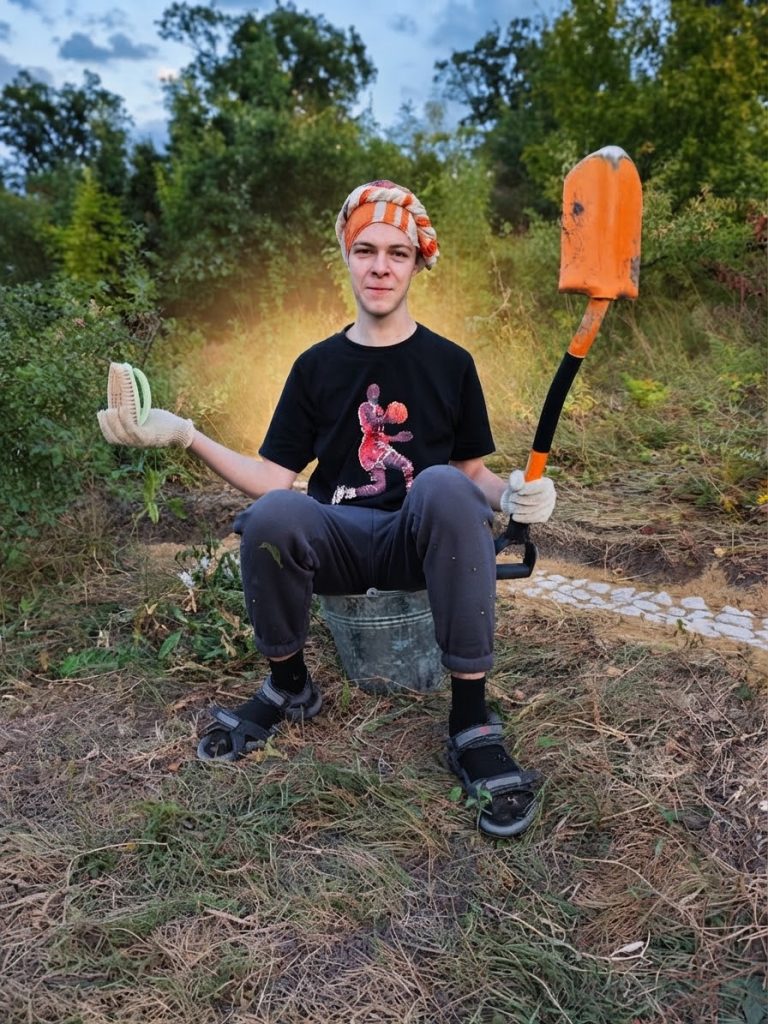
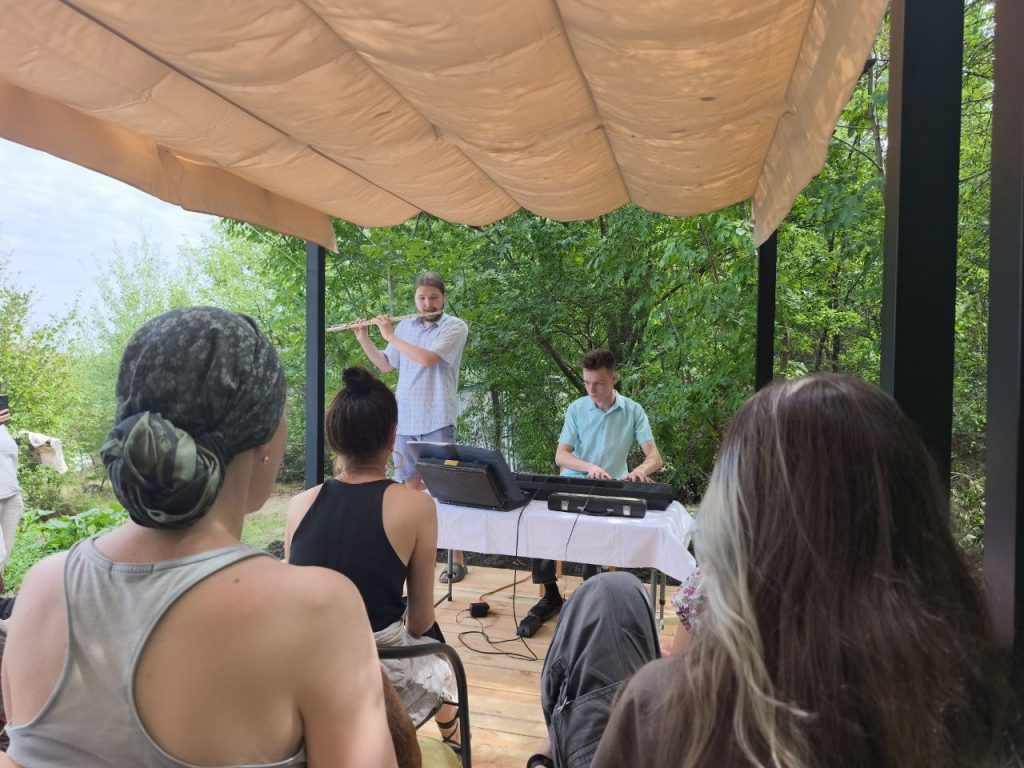
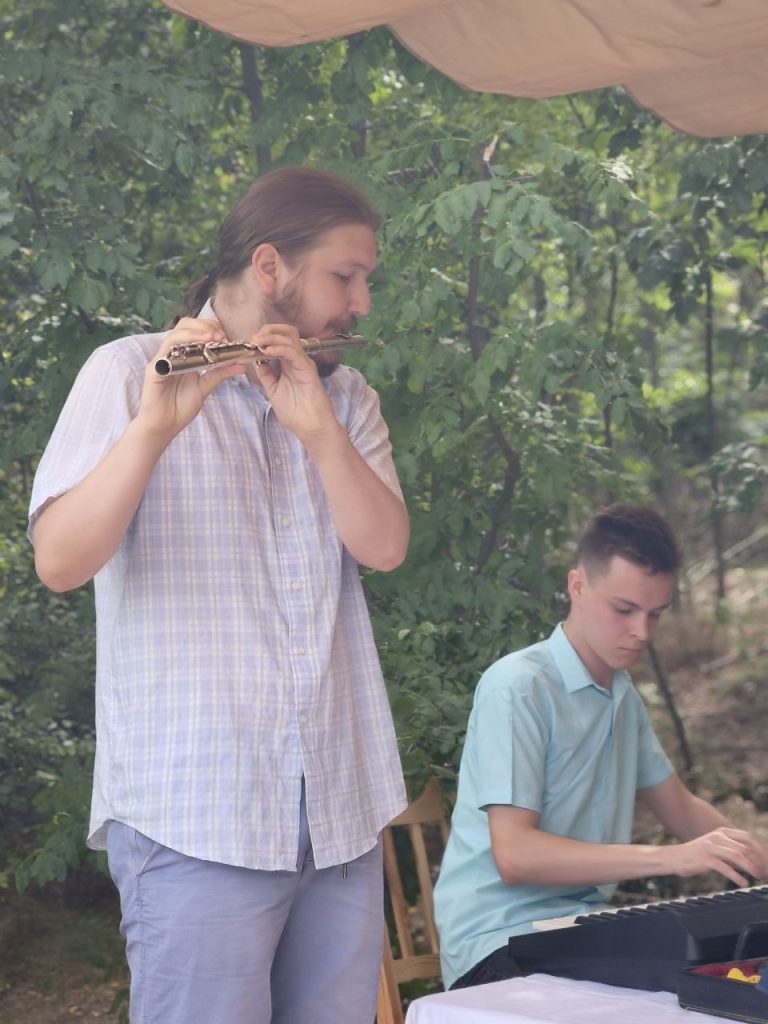
There was one particularly special moment. When we had prepared, rehearsed, and performed all our pieces at the final concert, I performed my poem “Ștefan cel Mare.” The audience received it with incredible enthusiasm! People came up to me, thanked me, and shared their emotions. It was very touching. I will remember that day with warmth for a long time.
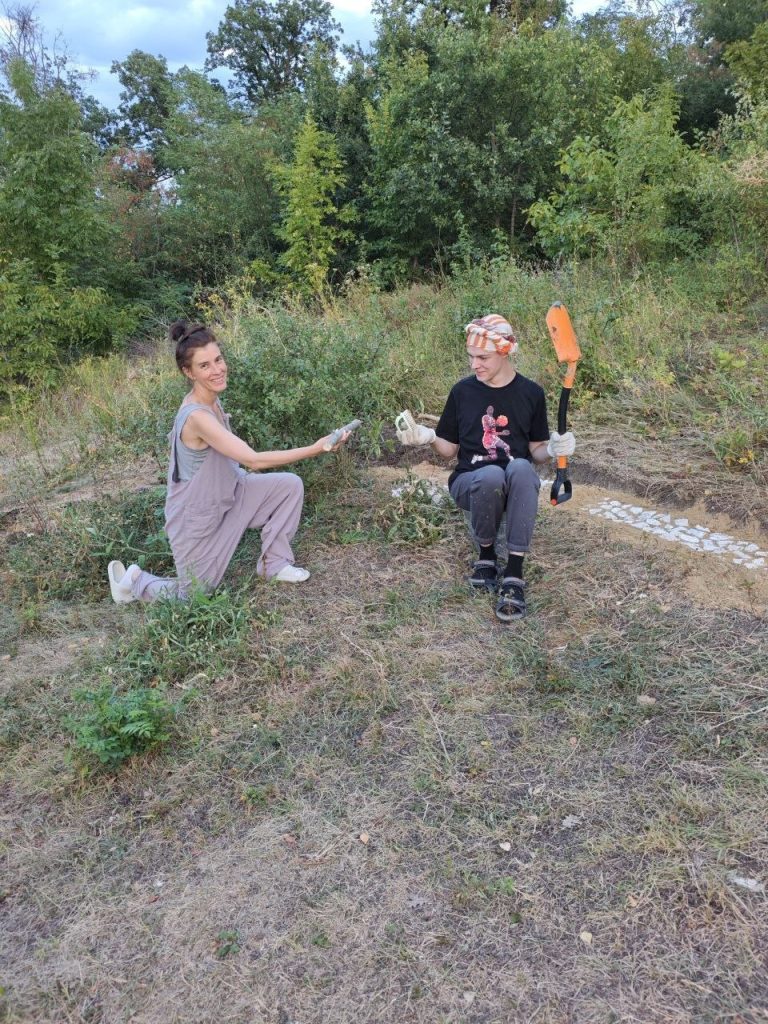
I am taking away an invaluable experience from this art residency. I have learned to communicate better with people, become more sociable and open to creativity. I now have many new ideas. I was deeply inspired by Moldovan culture and nature, and I want to continue exploring them: learning Romanian, immersing myself in history, and writing music inspired by these themes — and perhaps even literary works.

When I return home, I plan to create something completely new and unique.
If I had to describe this experience in one word, I would choose “existentialism.” To me, it is about something deep and hidden, something far beneath the surface. This word perfectly captures the essence of the place: when you come here, your inner character traits and temperament begin to reveal themselves. Everything that was hidden inside comes to the surface and manifests itself with renewed intensity.
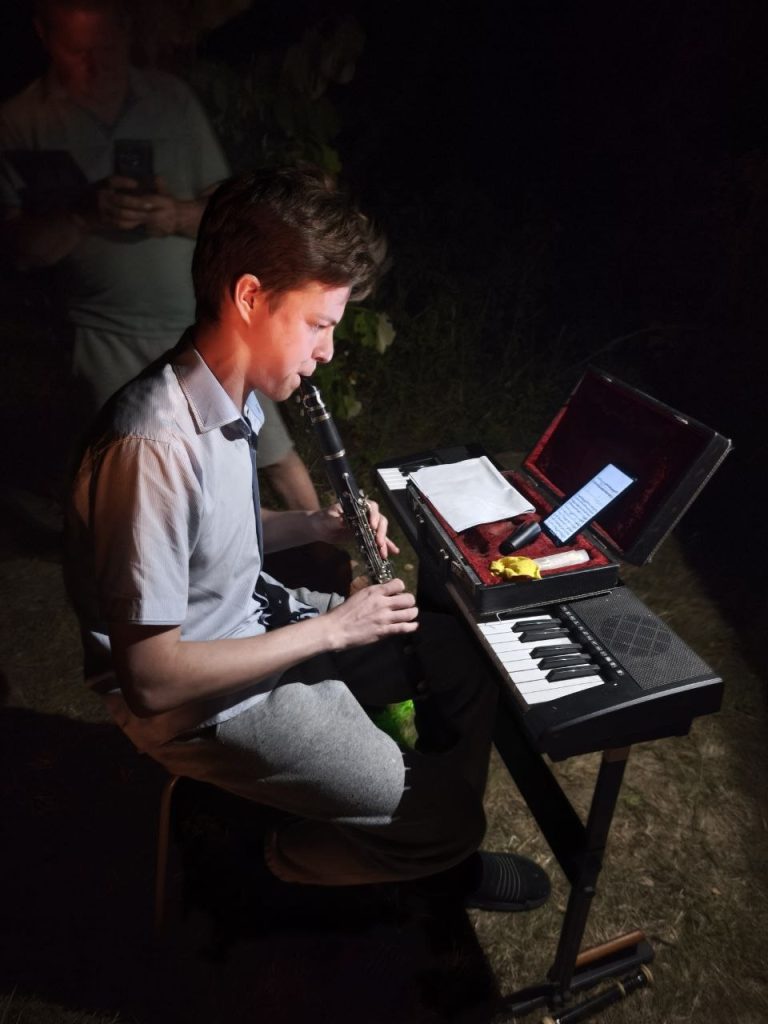
Works by Dmitry Ryzhak created during the art residency:
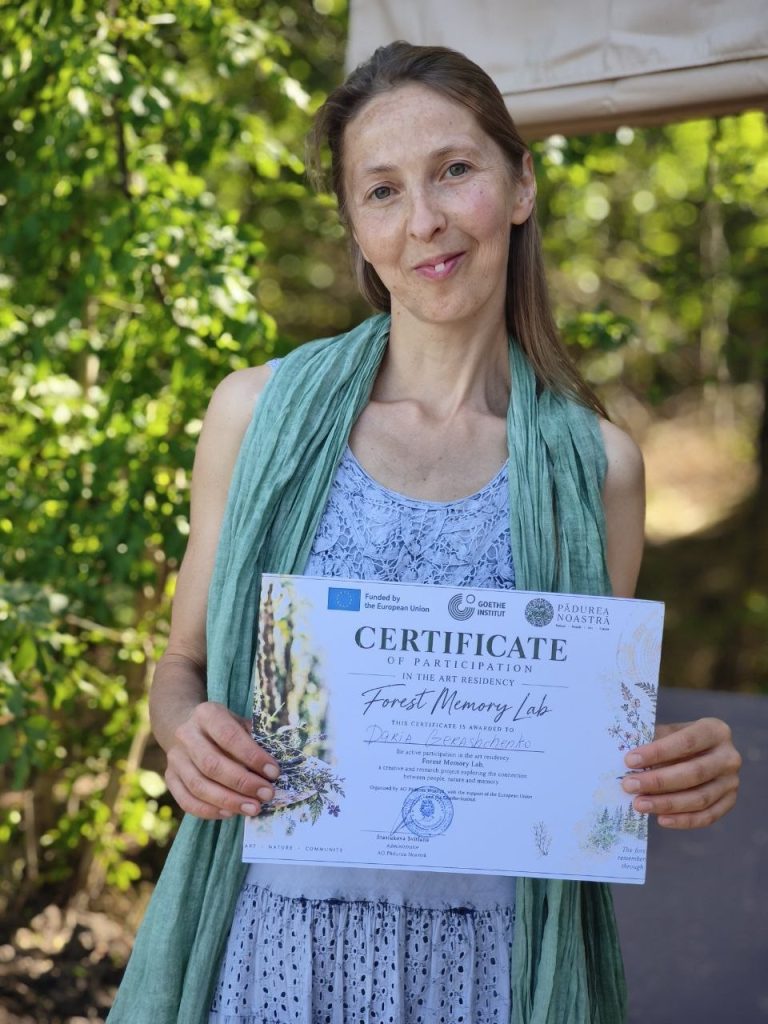
Forest Voice — An Unexplored Part of Me — Daria Gerashchenko

Category: EN

Singer and songwriter Daria Gerashchenko talks about her participation in the forest art residency “Forest Voice,” part of the Forest Memory Lab project, organized by AO Pădurea Noastră with the support of the Goethe-Institut and Culture Moves Europe.

Daria shares her impressions of living in nature, creating together with others, making music and working with clay. She talks about encounters with wild animals and how spending time in the forest helped her listen to herself more deeply and find new inspiration for her creativity.

My name is Daria Gerashchenko. I came from Odesa, Ukraine. I create music together with my family and also enjoy various kinds of handicrafts.

When I was coming here, I already knew that I would arrive at a wonderful place — the Moldovan Codri. I knew there would be a magical forest, a beautiful estate belonging to my friends, and an opportunity to be creative: sing songs, work with clay, and paint.

Of course, I was looking forward to an exciting and inspiring experience.

When I arrived here, I felt such joy and happiness! Breathing in the scent of these herbs, admiring the trees, touching the pure spring water, and swimming in the lake — it was true happiness.

I really wanted to make music with my son and his friend. And, of course, I wanted to try making different things with my own hands, putting all my love into them and creating a song.

For me, the Forest Voice is the harmony that the forest, with all its inhabitants, gives to people. It is a force of nature that draws a person and their entire inner world into itself.

At the same time, the Forest Voice is an unexplored, undiscovered part of me that has always lived within me, that is growing inside me and wants to be heard. A part that wants to share with the world everything that is best within me: all my beauty, tenderness, love, and light.

During my time here, throughout the residency, this connection has grown even stronger. We gathered herbs, made bouquets from them, worked with clay, and learned how to use the pottery wheel.

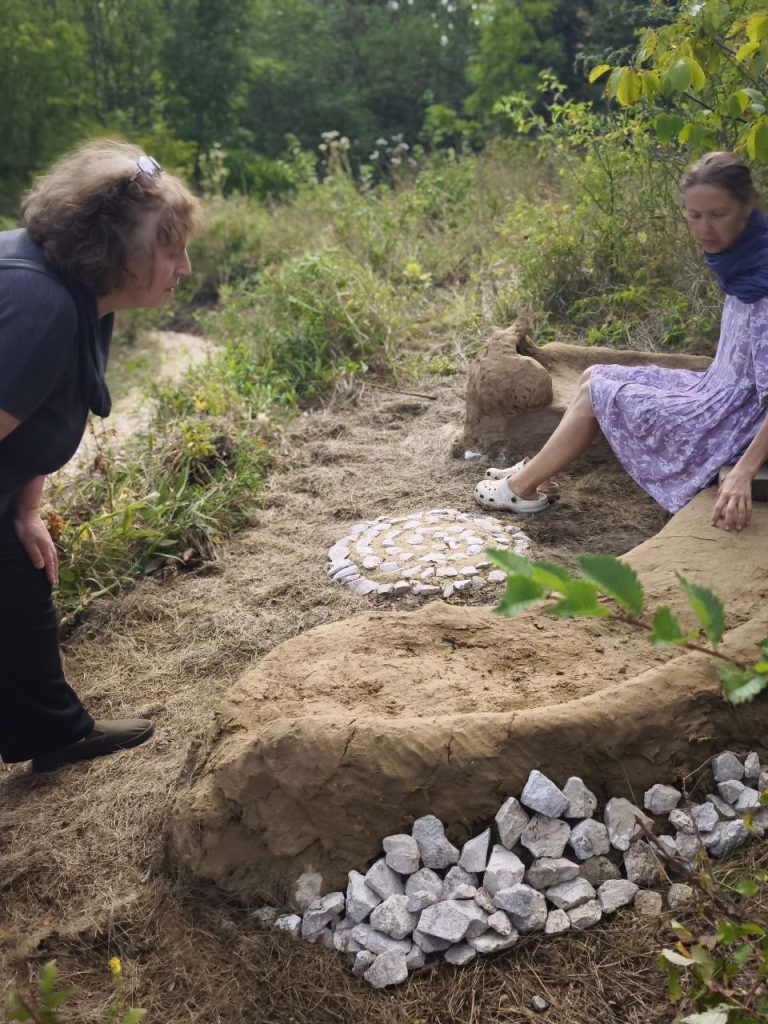
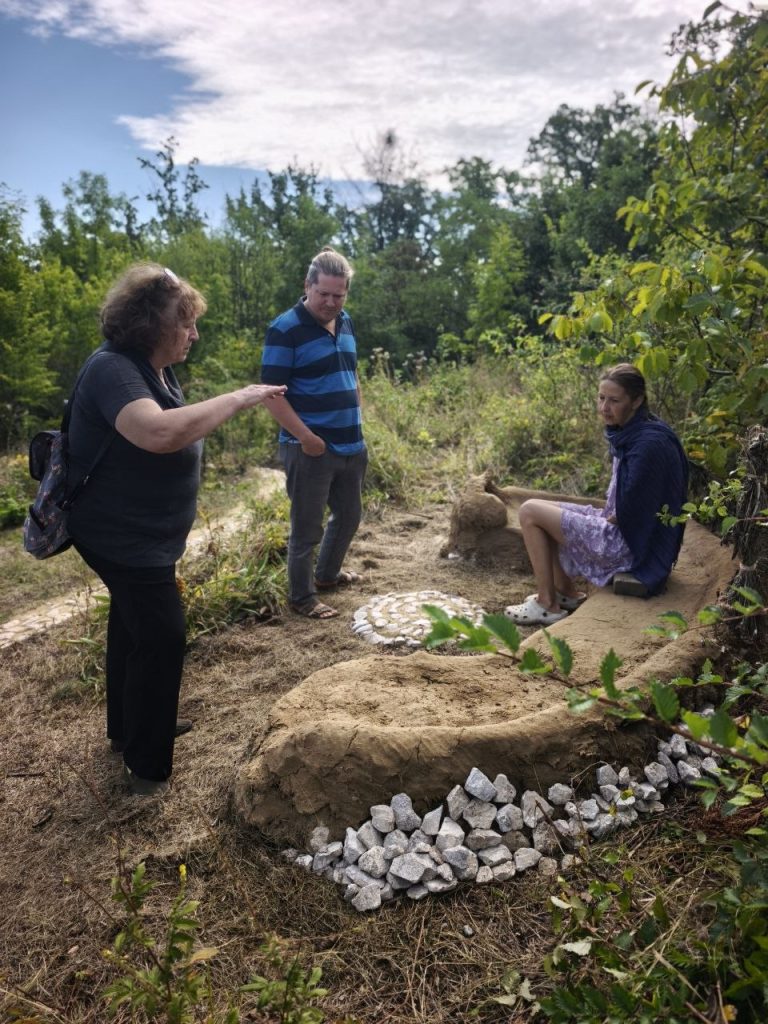
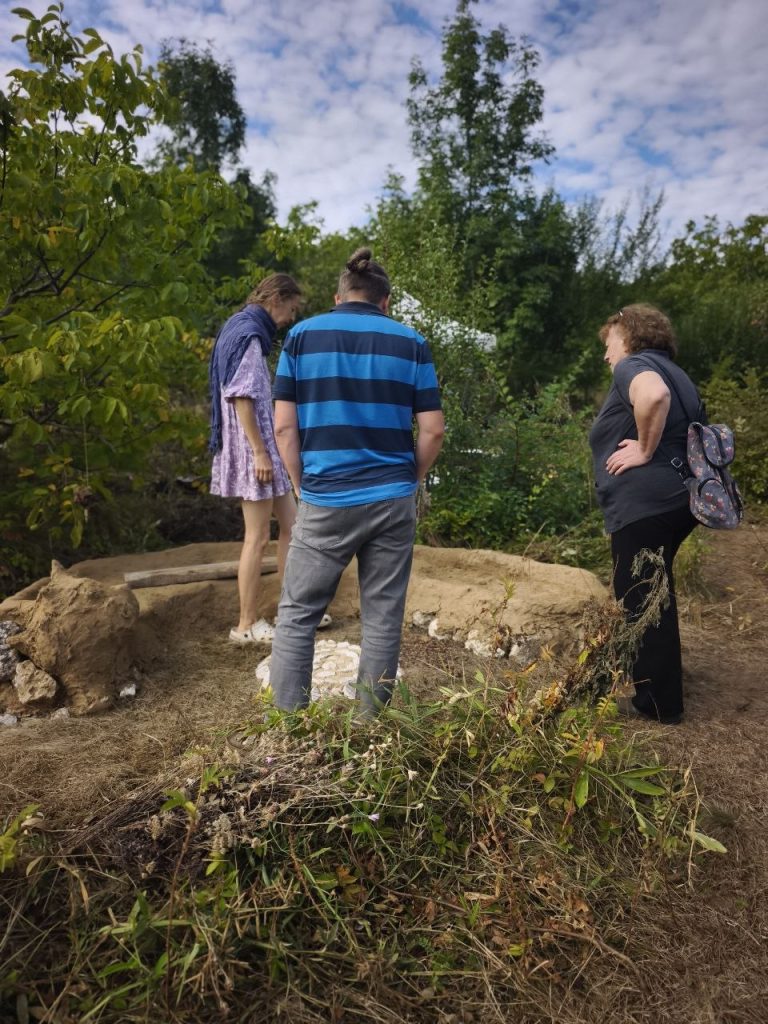
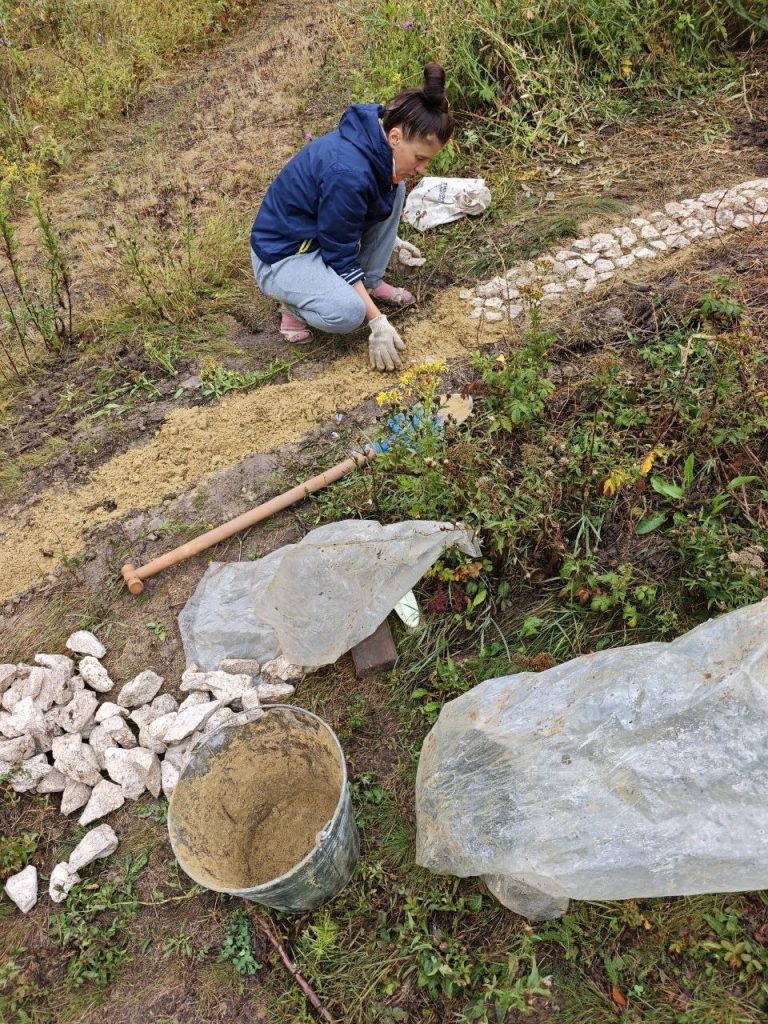
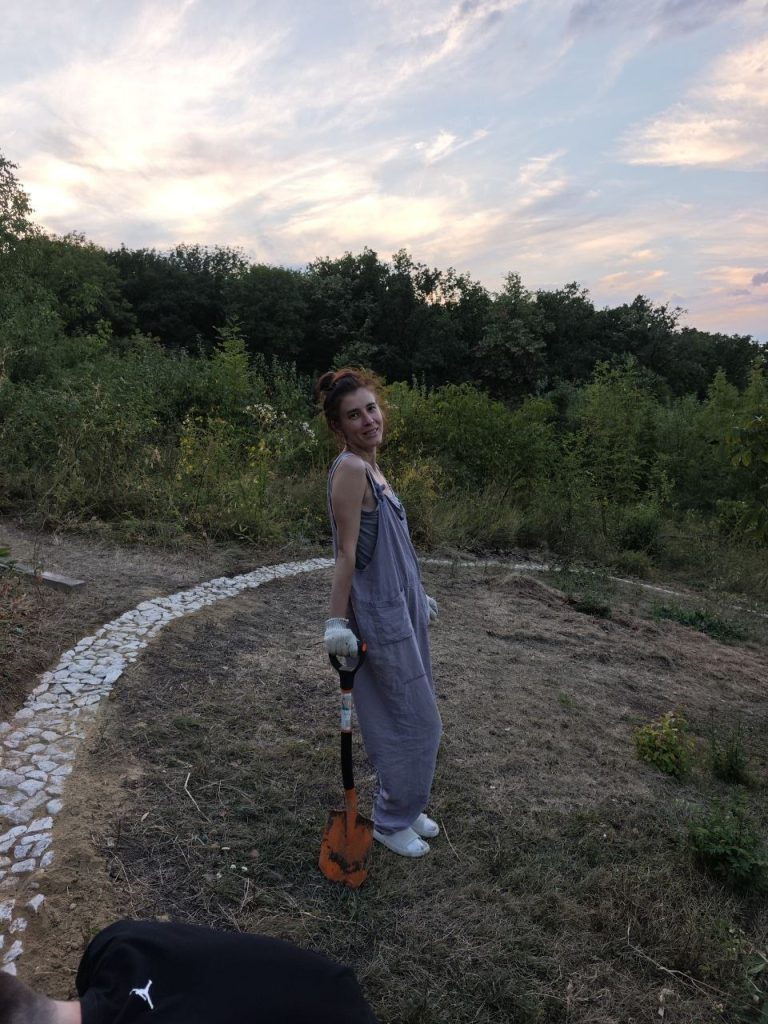
My main task was to create an installation on the ground. We paved it with stones that we found right here. They were beautiful white local stones. We used them to create a circle and a path leading into it.

Above the circle, we built an adobe bench made of clay, sand, and straw. We also used the same stones and branches from the trees. I really wanted everything to look natural — like a small, cozy corner in the middle of nature. Although it was handmade, I wanted it to blend organically into the surrounding space.

The circle itself symbolizes the sun and the moon. We really loved the shape of the circle: it is your personal space that protects you, a space you can completely trust.

Just as an artist comes every day and sees their canvas, our friends will be able to come to this circle and feel themselves in a protective sacred circle. During the day, people can dance in traditional circle dances, meet with friends, and hold different workshops — the setting is perfect for all of this.

When we first came to the tree standing in the center of our future circle, there was a dog tied to it. Its chain had literally traced out a circle around the tree. We noticed it and thought, “Wow, what a wonderful little circle!” — and we wanted to highlight it.

The most difficult part was managing my energy properly and finding enough time to accomplish everything we had planned. The most unexpected moment was when our friends arrived. It was a moment of letting go of control and completely trusting the space and the work we had already done.

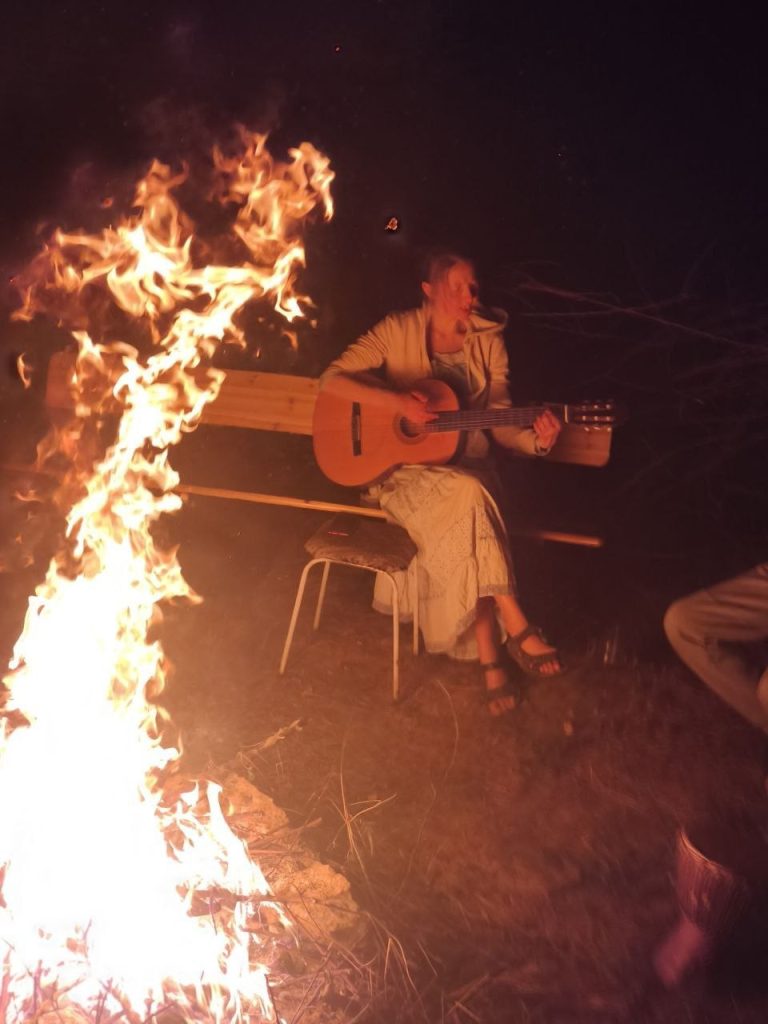
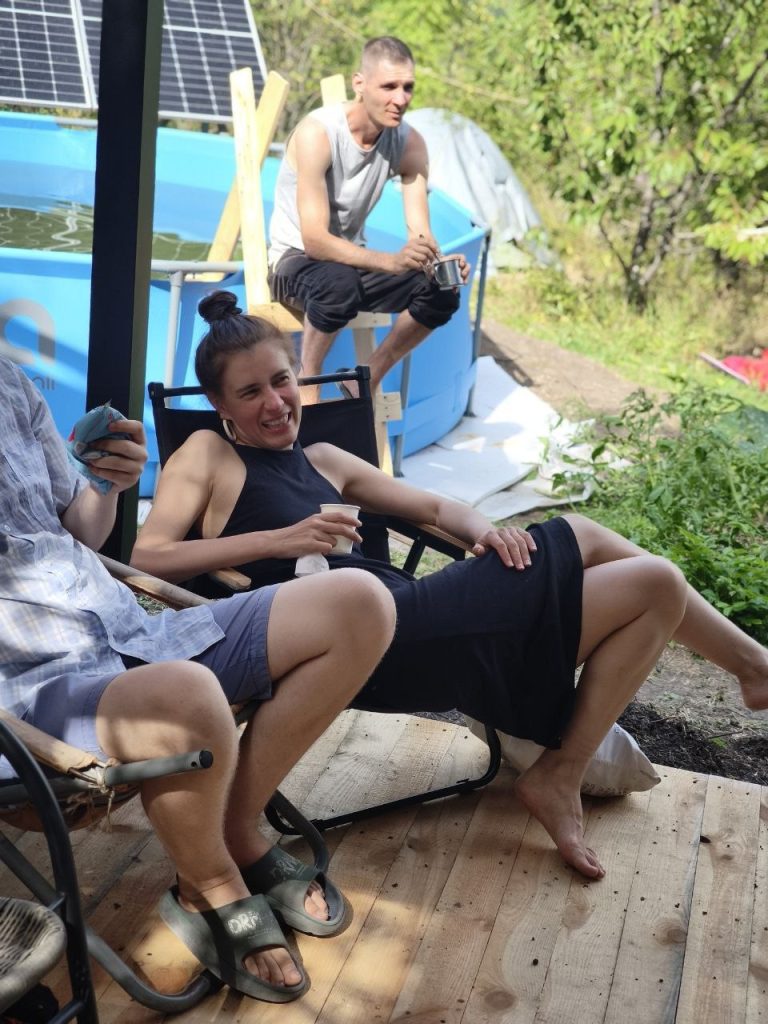
And when I was finally able to do that — mmm… I trusted, accepted everything as it was, and everything turned out in the best possible way for everyone. Together with the others, we played music a lot and performed around the campfire.

It was so interesting, with so many emotions! Every evening we rehearsed, and this memory touched me deeply. Those were very intimate moments when, tired after a long day, we still wanted to rehearse our piece together. We would gather and practice until late at night.

Together, we made adobe, kneaded clay and straw with our feet, mixed the materials for the bench, laid the stones… Of course, it was physically demanding! But at the same time, we were preparing the exhibition, discussing what everything would look like and how we would arrange it, and working with clay.

I will remember these walks in the forest with warmth, our conversations with Nina, and the creative work we shared — it was truly magical! Living in nature inspires you in a special way, and of course, we wanted to sing, dance, and move. We talked a lot, and these conversations awakened deep feelings within us. We walked through the forest and filled ourselves with impressions that gave birth to poems, music, and songs.

I fell in love with the pottery wheel, and I am very grateful to Nina for her patience and for the skills she managed to share with us — it truly inspired me! And I am very grateful to Vlad and Sveta for supporting me in my musical endeavors. Thanks to them, I felt more confident in myself, and now I want even more to work on my solo songs and play the guitar.

I really enjoyed all of this. Performing is always a special feeling: when we connect with each other, we can share our ideas, thoughts, and vision, and hear each other’s feedback…

I really want to open up and share my light!

A story that I will remember for a long time happened when we were working with clay in the forest.

A roe deer appeared from behind the trees. Then a second one appeared, and we watched them for a long time. When they noticed us, they froze and stared at us intently for several minutes, while we watched them too.

That gaze from the wild touched me incredibly deeply and left a warm, lasting impression. As a result of this encounter, a song was born, into which I poured all the warmth of that experience.

I observed my feelings and noticed the state in which I find it easiest to create — to come up with music and write lyrics. It happened precisely in those moments when I was alone with myself and nature. Everything came naturally, in a state of complete relaxation, when I escaped the hustle and bustle and simply listened to myself and the world around me. All I had to do was write down the melodies that came to me on their own.

I now have a firm intention to escape the hustle and bustle more often and spend more time in nature. I feel a growing desire to inspire other people to do the same and create similar projects where we can create together in the heart of nature.

And, of course, I want to continue working with the pottery wheel. Wherever I live, I would like to organize workshops on clay modeling and pottery. I also really want to keep creating songs and music, and to record the repertoire I already have.

For the art residency, I would choose the words “A Journey to Myself” or “Healing.”

During the art residency, Daria Gerashchenko wrote a poem about the Forest, a song, and also took the lead in creating an art installation.

The Forest Really Does Speak to People, Just Not in Words – Nina Stasiukova

Category: EN

Artist and ceramicist Nina Stasiukova shares her impressions of the “Voice of the Forest” art residency, organized by AO Pădurea Noastră in cooperation with the Goethe-Institut.

1. Art as a Way of Life

My entire life has been connected with art in one way or another. I am an artist, painter, and ceramicist. I have many years of experience working with painting, ceramics, color, form, and materials. I have never viewed art simply as a profession. For me, it is a natural way of living, thinking, and communicating with the world around me.

2. My First Feeling in the Forest

When I first arrived here, in the forest, I felt a sense of calm above all. Nothing here makes you rush. Gradually, you start thinking less about everyday matters and focusing more on what you truly want to create. For an artist, this is a very valuable state of mind.

3. The Forest Speaks Without Words

The theme of the project is very close to me. I think the forest really does speak to people, just not in words. It speaks through the texture of bark, the shape of branches, the earth, water, light, and traces of time. You simply need to stop and learn to notice it.

4. The Forest Memory Lab

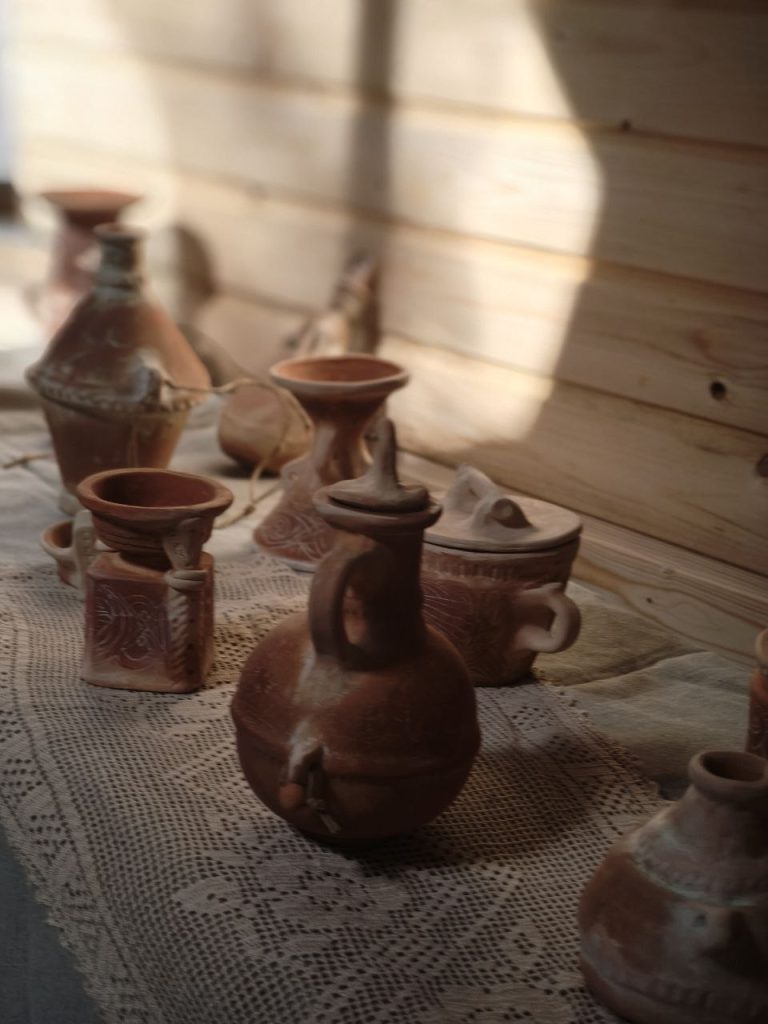
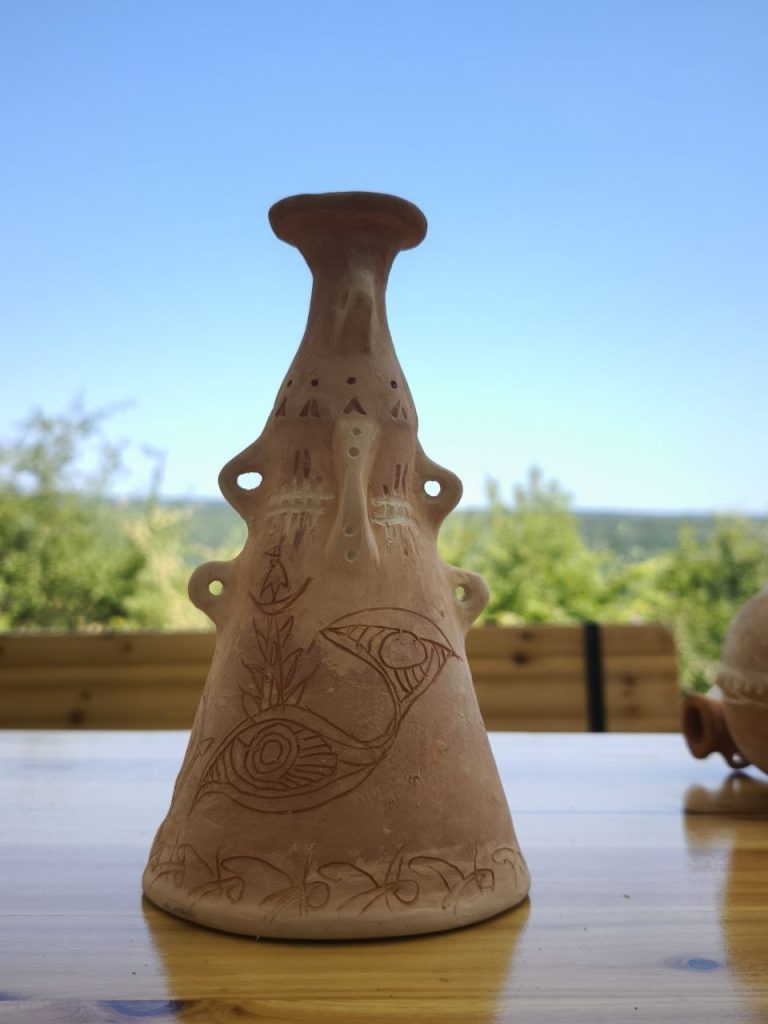
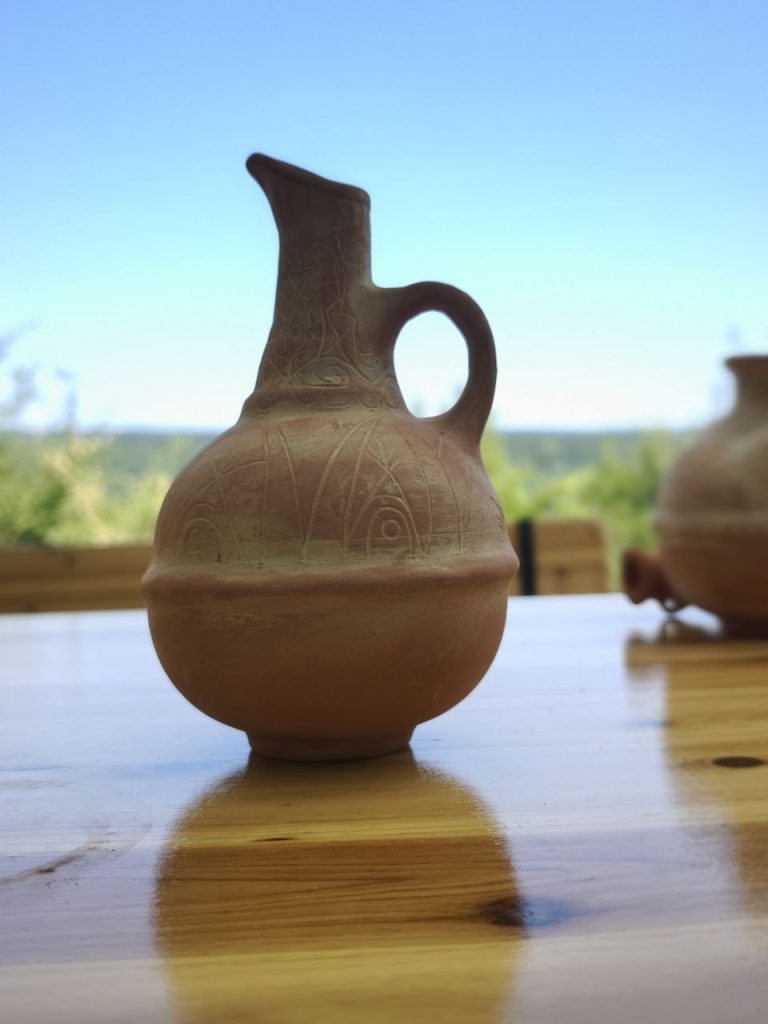
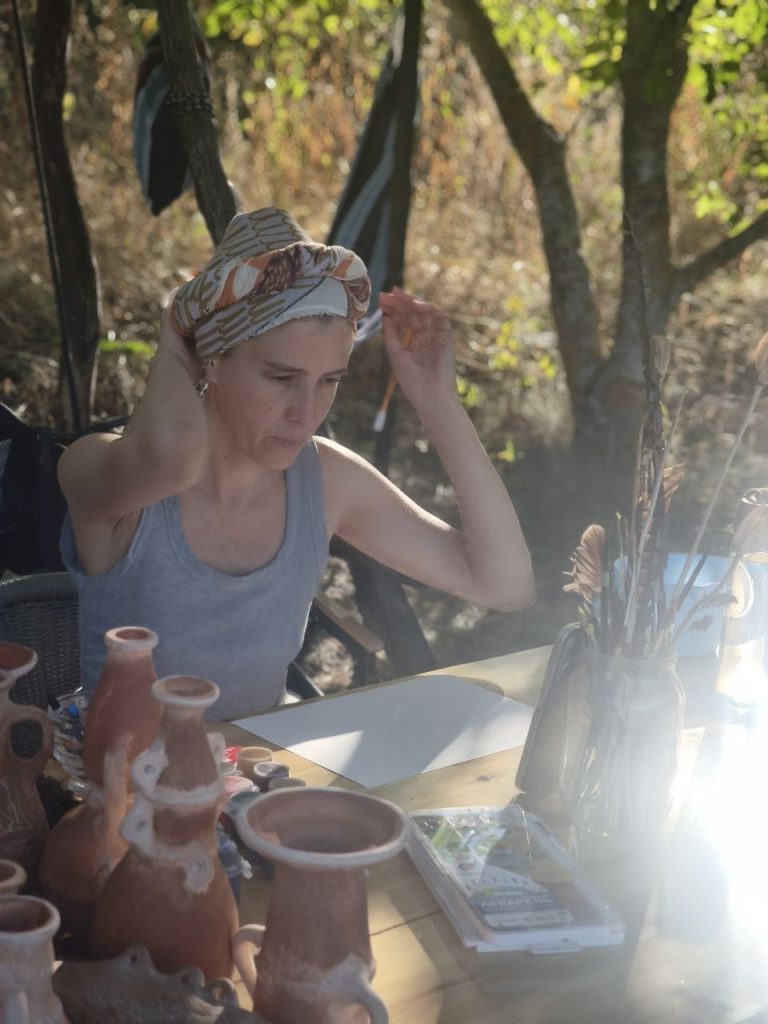
During the residency, I worked with ceramics and graphic art as part of the “Forest Memory Lab” project. I wanted to turn to very ancient images and symbols that have existed in our culture for thousands of years. That is why motifs connected with the Cucuteni–Trypillia culture appeared in my work.

5. Memory in Ceramics

I made vessels, bowls, and other ceramic forms. I like this contrast — warm earth and a thin, light line. For me, these lines are not simply decoration. They carry memories of water, earth, plants, the tree of life, human beings, and their connection with nature.

6. Painting and Graphic Art

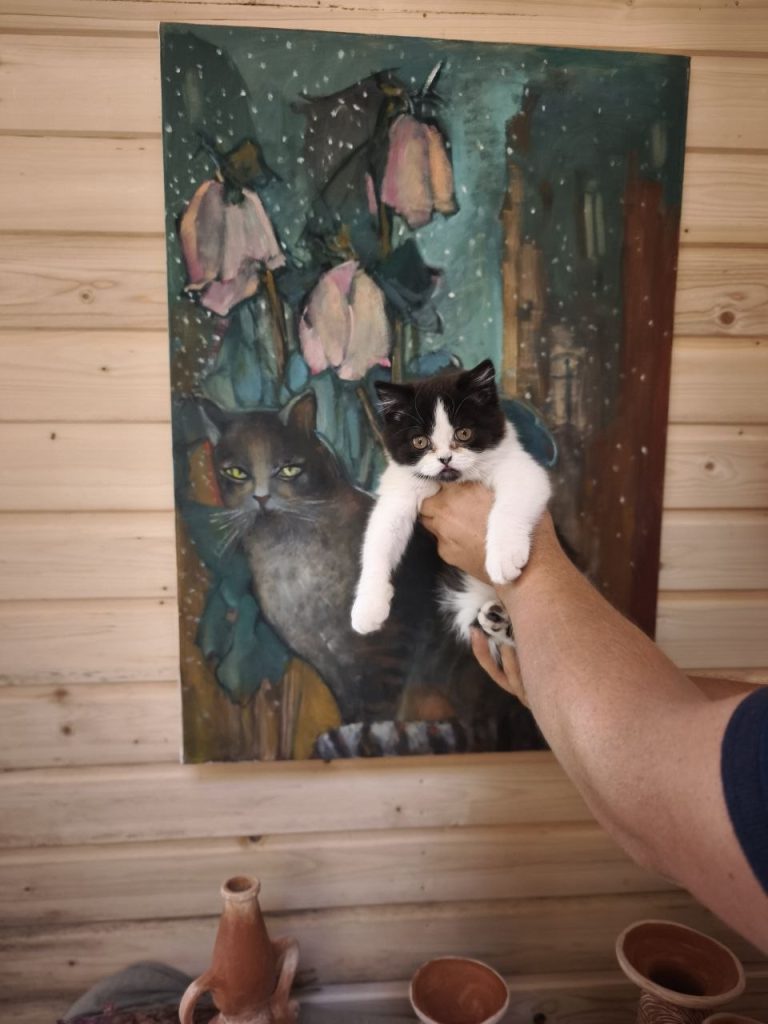
Alongside ceramics, I continued working with painting — creating oil paintings on canvas and making graphic sketches.

7. Exchange Between Generations

I think it is very important when different generations can not simply teach one another, but actually exchange with each other. Young people give you new energy, while you can share what you have accumulated throughout your life.

8. Art in Nature

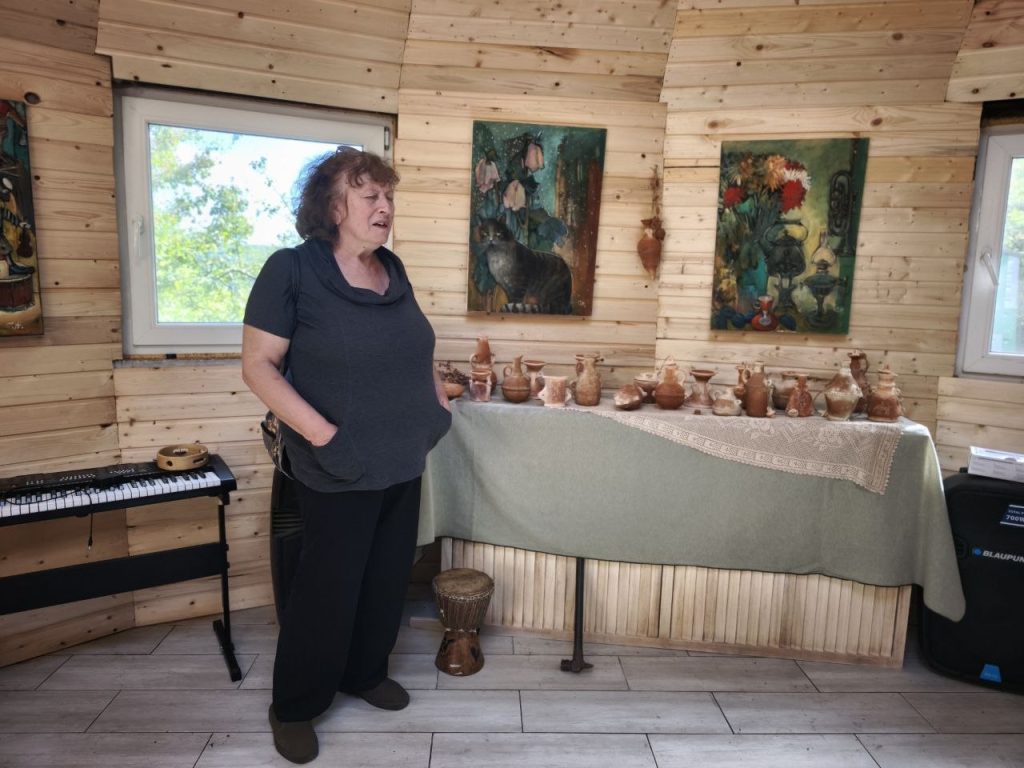
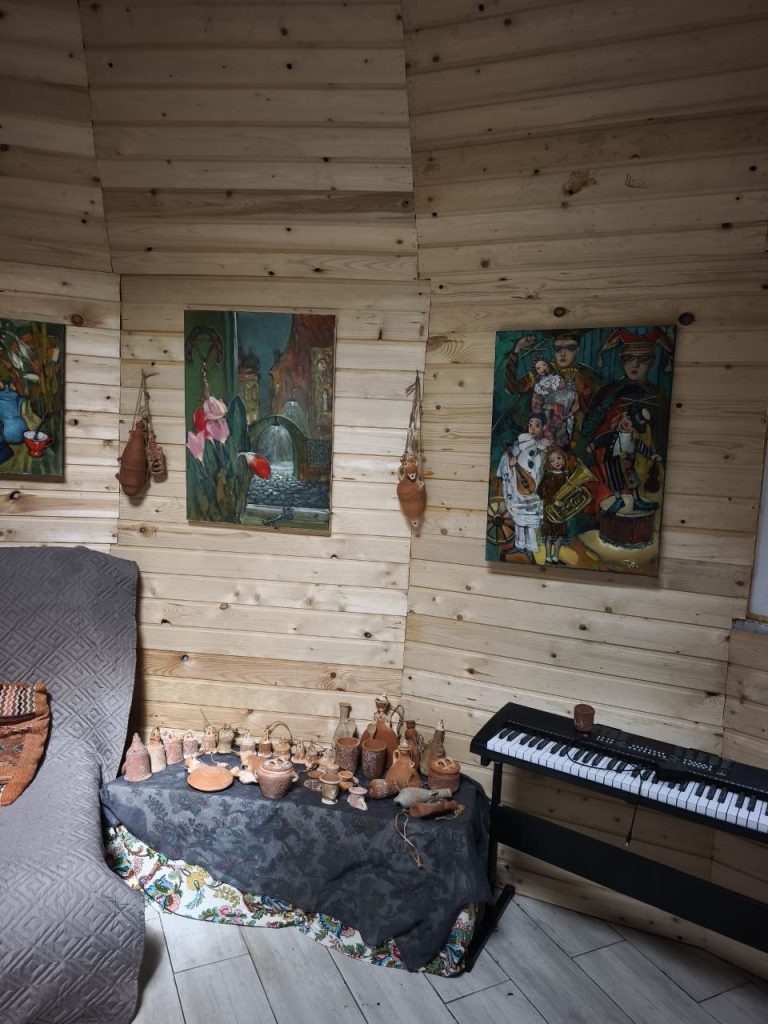
It was especially interesting to see how different forms of art gradually came together here. Music sounded among the trees. Watercolors blended into the natural surroundings. My ceramics and paintings found their place in the domed house with its overhead natural light, creating an exhibition.

9. Faith in the Future

I saw talented, profound, and very different young people around me. And this gives me great faith in the future.

Работы Нины Стасюковой созданные во время Арт-резиденции

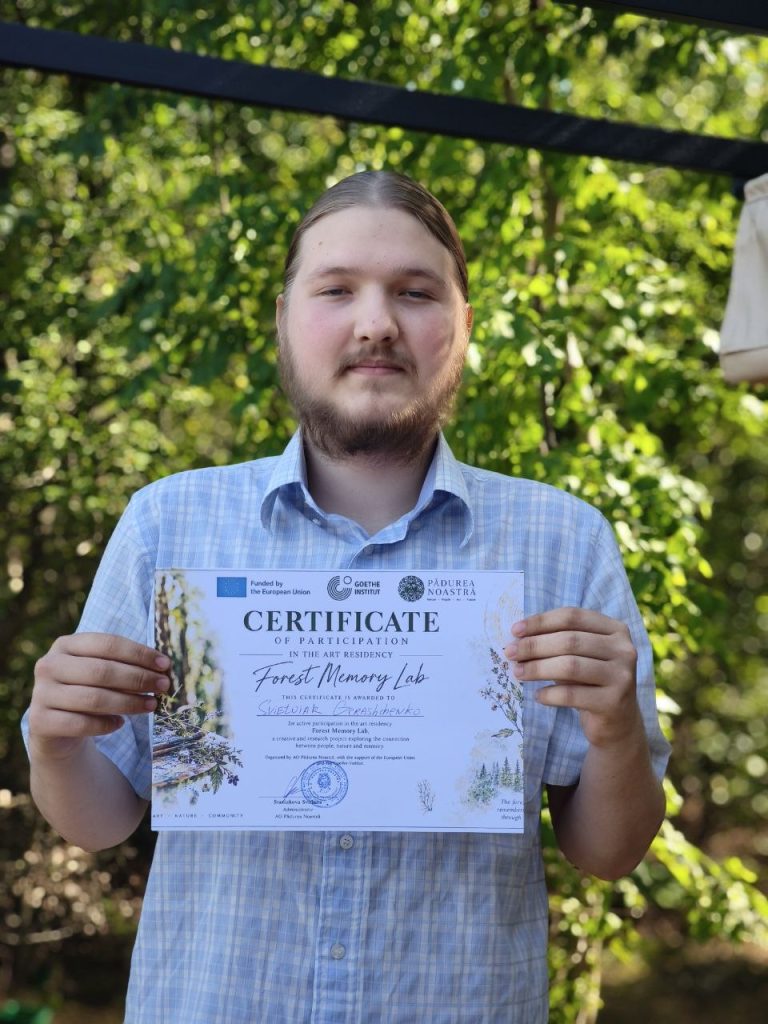
The Voice of the Forest Is My Inner Voice: Svetoyar Gerashchenko on His Experience at the Art Residency

Category: EN

In this interview, 20-year-old Ukrainian musician Svetoyar Gerashchenko talks about his participation in the “Voice of the Forest” art residency, organized by AO Pădurea Noastră in collaboration with the Goethe-Institut.

Svetoyar talks about how the forest helped him escape the hustle and bustle of the city, listen to himself, and see creativity from a new perspective. Together with the other participants, he created a landscape installation and music, while the residency experience inspired him to work on new compositions and continue pursuing his professional path as a musician.

My name is Svetoyar Gerashchenko, I am 20 years old, and I am from Ukraine. I am currently a student at a music college.

I came here hoping to take a break from the hustle and bustle of the city and the war, as well as to fully express myself as a musician and composer. I wanted to create new music here and explore the boundaries of my creative potential.

The forest allowed me to relax and finally take off the “mask” that people are used to wearing in cities. I felt a deep sense of peace and silence, and for the first time in a long while, I was able to truly hear myself.

From an early age, I traveled all across Ukraine, performed, and lived in forests at festivals together with my parents. Back then, the “voice of the forest” for me was the people around me — those who talked, made noise, and played music. It always brought back warm memories. But during the residency, my understanding changed.

The city pulls us into an endless rush and overwhelms us with noise. It puts masks on us and imposes roles upon us. But when you leave the city, immerse yourself in nature, and listen to the voice of the forest, breaking free from the endless cycle, time slows down — and you finally hear not the echo of other people’s worries, but your own pulse beating in harmony with nature.

For me, the “voice of the forest” is your own inner voice, which you rediscover in silence.

We created the “Voice of the Forest” landscape installation entirely from eco-friendly materials. The idea is that, by sitting on the bench, you can imagine yourself in the place of this tree, surrounded by the forest. Being there, you can hear yourself as if from the outside and realize that you are not alone — the world around you is there to support you. Through music, we also tried to convey the emotions and feelings we experienced here.

Our starting point was the atmosphere of this place itself and the desire to rethink the transition of a person from the hectic city into a living, breathing space of nature.

The most unexpected thing was how deep and healing the silence here is. The challenging part was figuring out things that were new to me, although that was also quite interesting.

The experience was truly amazing! Everyone here is an incredibly interesting and unique person. We built the installation together, interacting with one another at every stage. And we created the music in collaboration with Dima. Working with him was easy and comfortable — he understood everything very well, supported our ideas, and responded to criticism constructively.

We created together: everyone did what they were best at, and we all helped each other along the way. In the end, music, visual art, and the collective work on the project came together as one, complementing each other within the same space.

I learned perseverance, how to stand up for my point of view, and how to help others. Communicating with the participants gave me a powerful motivation to work, because I saw the passion in their eyes as they pursued what they loved. This experience showed me that creating is easier when you are surrounded by such creative people — there are always people who will support you and help you overcome any difficulties.

For me, it is a great honor and a way of showing respect to those who came to listen to us. I feel incredibly proud that Dima and I opened the exhibition together, and that our work truly resonated with the audience.

In this place, I saw an incredible starry sky, forests, and lakes, and once again realized how beautiful pristine, untouched nature can be.

I am taking home with me a huge creative energy, unfinished music that I want to complete and play at home, and, most importantly, the spark I saw in the eyes of the other participants. A lot has changed in me: I have developed a deep respect for other people’s boundaries, a greater understanding of the value of mutual support, and a strong belief that my music will find its listeners, no matter how difficult the journey may be.

I plan to continue developing as an artist and musician, complete my fourth year at music college, and apply to a conservatory, because here I realized that I am capable of much more. Dima and I also came up with the idea of writing a large suite, which we would like to present not only here, but also back home.

If I had to describe the residency in one word, for me that word would be “challenge.” I challenged myself and tested my limits to understand what I am truly capable of.

Works by Svetoyar Gerashchenko created during the Art Residency:
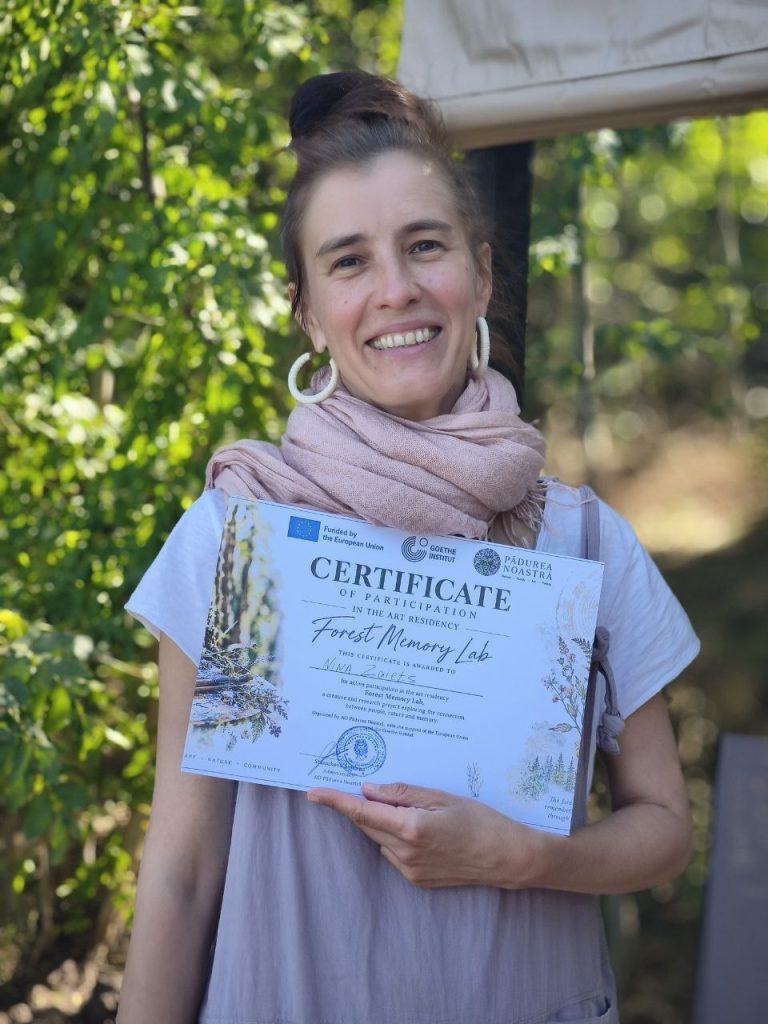
You can live like a robot, or you can live and feel alive: Nina Zayets on the Voice of the Forest project

Category: EN
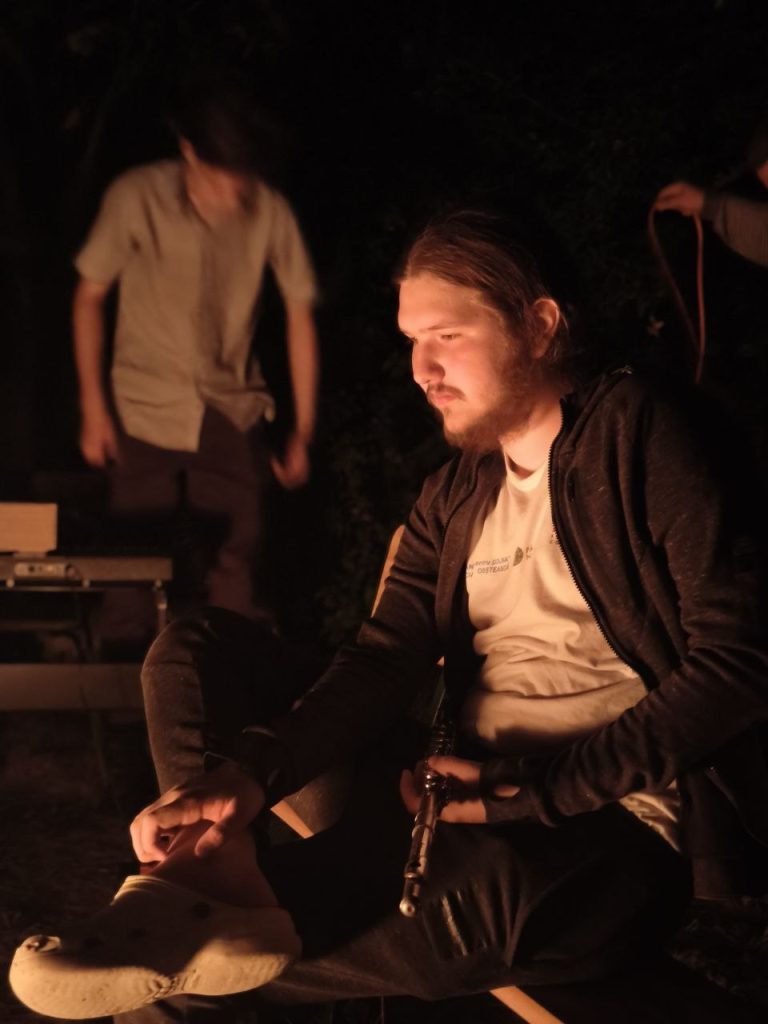
Nina Zayets, a participant in the “Voice of the Forest” project’s art residency, organized by AO Pădurea Noastră with the support of the Goethe-Institut, talks about how nature, creativity, and life away from the city helped her connect more deeply with herself; her search for meaning through art and co-creation; her interactions with other participants; working with clay, painting, music, and ceramics; as well as the unexpected discoveries and challenges she experienced during the residency.

Nina talks about the main result of this experience — the desire to doubt herself less, to take action more, and to bring more vitality, creativity, and authentic connection with nature into everyday life.

“When I live in the city, there are so many emotions and so much chaos. Here, I had contact with real, tangible reality. For me, this was extremely valuable because it helped me reconnect with the earth and feel grounded.”

1. Hello!

My name is Nina Zayets.

I am from Ukraine.

I am a creative person, and I am interested in everything connected with Creativity, Nature, and everything that is Alive and Authentic.

I practice art therapy, family constellations, and psychotherapy, and I really love singing, photography, ceramics, dancing, and painting.

When I found out about this Event, I was deeply moved. I felt an inner response and heard this phrase: “You are going to have a SPECIAL AUGUST.”
I literally got goosebumps all over my body when I heard these words. And I can confirm: AUGUST really was SPECIAL!

  1. 2. I would like to talk about the Meaning that I found for myself during this Art Residency, about my expectations, and about why I came here in the first place.

    It is important for me to find Meaning everywhere, to find myself in all the processes that happen to me, and to explore myself.

    And during this Art Residency, I realized that I also came here to get to know myself better and to see WHAT emerges from me — in the form of Creativity, co-creation, collaboration with the other participants of the Art Residency, with the organizers, and simply in the way I express myself.

    I also really wanted to spend some time in Nature, in the forest, far away from the city, in silence. This is also very valuable for my physical and mental health.

    Because Nature, physical work, and creativity have given me so much. When I live in the city, it can be quite difficult for me — there are so many emotions and so much chaos, and I spend a lot of time on my phone, in a “virtual reality.”

    Here, I had contact with REAL, MATERIAL REALITY. For me, this was incredibly valuable because it really GROUNDED me.

    I was interested in observing WHAT was emerging from me here, what was being “produced” from me, WHAT was happening in the drawings I created in this Space.

    And at the beginning of the Art Residency, it was a little difficult. Everyone was adapting, and it was difficult to open up. I noticed that I was going more and more into my drawings and interacting less with others.

    And the drawings turned out as if I was hiding a little — behind “leaves,” “feathers.” But I was incredibly interested in drawing these “details” and going deeper into them.

    And the further we went, the more I felt that I really enjoyed interacting with other people.

    It was interesting to create this Installation. There were many different and interesting experiences connected with it.

    And actually, the Meaning of our Installation came to me right at the very end, when I could already feel that the Process was coming to an end, that the Art Residency was coming to an end. There were many hints and signs coming from all directions that our Process was approaching its completion.

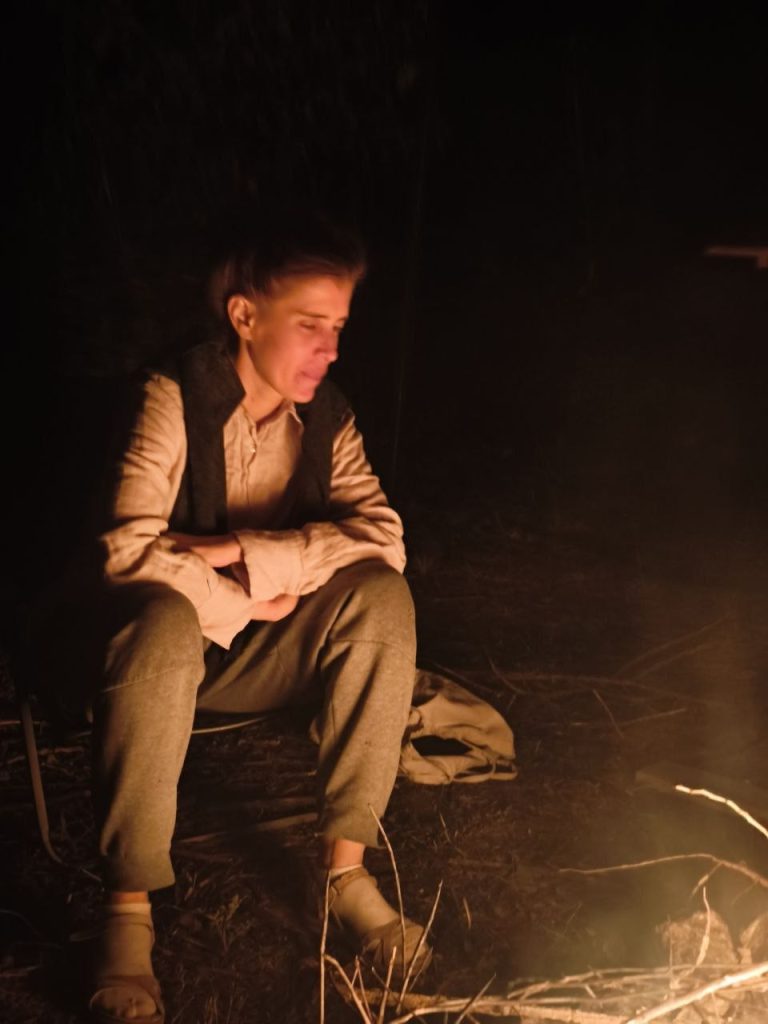
    And I wanted to sit by the fire, to sit near our Installation. I sat down on the adobe bench that we had made together with Dasha and the others.

    And I felt that she had made it in exactly the right way, with exactly the right shape, in exactly the right place.

    And when I sat there, I felt — what is this Installation actually about? Some deeper Meaning for me seemed to “download” and reach me at that very moment.

    Maybe this is only my personal Meaning, but I had a very strong response to it.

    I felt that this bench, because it is made of adobe, is a continuation of Nature. And that is exactly what we wanted in the VOICE OF THE FOREST project — for everything not to feel artificial.

    I felt that this bench fit into that place SO beautifully. It was so COZY. The lines of its shape were very smooth and soft.

    It felt very feminine, caring.

    When I sat down on it, I felt as if I were being hugged. And there were smooth raised edges on the sides that seemed to protect me.

    I was wearing a headlamp. I looked straight ahead, and the light was shining directly onto the Tree in the center of the Installation.

    And at that moment, I had a very powerful insight:

    This Center, this Tree in the Center of the Circle, and me sitting on this bench — it was as if I were the OBSERVER, while this Tree was my ESSENCE, my Life, my “I AM,” my Core, my Center — the state of being in the present moment, when I am PRESENT.

    And for me, this was SO symbolic. This Tree — I felt something very good and very deep through it.

    And this Meaning is very precious to me.

    And this whole atmosphere — the starry sky, the forest — all of it created the conditions for me to feel and experience this Meaning.

3. For me, it was unusual and very valuable to interact as part of this newly formed team of Art Residency participants, with people I had never known before,

but with whom a wonderful, pleasant, and safe Connection developed.

And again, this is very valuable for me because through these people and my interaction with them, I am still exploring myself. Inside, I am kind of “calibrating” myself — observing how this process happens for another person and how it happens for me.

And it was incredibly valuable for me to communicate with these people.

For example, Dasha was like a little MOTOR, an Energizer for me — a very life-affirming, expansive person who loves everything and interacts with everything, with all living Nature. Everything interests her.

Everything is “within her power.” She has no resistance or doubts that something might not work out — and this INSPIRED me SO MUCH.

I learned this from her, and I definitely took something from her with me.

I was REALLY impressed and touched by the fact that there is nothing “foreign” to her. Everything is familiar, beloved to her. It is as if she simply RADIATES and gives LOVE as a whole.

I also felt Dasha’s GENEROSITY.

At first, I was closed off, as if it was difficult for me to integrate into the “group.” But then, on the contrary, it became wonderful, and I wanted to share, to give, to offer treats — and this created a pleasant sense of expansion inside me.

I also definitely want to talk about my interaction with Vladimir, Dasha’s younger son.

It was super cool to observe how, as soon as I opened up to him and reached out to him, he also opened up.

It was an incredibly valuable experience of ACCEPTING a person with all their unique characteristics — and it even developed into something more, into a kind of warm feeling towards him as a child.

4. But probably my strongest impressions came from a participant named Svetoiar.

Because this person is, essentially, the opposite of me.

I was deeply impressed by his ease and by the way he approaches life, creativity, and interaction with people — it is radically different from my way.

And I wanted to take something from this as well and add it to my own “arsenal” of useful things:

the ability not to bend myself, not to give in to pressure, not to allow myself to be “bent” or forced to do something I don’t like;

to feel what interests me and, on the contrary, what brings me EASE;

to catch MY OWN WAVE and not let myself be drawn into “other people’s stories” that do not interest me and that create a feeling of heaviness inside me.

Because when you follow “YOUR OWN PATH,” you feel satisfaction and a wave of energy.

But when you go “in the wrong direction,” you feel heaviness and a loss of energy.

And one more thing!

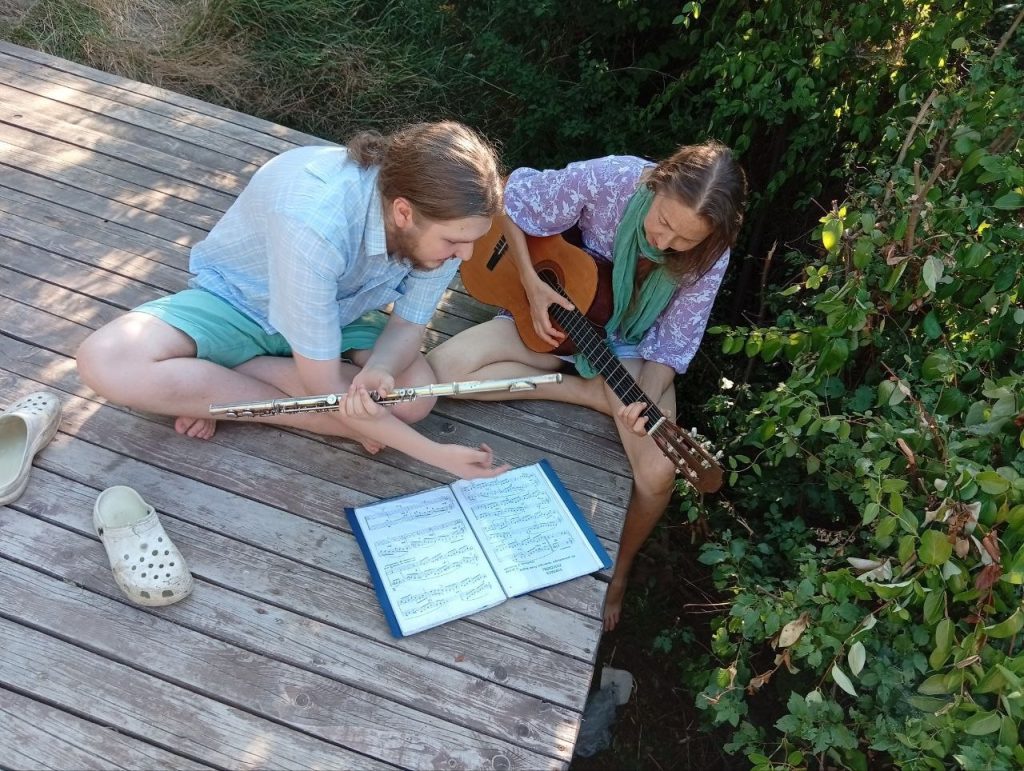
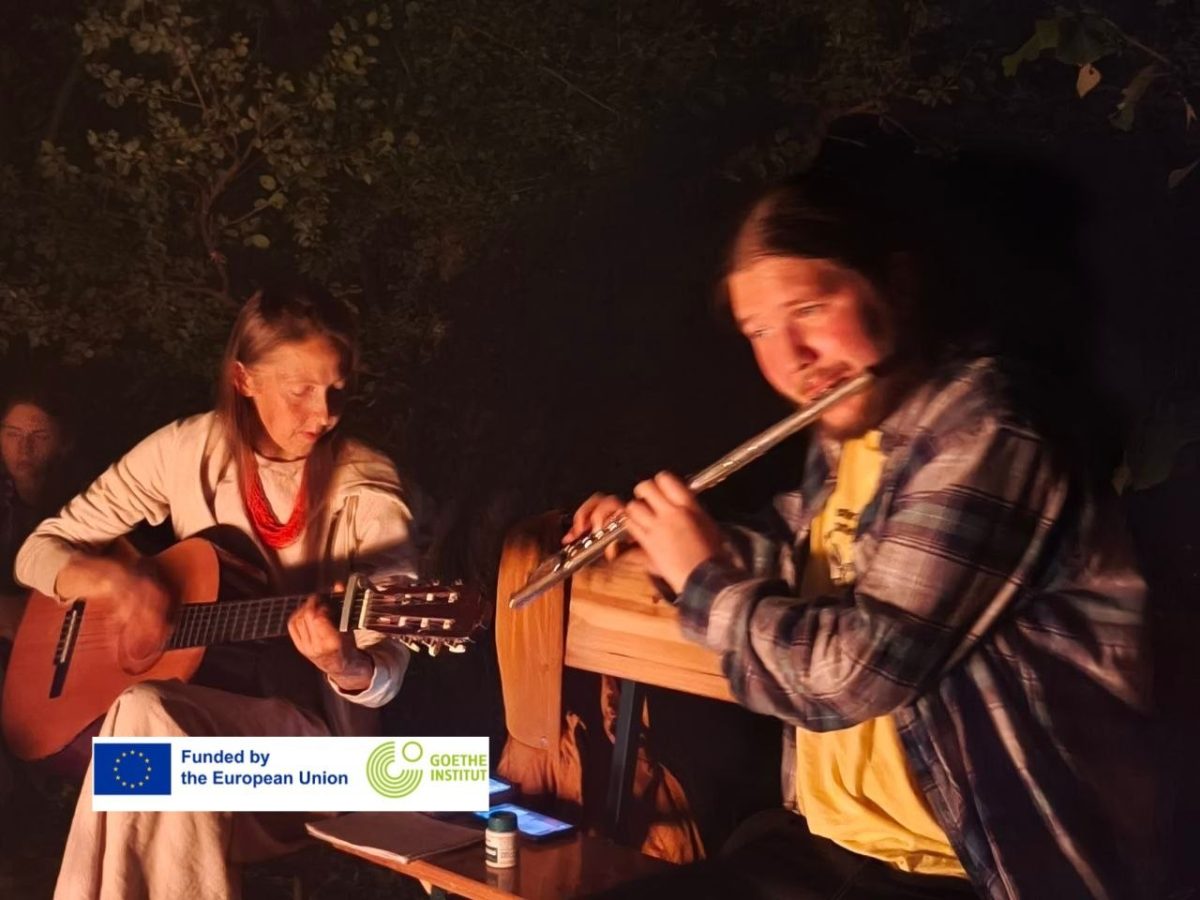
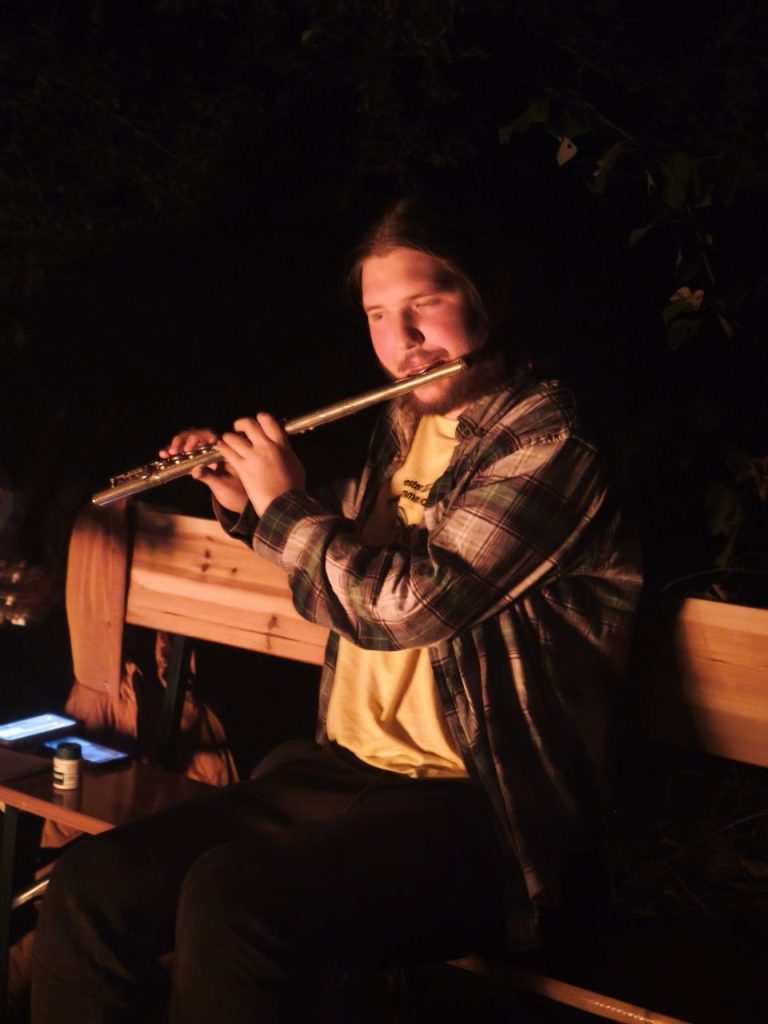
Svetoiar let me play his musical instrument — the flute — and it is SO wonderful when you manage to do something, even just a little, but you succeed on your very FIRST TRY!

It inspires you so much and gives you confidence in yourself.

  1. I realized that the most powerful experience I had here was when I rehearsed the song together with Dima, Svetoiar, and Dasha — the song in which I sing.

    And I REALLY LOVED this safe space that we created together with people who do not criticize, but support.

    Especially Svetoiar, who calmly gives very good constructive feedback, leads the entire musical process with great skill and talent, hears all the mistakes, and knows how to correct them in a very appropriate way.

    For me, this is an invaluable experience — when people notice what I do well and gently correct my mistakes.

    Under such conditions, everything becomes much easier.

    I really enjoyed our interaction, and I saw the result.

    I gained an experience that showed me that if you keep practicing, things work out — and each time, they get better and better.

    I also want to say something about the participant Dmitry.

    When he left, I felt the difference.

    Dmitry is a great guy — hardworking, very talented, and reliable. He brought his own value to every process, supporting them both through his direct help and through his work.

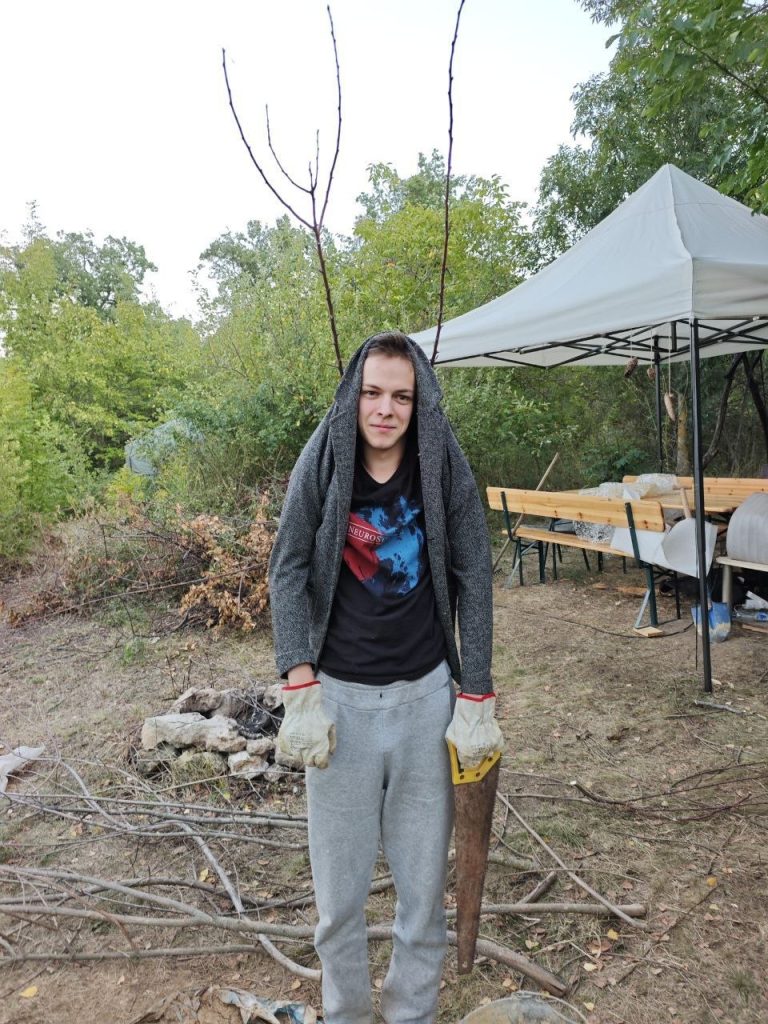
    Even though Dmitry is a musician, here he also helped us cut branches, knead clay, and carry stones.

    It was good and comfortable to have him around.

    And Dmitry really impressed me with his talent for composing music and with his creation about Stephen the Great.

  1. I drew here directly in Nature,

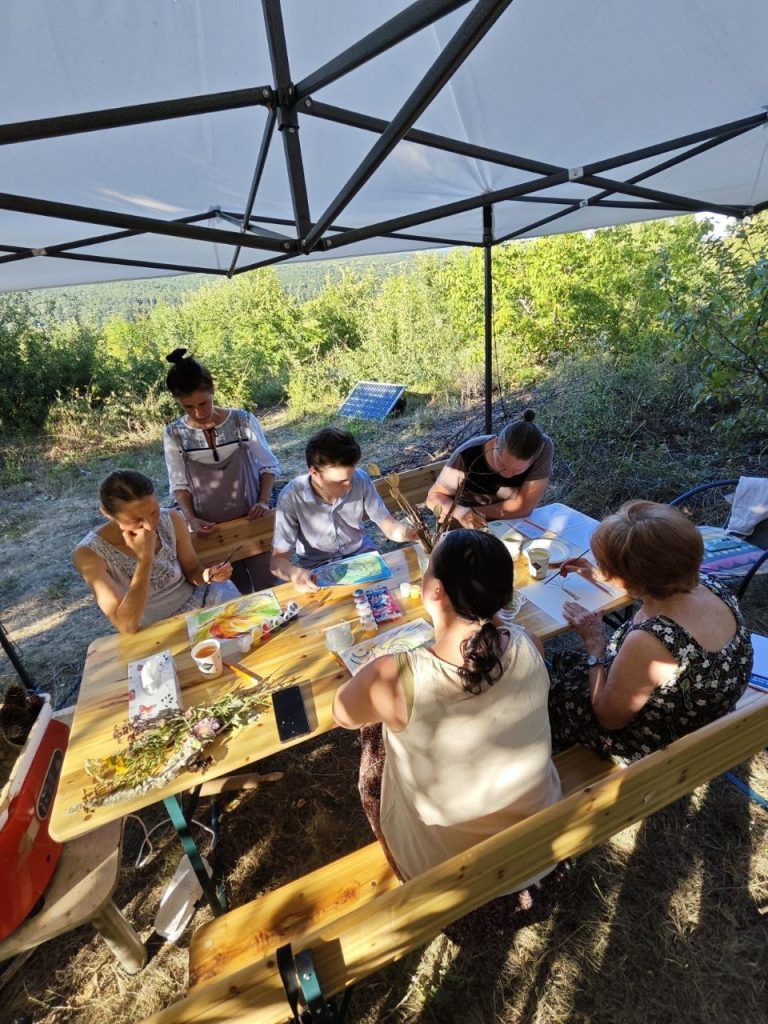
    in the forest or on the hill, with a view of the forest — and this was a special pleasure.

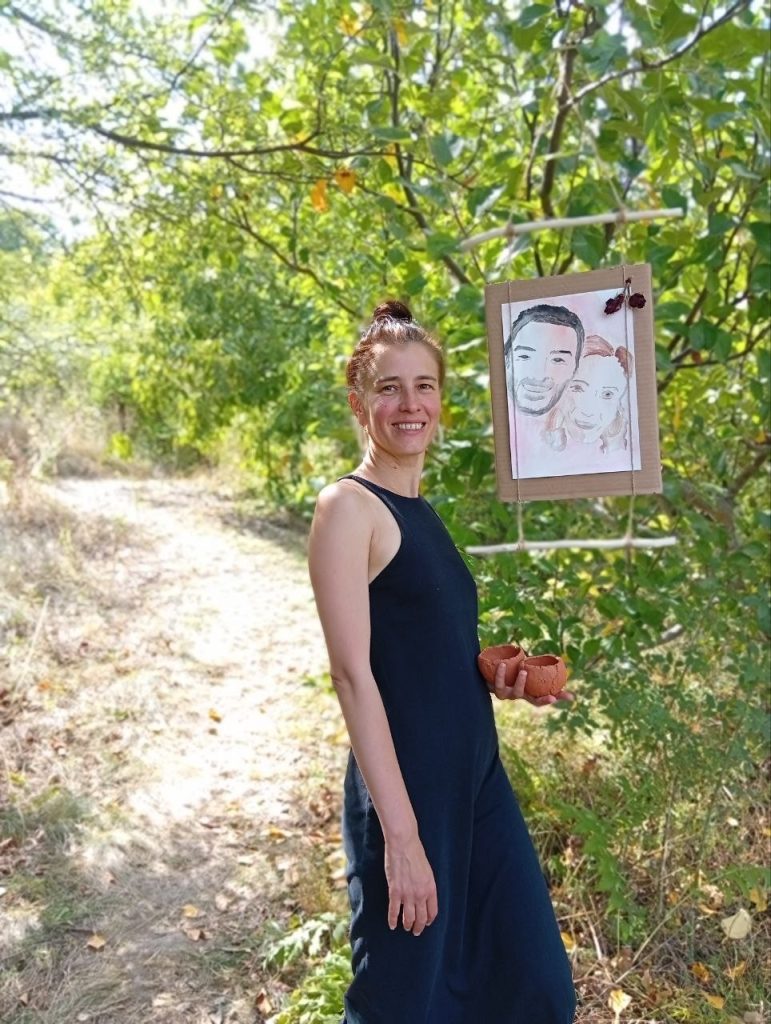
    It was very interesting for me to draw the participants and to draw them intuitively: to see and feel their image and then convey it approximately, so that the drawing would not necessarily look like the person, but would rather express a feeling, a character, a suggestion.

    It was fascinating to observe how each participant would emerge in the drawings.

    Another very valuable and powerful experience for me here was working with my hands, making things manually.

    And I am grateful to Dasha for her ideas and support.

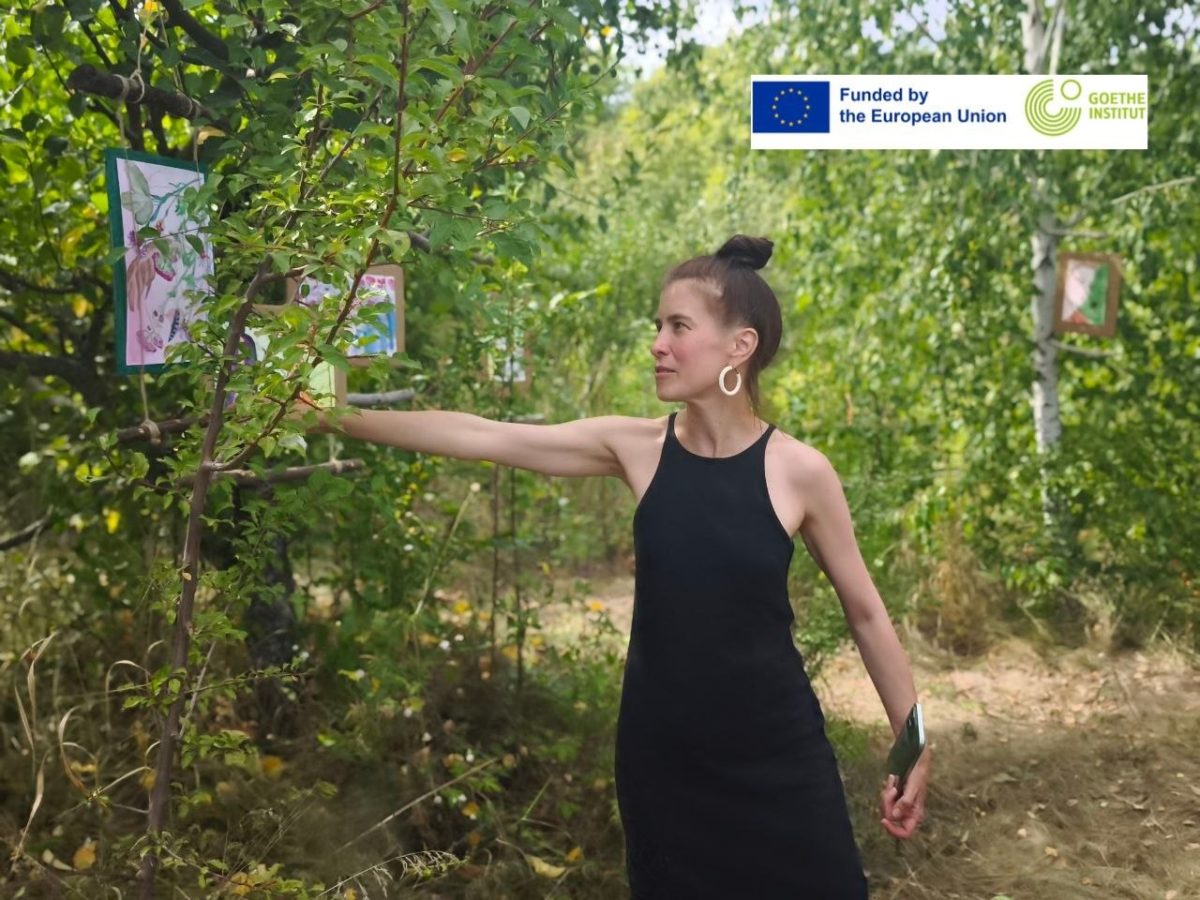
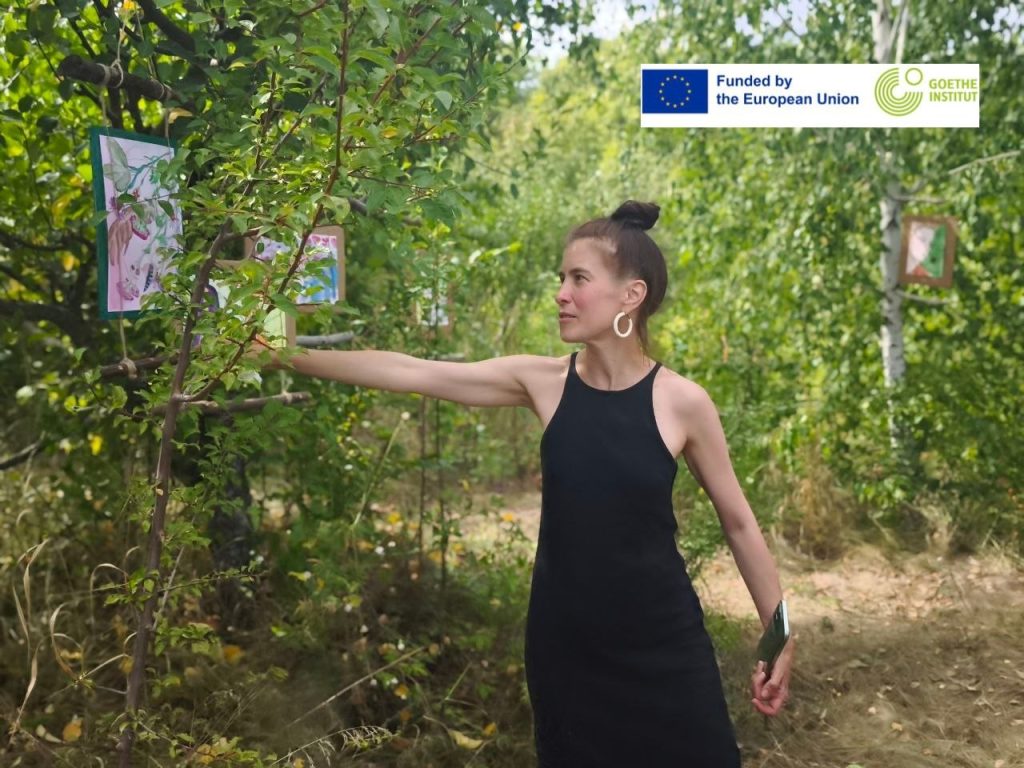
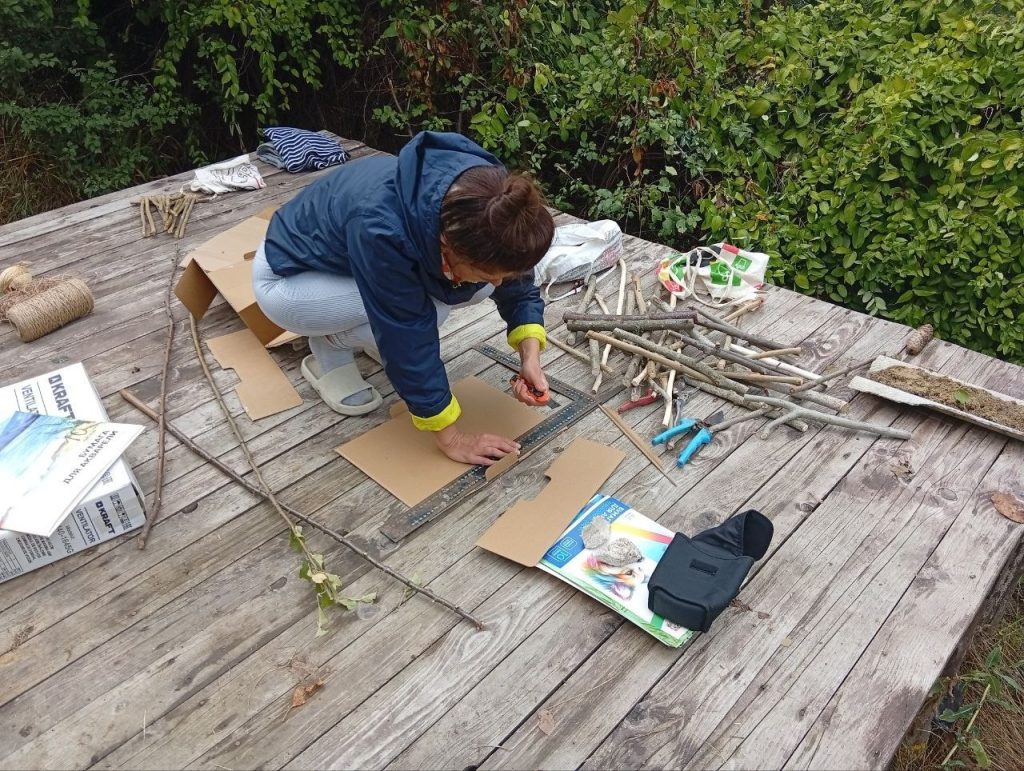
    Dasha helped me come up with the idea and make frames for the drawings from branches and string.

    I cut branches for the frames,

    and I LOVED cutting them!

    I had never done it before!

    And I had no idea that it could be such a pleasant and engaging process!

    I really enjoyed weaving the frames from string and branches.

    At first, I wasn’t very good at it.

    But Dasha, who is a true craftswoman, showed me and taught me,

    and then it started turning into REAL BEAUTY!

    I really enjoyed choosing the place for my Exhibition and hanging it in the trees.

    When Dasha and I chose the location together, I saw a clearing that had become overgrown with vegetation.

    And I felt something! There was something there!

    It was a special clearing where trees had been planted in honor of people who were special to the owner of the estate.

    Immediately, inspiration, energy, and strength appeared —

    and we quickly cleared the clearing of the unnecessary bushes and brambles.

  1. I would like to add that, in order to truly get to know people and interact beautifully with them,

    you need to live together with them, in the same place, for a longer period of time and, most importantly,

    to do something together. Probably, this is the most interesting and, at the same time, the most difficult thing.

    It was wonderful when this “RESONANCE” was created between us, this feeling of being “IN UNISON” — and these are such pleasant and THE MOST POWERFUL moments.

    Right now, I actually feel like crying — it is something very powerful when this “unison” appears,

    a certain mutual attunement, a shared wave.

    And with Dasha, I remember this feeling very clearly — when we went into the forest, made things together from clay near the spring, talked from the heart,

    shared memories, and swam in the forest lake.

    And it is a completely different feeling when we are on the estate grounds and when we go out into the wild forest.

    In the forest, you can hear yourself better.

    I felt how the forest interacts with me.

    And one day, Dasha and I were sitting by a spring in the forest, talking quietly and working with clay,

    and two deer came to drink — an adult one and a younger one.

    That moment was SO BEAUTIFUL…

    I felt that we had merged with Nature, with the forest, that we had merged with its silence and rediscovered our own inner silence,

    and the deer did not sense any danger from us.

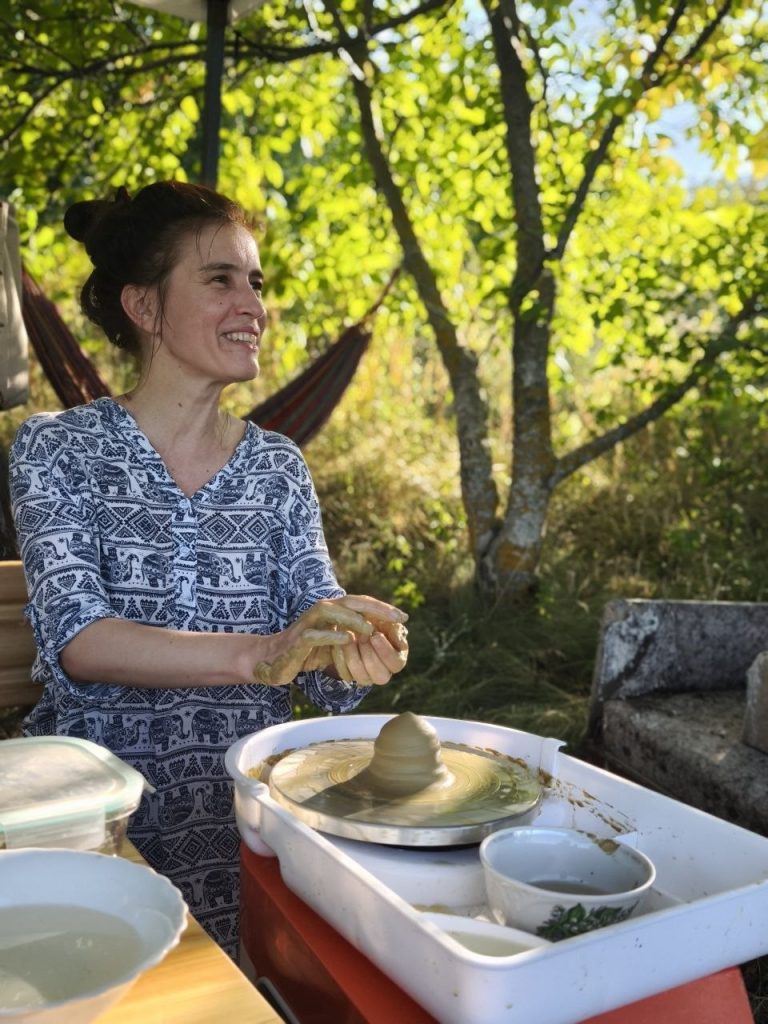
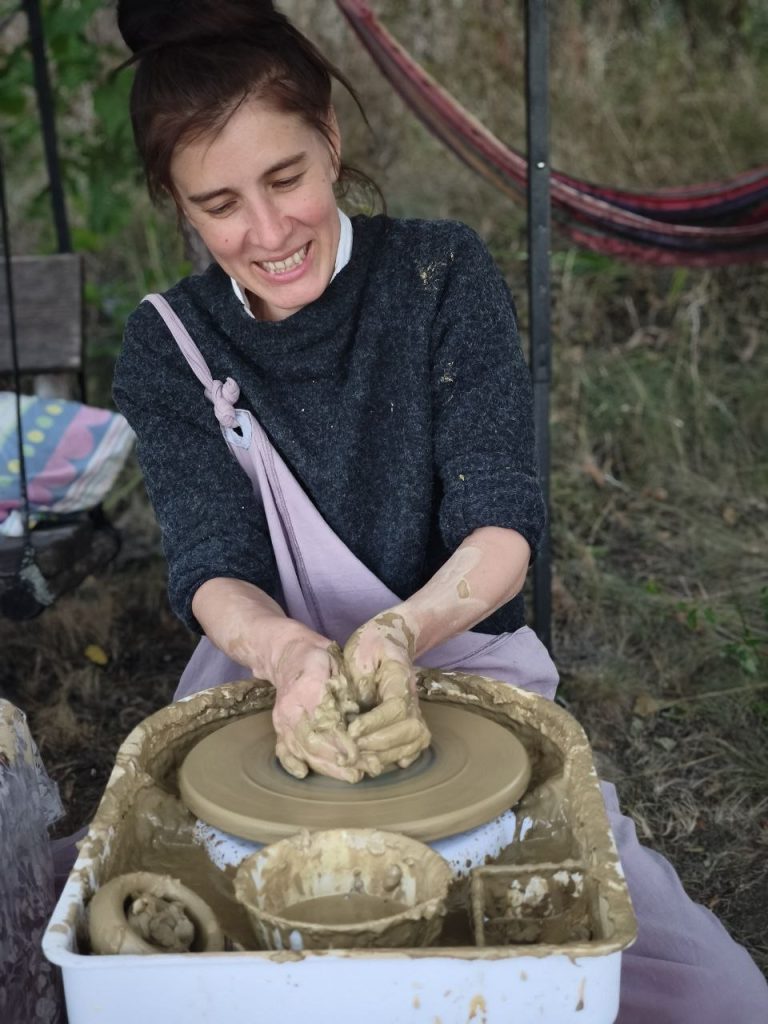
    And, as it seems to me, when we worked with clay in the forest, the pieces we created turned out to be more interesting.

8. I also really enjoyed leading the pottery wheel workshop. I had missed it so much.

It was a long-awaited reunion! It was pure HAPPINESS!

I was glowing with joy!

Working at the pottery wheel centers you and brings you back to yourself.

At the workshop, I wanted people to experience this feeling.

When you feel centered within yourself, it becomes easier to center the clay on the wheel, and the piece turns out well.

And when I helped Dasha make pieces on the wheel, that was also a form of co-creation.

I really loved the way Dasha worked. She did everything slowly and calmly.

We enriched each other so much, we “pollinated” each other,

we learned something from one another,

and we noticed a few little “life hacks” in each other’s way of working.

And that was simply SO COOL!

  1. I would like to add a few more things about the “adventures” and intense experiences I had here.

    First of all — as I mentioned before — this was the first time I ever cut wood with a saw!

    It was also the first time I heated the wood-fired sauna all by myself!

    It was such a great experience when the organizers, Vlad and Sveta, left for a little while — and I immediately felt that “difficulties and exciting adventures” were about to begin :))

    We had some interruptions in the water supply, and we managed to cope with them.

    Then there was a very strong wind and a torrential downpour, with the wind blowing sideways. Dasha and I tried to save the tent. We had to take it down in the middle of the very strong wind, and the tent absolutely refused to cooperate.

    At one point, we almost gave up, but in the end, we managed to do it.

    The torrential rain also flooded the second floor through an open window.

    All these events really “activated” me.

    Because we had to solve the problem right there and then, I felt my Adult Nina coming forward — the part of me that, when necessary, simply gets up and does what needs to be done, without unnecessary emotions and without overthinking or doubting.

    It felt good and gave me more confidence in myself.

    I also want to say something about ceramics!

    This process fascinates me!

    HOW is it possible that just a short while before, it was almost nothing but earth,

    simply clay taken from the ground,

    and then, through some kind of magic,

    with the help of our hands and whatever manifests through us,

    it transforms into BEAUTY!???? 😍

    My pieces developed a certain style, while Dasha’s were completely different!

    From exactly the same clay!

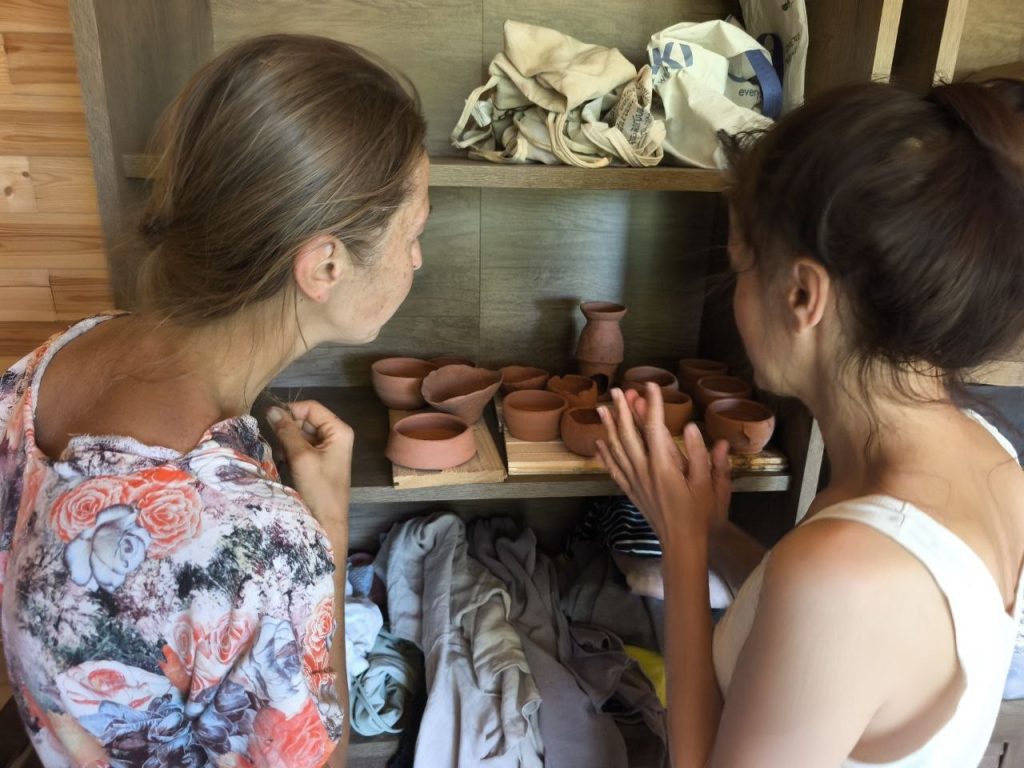
    And it is so amazing that Vlad and Sveta have a kiln for firing ceramics, and that we were able to fire our pieces and SEE

    how, from this soft, dark-gray mass,

    after firing, such wonderful objects appear, with such a beautiful terracotta color, so resonant and alive —

    TRUE WORKS OF ART!

    It is simply AMAZING!!!

10. I also want to say that all these people who were here — the Art Residency participants and the organizers — inspired me by helping me realize that you simply have to TAKE ACTION AND DO IT, no matter what, to keep moving forward through fear, doubts, and uncertainty — just KEEP GOING,

just TAKE ACTION AND DO IT.

My interactions with the Art Residency participants inspired me to get involved in music, singing, working with clay, drawing, and dancing — and I want to give these processes more attention in my life,

because they give me so much Energy and Inspiration,

they give me that something that makes me feel alive.

You can live like a “robot,” but you can also live and be ALIVE.

And my intention now is to bring all this Vitality, this Life that was activated here, into my everyday life.

I really want to live in the countryside. I have felt this for a long time — I want to live in a House, I want to plant things, grow things,

to shape things from clay, to LOVE everything I do and to do everything I love.

This makes me feel so alive, and that is when the real Nina awakens inside me — Alive Nina, who expresses herself, much more interesting than “robot” Nina :)))

The one who does the same things, thinks the same thoughts, believes in the same narrow ideas, and goes around in circles.

And the most important thing I want is TO TAKE ACTION.

If you do something, then IT GETS DONE! And there is a result!

PRIVACY POLICY

Category: EN

Last updated: August 2026

The information portal homestead.md (hereinafter referred to as the “Site”), operated by A.O. Pădurea Noastră (hereinafter referred to as the “Operator”), respects the right to privacy and is committed to protecting the personal data of its visitors.

This Privacy Policy has been prepared in accordance with Law No. 195/2024 of the Republic of Moldova on the Protection of Personal Data (which transposes the European Union’s General Data Protection Regulation — GDPR). The text below explains what data we collect, how we use it, and what your rights are.


1. What personal data do we collect?

We collect only the minimum data necessary for the proper operation of the news website and to improve your experience:

  • Data provided voluntarily: First name, last name, or email address when you subscribe to our newsletter, leave comments on articles, or contact us through forms on the Site.
  • Data collected automatically (Cookies and Technical Data): IP address, browser type, operating system, pages viewed on our Site, time spent on a page, and traffic source.

2. Legal basis and purposes of processing

We process your data on the basis of the following legal grounds:

  • Your consent: For sending newsletters and placing non-essential cookies (analytics/advertising).
  • The legitimate interest of the Operator: For securing the Site against cyberattacks, preventing spam in the comments section, and monitoring the overall audience of the Site.

The main purposes are:

  1. Providing and delivering journalistic content and news through the portal.
  2. Monitoring the Site’s performance and analyzing web traffic using statistical tools (such as Google Analytics).
  3. Displaying relevant advertising based on your anonymized preferences.

3. How long do we retain your data?

Your data is stored only for as long as necessary to fulfill the purposes described above:

  • Newsletter subscription data is retained until you choose to unsubscribe (withdraw your consent).
  • Technical data collected through cookies is retained for specific periods, in accordance with the policy applicable to each cookie (usually between 30 days and 2 years).

4. Sharing data with third parties

The Operator does not sell or rent your personal data to third parties. Data may be accessed or transferred exclusively to trusted service providers that help us operate the Site, such as:

  • IT service providers, web hosting providers, and technical maintenance providers.
  • Traffic analytics platforms (e.g., Google LLC) and partner advertising networks (which process data exclusively in the form of anonymized cookie IDs).
  • Public authorities of the Republic of Moldova, only where there is an explicit legal obligation to do so.

5. Your rights under Law No. 195/2024

As a data subject, the new legislation guarantees you the following rights, which you may exercise free of charge:

  • Right of access: You may request confirmation as to whether or not your personal data is being processed, as well as information about such processing.
  • Right to rectification: You may request the correction of inaccurate data or the completion of incomplete data.
  • Right to erasure (“right to be forgotten”): You may request the deletion of your data if consent has been withdrawn or if the data is no longer necessary for the original purpose.
  • Right to restriction of processing: You may temporarily restrict the processing of your data under certain legal conditions.
  • Right to object to processing: You may object at any time to the processing of your data for direct marketing purposes (newsletter).
  • Right to lodge a complaint: If you believe that your rights have been violated, you may contact the National Center for Personal Data Protection of the Republic of Moldova (NCPDP).

6. Data security

We implement modern technical and organizational measures (SSL/HTTPS encrypted connections, firewalls, and strict employee access controls) to ensure a level of security appropriate to the risks of loss, misuse, or unauthorized access to our users’ data.


7. Contact and requests

For any questions regarding this Policy or to exercise your data protection rights, you may contact us directly:

  • Company name: A.O. Pădurea Noastră
  • Postal address: мун. Кишинёв, Alecu Russo 59/4
  • Dedicated email: padurea.noastra.ao@gmail.com

For Moldovans, the best place for recreation is the Codrii and their biodiversity (Study)

Category: EN

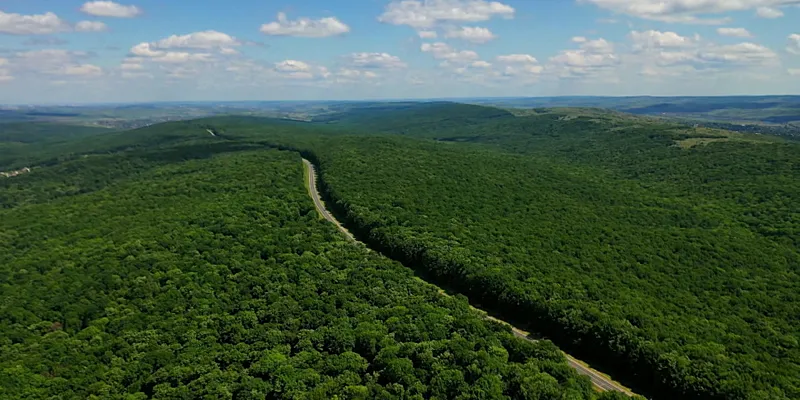
Resting in Moldova’s Codrii forests can be not just pleasant, but truly healing—and in some cases even more beneficial for mental health than traveling abroad. This conclusion is supported by the results of a new scientific study on the impact of natural sounds and biodiversity on human well-being.

Why the Codrii?

The study found that soundscapes of local forests have a stronger positive effect on the human psyche than the sounds of “exotic” natural environments. This means that for people living in Moldova, native forests—such as the Codrii—may be the most restorative.

Key findings:

  • Sounds of local forests improve mental well-being more than sounds of unfamiliar ecosystems
  • The greater the diversity of animals, the stronger the feeling of harmony and even awe
  • Perceiving rich wildlife is directly linked to improved mood
  • However, “chaotic” acoustic diversity (without understanding its meaning) can, on the contrary, create tension

In other words, it’s not just the number of sounds that matters, but their naturalness, familiarity, and connection to living nature.

Biodiversity is the key to inner calm

Humans are evolutionarily connected to their natural environment. The sounds of birds, insects, and rustling leaves create a sense of safety and belonging. That is why forests rich in biodiversity can:

  • reduce stress levels
  • improve concentration
  • restore emotional balance

The Codrii are one of the few regions in Moldova where relatively high species diversity is still preserved. This makes them not only ecologically valuable but also psychologically important for people.

Acacia plantations are good for firewood, but do they improve mental health?

It is important to address a separate issue relevant to the Republic of Moldova: the large-scale planting of acacia trees.

Although acacia is often used for rapid greening efforts, it is important to understand that monocultures are not real forests.

Such plantations:

  • have low biodiversity

  • create poor soundscapes

  • do not form a complete ecosystem

  • may cause a feeling of monotony in people

The study indirectly confirms this: when the sound environment is not perceived as “alive” and rich, it does not provide psychological comfort.

Implications for reforestation

If Moldova wants not just to “plant trees,” but truly restore nature and improve people’s quality of life, it is necessary to:

  • create mixed forests rather than monocultures
  • consider the diversity of plant and animal species
  • build resilient ecosystems
  • preserve local natural communities

Biodiversity is not a luxury—it is the foundation of both environmental and human health.

How the study was conducted

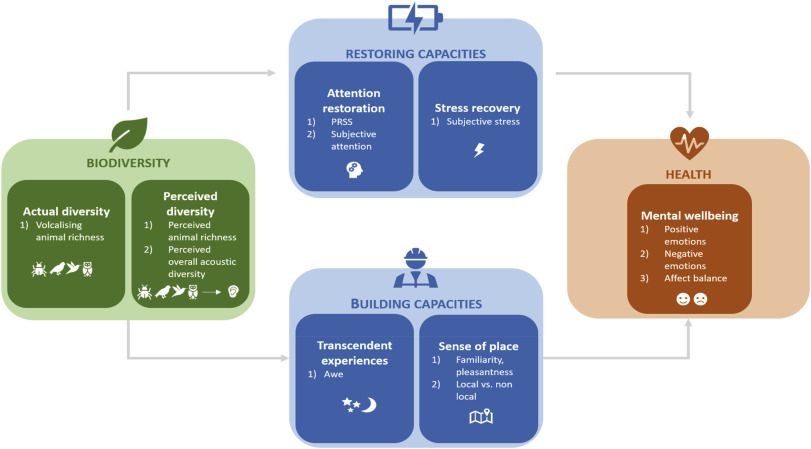
The experiment involved 195 students from Germany. They were asked to listen to recordings of forest soundscapes:

  • with low and high levels of animal sounds
  • from local (temperate) and non-local (tropical) forests

Researchers analyzed:

  • emotional responses
  • stress and well-being levels
  • sense of “place attachment”
  • perception of sound diversity

Main scientific conclusions:

  • Forests richer in animal sounds triggered stronger positive emotions
  • Local forests were perceived as more pleasant and restorative
  • Perceived biodiversity was more important than its objective level
  • Overly complex but “unfamiliar” sound environments reduced comfort

Researchers emphasize that it is not enough to increase diversity—it must be ecologically meaningful and perceptible to humans.


In conclusion, the Codrii are not just a green area on the map. They are a place where nature can truly heal—through sound, atmosphere, and biodiversity.

And perhaps the best отдых for Moldovans is not a flight to another country, but a return to their own nature.

🔗 Study link:
https://www.sciencedirect.com/science/article/pii/S0272494426001088

Beehive on the Balcony

Category: EN

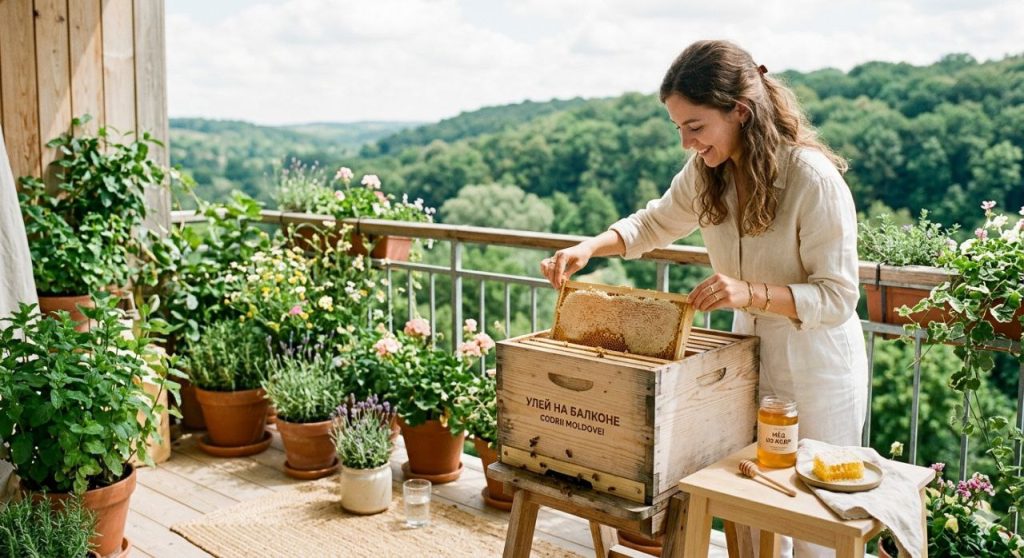
🍯 “Beehive on the Balcony” — a project of support and sustainability.

We are launching a social project that combines two key goals:
💛 helping people
🌱 financial sustainability of environmental projects

We are the team of Pădurea Noastră (Our Forest) from Moldova.
We organize environmental actions, educational programs, create media content, and protect the environment on a legal level.

Today, our capacity largely depends on external funding.
To grow sustainably, we are creating our own source of income — both ecological and social at the same time.


🐝 Why a beekeeping project?

We are launching an apiary that will become:
— a financial foundation for the organization
— a platform for environmental education
— a tool to support people

The apiary will be located in a clean natural area —
in the eco-settlement “Schiastlivoye,” in one of the homesteads near Moldova’s Codri forest 🌳

🐝 How does the project work?

We have created a format with a strong social impact:

👉 you make a donation
👉 we invest it in developing the apiary
👉 and distribute this year’s harvest as follows:

50% — for the development of environmental projects
50% — for vulnerable people in Moldova who need support:

Refugees
— single mothers
— large families
— elderly people
— people with disabilities

Cost of one hive is:

  • 175 euros or
  • 200 US dollars

💬 If you wish,
we can deliver honey to a specific person or family
you would like to support.

❓ Why is it called “Hive on the Balcony”?

We want to give urban residents the opportunity to have clean, natural products on their table without commercial markups —
as if the hive were right at their home.
Where exactly? On the balcony.

At the same time, through this project, we want to introduce people to eco-settlements and a nature-based lifestyle.

🌿 Why does it matter?

This is not just a donation.

It is a contribution that simultaneously:
— helps people here and now
— supports the development of our environmental projects 🌱

Products will be distributed throughout the year as they are harvested:
acacia honey, linden honey, wildflower honey,
as well as pollen, bee bread, and other bee products.


📊 Plans for this year

We plan to launch an apiary with 50 bee colonies.


🌱 About us

A.O. Pădurea Noastră (Our Forest) is an environmental and cultural organization in Moldova.

We combine:
— environmental protection activities
— educational projects
— cultural initiatives

👥 Our team includes 9 core members and more than 100 volunteers

More than 100 volunteers take part in large-scale activities:
forest clean-ups, tree planting, environmental projects,
as well as festivals of traditional culture and heritage,
where ecological awareness is integrated into cultural programs.

We also support eco-settlements in Moldova
and encourage moving from cities to rural areas.


📈 Our achievements:

• Over 20,000 kg of waste collected during 45 eco-actions (2022–2025)
• 10 “Clean Games” held with participation of 500 children and teenagers
• Illegal construction stopped in the Tsypova nature reserve
• Illegal logging and dumps identified
• Compensation secured for cutting down a fig garden in central Chișinău
• Organized the first environmental Reels blogging conference in Moldova

Why River Channelization and “Cleaning” Are a Mistake for Chișinău and Moldova (Research-Based)

Category: EN

For decades, cities around the world—including Chișinău—have tried to “tame” rivers by encasing them in concrete and straightening their channels. It was believed that river canalization would prevent floods, improve drainage, and simplify urban development. However, modern research shows the opposite: concrete riverbeds do not solve the problem—they make it worse.

What happens when rivers are locked in concrete

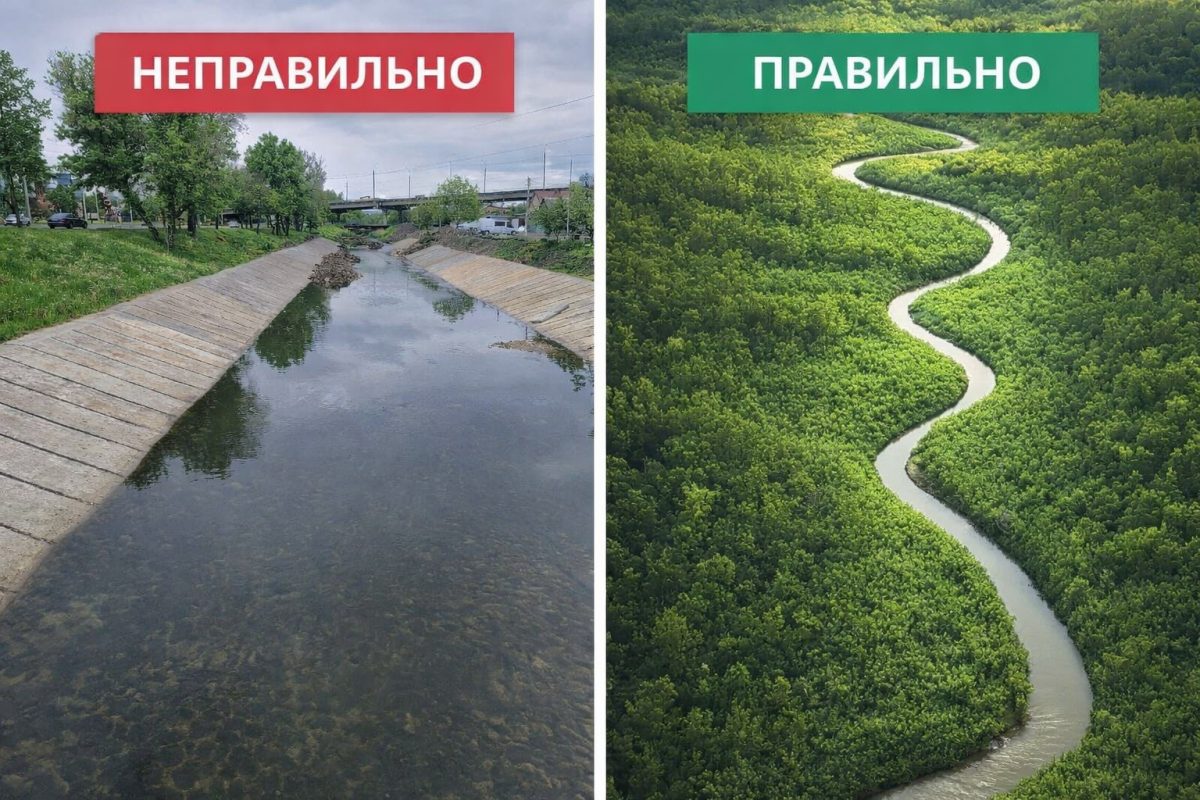
Hydrological studies by the US Geological Survey as early as the 20th century (Leopold & Wolman, 1960) demonstrated that when a river is confined by concrete banks and its channel is straightened, the flow velocity increases sharply. The river effectively turns into a pipe.

The same process is happening with the Bîc River in Chișinău.

During heavy rainfall, water can no longer spread across the floodplain or be absorbed by vegetation and soils. Instead, it rushes downstream at dangerous speeds.

More recent studies (Brody et al., 2019, Journal of Environmental Management) confirm that cities with heavily channelized rivers suffer greater flood damage—especially under extreme rainfall events, which are becoming more frequent due to climate change.

Concrete does not absorb water, does not filter it, and does not cool the city. It only accelerates the flow and transfers the problem further downstream.

Why are rivers “cleaned” if they flowed naturally for thousands of years?

The core problem is not the rivers themselves, but their straightening.

During the Soviet period, many river sections were straightened to expand agricultural land and to build highways, railways, and other infrastructure.

Today, “cleaning” 1 km of a river in Moldova costs between 800,000 and 1.5 million lei. And these works must be repeated again and again—the costs never end.

The only sustainable solution is restoring river meanders, not further deepening and straightening channels.

Why are rivers naturally meandering?

Rivers meander because this is nature’s way of dissipating water energy and balancing bank erosion with sediment deposition on floodplains.

Meanders:

  • slow down the flow,

  • reduce the risk of catastrophic floods,

  • support floodplain ecosystems.

Straightening rivers, by contrast, accelerates flow, dries out floodplains, destroys ecosystems, and shifts flood risk downstream.

What natural rivers do—and why it works

Rivers with natural banks, vegetation, and floodplains behave very differently.

The Intergovernmental Science-Policy Platform on Biodiversity and Ecosystem Services (IPBES, UN, 2019) shows that restored riverbanks, wetlands, and floodplains can:

  • reduce flood peaks by 20–40%,

  • slow water flow,

  • recharge groundwater,

  • filter pollutants before they enter the river.

This is exactly what the Bîc River and many small rivers of Moldova—including the Răut River and its tributaries—are lacking today.

Nature is cheaper than concrete

According to the World Bank (2019), every 1 euro invested in nature-based and sustainable infrastructure saves up to 4 euros in disaster recovery costs.

The OECD (2020) emphasizes that:

  • concrete solutions require constant repairs,

  • their costs increase with every extreme flood,

  • they adapt poorly to changing climate conditions.

For Chișinău, this means millions of lei spent not on urban development, but on dealing with the consequences of outdated approaches.

Restored rivers bring life back

Research by Palmer et al. (2010, Science) shows that river restoration leads to:

  • the return of fish,

  • increased bird populations,

  • recovery of pollinators,

  • improved water quality within 3–5 years.

For the Răut River and its tributaries, this is a real chance to restore ecosystem functions lost due to channel straightening, removal of riparian vegetation, and agricultural pressure.

River corridors are natural air conditioners for cities

Green zones along rivers are not a luxury—they are a climate necessity.

According to Urban Climate research (Gunawardena et al., 2017), green river corridors:

  • reduce air temperatures by 1–3°C,

  • mitigate the urban heat island effect.

For Chișinău, which increasingly suffers from summer heat, restoring the Bîc River is a matter of public health and comfort.

The world is changing its approach—Moldova should too

Around the world, cities are moving away from concrete:

  • Germany and the Netherlands implement the “Room for the River” policy,

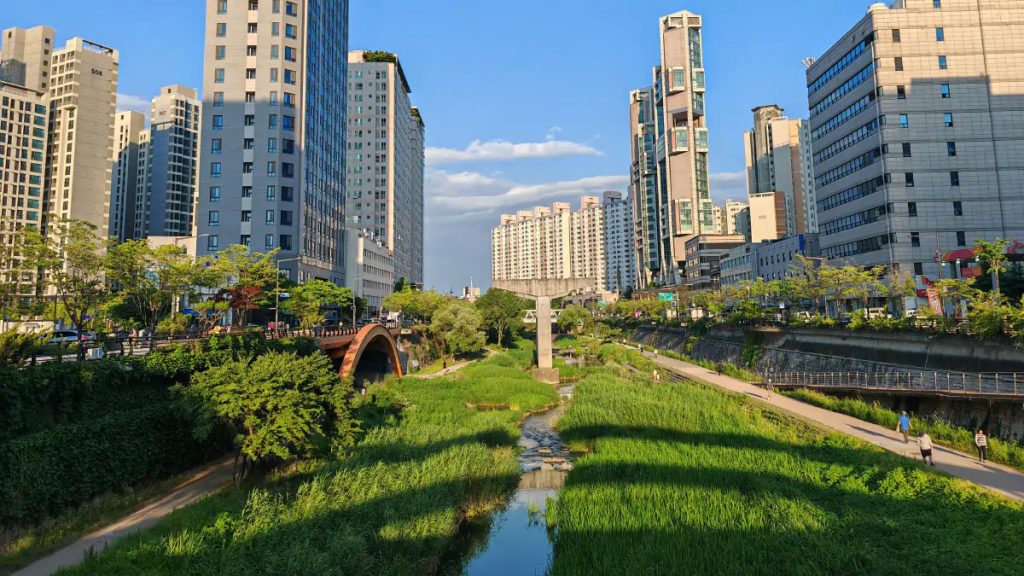
  • Seoul removed concrete and restored the Cheonggyecheon River,

  • France is investing heavily in the renaturalization of small rivers.

Farmers in Ethiopia Have Learned to Restore Forests and Earn Income from Carbon Credits

Category: EN

In southern Ethiopia, in the Humbo district, farmers have demonstrated that forest restoration can be not only an environmental effort but also an economically viable one. The story of this landscape shows how degraded mountain slopes were transformed into a source of sustainable income for local communities through collective action and carbon financing.

From Barren Mountains to a Living Forest

In 2005, the international organization World Vision launched an initiative in Humbo focused on farmer-managed natural forest regeneration. The project covered 2,728 hectares of severely degraded mountainous land. During the first month, specialists held consultations with local communities, paying particular attention to the poorest households that depended on charcoal production and fuelwood collection for survival.

To implement the project, seven cooperatives were established at the kebele level (local administrative units). Their members received training in basic forest management, while people dependent on forest exploitation were offered alternative sources of income. Over time, the cooperatives united into a single union, which today has 5,184 members, about 25% of whom are women.

Resistance, Threats, and First Successes

The path to forest restoration was far from easy. According to Mekonnen Gudjo, chairman of the Hobicha Bada Woyito Mountain Forest Development Cooperative, many residents initially opposed the restrictions.

“People did not want to lose free access to forest resources. When we tried to stop logging and livestock grazing, committee members were pressured and their crops were destroyed,” he recalls.

Tensions escalated to the point where one cooperative chairman was attacked and later died from his injuries. Only after the intervention of local authorities and the organization of security measures was it possible to protect the area and continue the project.

Today, the cooperative manages 372 hectares of restored forest. While it initially had only 25 members, it now includes 935. Some farmers were required by court order to leave land inside the fenced area, while others had to remove eucalyptus plantations that did not align with ecosystem restoration goals.

How Farmer-Managed Restoration Works

The core tool of the project was Farmer-Managed Natural Regeneration (FMNR). This approach is based on regenerating vegetation from living stumps, roots, and seeds. Farmers select the strongest shoots, carry out pruning, and guide tree growth to accelerate biomass accumulation. In addition, seedlings were raised in nurseries and supplementary planting was carried out in open areas.

According to World Vision staff member Mulugeta Zeleke, FMNR is “a low-cost, fast, and easily replicable method for restoring agricultural land, forests, and grazing areas.”

Results became visible within a few years: forest cover reduced the risk of flooding, stabilized rainfall patterns, improved groundwater levels, and even contributed to the return of natural springs. Wildlife returned to the area, and the local microclimate became cooler and more stable.

Carbon Credits: An Economic Turning Point

A major turning point came in 2012, when the Humbo cooperatives began receiving income from the sale of carbon credits. Prior to this, carbon market mechanisms were largely unknown in the Wolaita region, but the project quickly attracted attention and became a model for other communities across the country.

Revenue from carbon credits enabled the cooperative to establish a flour mill offering low prices to local residents, open an office, and rent warehouses and shops. Part of the income is provided to cooperative members as interest-free loans to support their livelihoods.

Each year, specialists measure carbon stocks at 85 sample plots measuring 20×20 meters across the project area. Although income from carbon credits fluctuates, its potential is clear: in 2024 the cooperative earned about 435,000 birr, while in 2025 revenues exceeded 5 million birr. In the near future, the cooperative plans to distribute 10,000 birr each to 500 members.

Lessons from Humbo

The Humbo experience shows that forest restoration is possible even under conditions of severe poverty and social conflict—provided that local communities are genuinely involved and benefits are distributed fairly.

“This project changed my understanding of what is possible. If people believe in an idea and feel ownership of it, they can achieve what seems impossible,” said Dr. Getachew Hiruy of the Commission for Development and Social Services.