For Moldovans, the best place for recreation is the Codrii and their biodiversity (Study)

Tag: Codrii

Resting in Moldova’s Codrii forests can be not just pleasant, but truly healing—and in some cases even more beneficial for mental health than traveling abroad. This conclusion is supported by the results of a new scientific study on the impact of natural sounds and biodiversity on human well-being.

Why the Codrii?

The study found that soundscapes of local forests have a stronger positive effect on the human psyche than the sounds of “exotic” natural environments. This means that for people living in Moldova, native forests—such as the Codrii—may be the most restorative.

Key findings:

  • Sounds of local forests improve mental well-being more than sounds of unfamiliar ecosystems
  • The greater the diversity of animals, the stronger the feeling of harmony and even awe
  • Perceiving rich wildlife is directly linked to improved mood
  • However, “chaotic” acoustic diversity (without understanding its meaning) can, on the contrary, create tension

In other words, it’s not just the number of sounds that matters, but their naturalness, familiarity, and connection to living nature.

Biodiversity is the key to inner calm

Humans are evolutionarily connected to their natural environment. The sounds of birds, insects, and rustling leaves create a sense of safety and belonging. That is why forests rich in biodiversity can:

  • reduce stress levels
  • improve concentration
  • restore emotional balance

The Codrii are one of the few regions in Moldova where relatively high species diversity is still preserved. This makes them not only ecologically valuable but also psychologically important for people.

Acacia plantations are good for firewood, but do they improve mental health?

It is important to address a separate issue relevant to the Republic of Moldova: the large-scale planting of acacia trees.

Although acacia is often used for rapid greening efforts, it is important to understand that monocultures are not real forests.

Such plantations:

  • have low biodiversity

  • create poor soundscapes

  • do not form a complete ecosystem

  • may cause a feeling of monotony in people

The study indirectly confirms this: when the sound environment is not perceived as “alive” and rich, it does not provide psychological comfort.

Implications for reforestation

If Moldova wants not just to “plant trees,” but truly restore nature and improve people’s quality of life, it is necessary to:

  • create mixed forests rather than monocultures
  • consider the diversity of plant and animal species
  • build resilient ecosystems
  • preserve local natural communities

Biodiversity is not a luxury—it is the foundation of both environmental and human health.

How the study was conducted

The experiment involved 195 students from Germany. They were asked to listen to recordings of forest soundscapes:

  • with low and high levels of animal sounds
  • from local (temperate) and non-local (tropical) forests

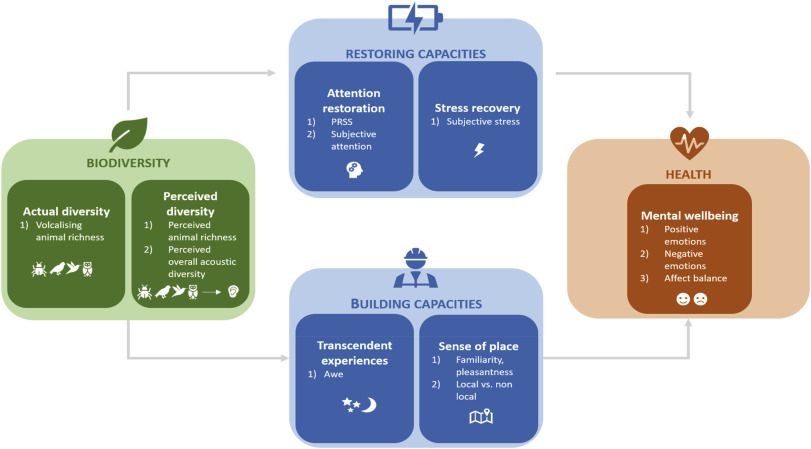
Researchers analyzed:

  • emotional responses
  • stress and well-being levels
  • sense of “place attachment”
  • perception of sound diversity

Main scientific conclusions:

  • Forests richer in animal sounds triggered stronger positive emotions
  • Local forests were perceived as more pleasant and restorative
  • Perceived biodiversity was more important than its objective level
  • Overly complex but “unfamiliar” sound environments reduced comfort

Researchers emphasize that it is not enough to increase diversity—it must be ecologically meaningful and perceptible to humans.


In conclusion, the Codrii are not just a green area on the map. They are a place where nature can truly heal—through sound, atmosphere, and biodiversity.

And perhaps the best отдых for Moldovans is not a flight to another country, but a return to their own nature.

🔗 Study link:
https://www.sciencedirect.com/science/article/pii/S0272494426001088
Pentru moldoveni, cel mai bun loc de odihnă — Codrii și biodiversitatea lor (Studiu)

Tag: Codrii

Odihna în Codrii Moldovei poate fi nu doar plăcută, ci cu adevărat vindecătoare — iar în unele cazuri chiar mai benefică pentru sănătatea mintală decât călătoriile în străinătate. La această concluzie conduc rezultatele unui nou studiu științific dedicat influenței sunetelor naturii și biodiversității asupra stării de bine a omului.

De ce anume Codrii?

Studiul a arătat:
peisajele sonore ale pădurilor locale au un efect pozitiv mai puternic asupra psihicului decât sunetele unor teritorii naturale „exotice”. Aceasta înseamnă că, pentru locuitorii Moldovei, anume pădurile natale — precum Codrii — pot avea cel mai puternic efect de refacere.

Concluzii cheie:

  • Sunetele pădurii locale îmbunătățesc starea de bine psihică mai mult decât sunetele ecosistemelor necunoscute
  • Cu cât diversitatea animalelor este mai mare, cu atât mai puternică este senzația de armonie și chiar de admirație profundă
  • Percepția bogăției naturii vii este direct legată de îmbunătățirea dispoziției
  • Dar diversitatea acustică „haotică” (fără a-i înțelege sensul) poate, dimpotrivă, provoca tensiune

Cu alte cuvinte, nu contează doar numărul sunetelor, ci naturalețea, familiaritatea și legătura lor cu natura vie.

Biodiversitatea — cheia liniștii interioare

Omul este evolutiv legat de mediul său natural. Sunetele păsărilor, insectelor, foșnetul frunzelor — toate acestea creează un sentiment de siguranță și apartenență. De aceea, o pădure cu biodiversitate bogată poate:

  • reduce nivelul de stres
  • îmbunătăți concentrarea
  • restabili echilibrul emoțional

Codrii sunt una dintre puținele regiuni din Moldova unde se mai păstrează o diversitate relativ ridicată de specii. Acest lucru îi face nu doar valoroși din punct de vedere ecologic, ci și importanți psihologic pentru oameni.

Plantațiile de salcâm sunt bune pentru lemne de foc, dar îmbunătățesc ele sănătatea mintală?

Este important să abordăm separat o problemă actuală pentru Republica Moldova: plantările masive de salcâm.

Deși salcâmul este adesea folosit pentru împăduriri rapide, este important de înțeles că:
monoculturile nu sunt o pădure adevărată.

Astfel de plantații:

  • au o biodiversitate scăzută

  • creează un peisaj sonor sărac

  • nu formează un ecosistem complet

  • pot provoca la om senzația de monotonie

Studiul confirmă indirect acest lucru:
atunci când mediul sonor nu este perceput ca „viu” și bogat, el nu oferă confort psihologic.

Concluzii pentru reîmpădurire

Dacă Moldova dorește nu doar să „planteze copaci”, ci să refacă cu adevărat natura și să îmbunătățească calitatea vieții oamenilor, este necesar:

  • să creeze păduri mixte, nu monoculturi
  • să țină cont de diversitatea speciilor de plante și animale
  • să formeze ecosisteme stabile
  • să conserve comunitățile naturale locale

Biodiversitatea nu este un lux, ci baza sănătății atât a naturii, cât și a omului.

Cum a fost realizat studiul

La experiment au participat 195 de studenți din Germania. Aceștia au ascultat înregistrări ale sunetelor de pădure:

  • cu nivel scăzut și ridicat al sunetelor produse de animale
  • din păduri locale (temperate) și ne-locale (tropicale)

Cercetătorii au analizat:

  • reacțiile emoționale
  • nivelul de stres și starea de bine
  • senzația de „legătură cu locul”
  • percepția diversității sonore

Principalele rezultate științifice:

  • Pădurile cu mai multe sunete de animale au generat emoții mai pozitive
  • Pădurile locale au fost percepute ca mai plăcute și mai restorative
  • Percepția biodiversității s-a dovedit mai importantă decât nivelul ei obiectiv
  • Un mediu sonor prea complex, dar „neînțeles”, reduce confortul

Cercetătorii subliniază:
nu este suficient să creștem diversitatea, ci trebuie ca aceasta să fie ecologic coerentă și ușor de perceput de către om.


În concluzie, Codrii nu sunt doar o zonă verde pe hartă. Este un loc unde natura poate cu adevărat să vindece — prin sunete, atmosferă și biodiversitate.

Și, poate, cea mai bună odihnă pentru moldoveni nu este un zbor spre o altă țară, ci întoarcerea la propria natură.

🔗 Link către studiu:
https://www.sciencedirect.com/science/article/pii/S0272494426001088