
“We are facing a period of high temperatures that will last about 80 days,” noted expert Sergiu Dobrojan.
“The flow into the Moldovan segment of the Dniester remains at 100 m³/s,” shares observations from Doctor of Science Ilia Trombitsky.
It’s been over three years since the 2021 COP26 climate summit, where 140 countries, including Moldova, signed a declaration to halt global deforestation by 2030. However, recent data indicates the situation is worsening.
According to the Forest Declaration Assessment 2024, last year, 6.4 million hectares of forest were destroyed worldwide. Additionally, over 62 million hectares suffered degradation due to logging, infrastructure development, and fires. The primary causes include increased demand for meat, soy, palm oil, and nickel.
Moldova, although not among countries with tropical forests, also faces deforestation issues.
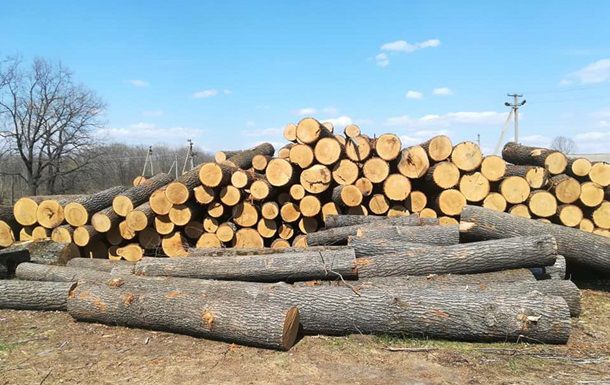
One recent case, according to the prosecutor’s office, involved three men attempting to steal over 4,000 cubic meters of timber in the Anenii Noi district. This is equivalent to approximately 4,000 or 12,000 felled trees for young and mature forests, respectively, corresponding to 0.4 or 1.5 hectares of continuous forest, and valued at 2–4 million lei. For the damage caused, they received a fine of only 67,500 lei! It turns out that minimal fines create favorable conditions for forest theft in Moldova.
On the Moldsilva website, the latest research dates back to 2010, indicating that the organization is likely significantly lagging behind the constantly changing climate indicators.
The organization also faces constant criticism from experts and citizens due to the lack of transparent reporting: how much timber has been cut and where was it sold? What is the quantity in hectares, and does the number of planted hectares exceed the number of felled ones?
Citizens’ and experts’ concerns were confirmed by the latest external audit at the end of 2023, when the Court of Accounts examined the use of 50.2 million lei allocated to Moldsilva. The audit revealed:
Lack of clear criteria for firewood distribution, leading to multiple family members and individuals with alternative heating sources being included in the recipient lists.
Some enterprises, such as the “State Road Administration,” did not report the volumes of harvested timber and its distribution.
The firewood pricing mechanism was deemed defective, contributing to unjustified price increases and reduced fuel accessibility for the population.
Some examples worldwide inspire hope, but overall, the situation is deteriorating.
In Brazil, thanks to the new government’s efforts, deforestation in the Amazon basin decreased by 62% over the year. However, in the Cerrado savanna—another important biome—deforestation rates increased by 68%. Indonesia, which previously succeeded in curbing deforestation, is again showing growth—57% in one year.
Experts emphasize: voluntary measures are ineffective; strict regulation and international funding for forest protection are required. The EU plans to introduce a ban on importing products associated with deforestation—coffee, cocoa, furniture.
In Moldova, with the lowest afforestation rates in Europe, no new bans are being introduced, and instead, oaks continue to be cut for furniture factories and domestic production.
While there are initiatives aimed at forest restoration, the national afforestation campaign aims to increase forest cover to 15% of the country’s total area (currently about 11%). Experts note that this is insufficient—there is a need to tighten responsibility for illegal logging and strengthen land use control.
Some experts and eco-activists even call for a complete ban on logging across the country for the next 10 years.
The Ministry of Ecology does not comment on these statements; however, the refusal of logging is one of the main goals of COP29, of which the Republic of Moldova is a member. But whether Moldova actually aims to refuse logging is unknown! Officials have not commented on this conference goal.
We have only six years left until the global deadline—2030. If we continue to turn a blind eye to deforestation, Moldova risks losing its natural protection against droughts, erosion, and climate change.