Eco-activists demand accountability in forest restoration projects

Tag: sustainable development

Moldova is about to receive 200 million euros for forest planting, and there are only two possible outcomes: either we become a beautiful, prosperous European country, or we’ll see neither the forests nor the money.

This opinion was expressed by eco-activist Vladislav Sandulyak, one of the leaders of the “Camp of Mother Earth” team and a student at the Faculty of Ecology at the Technical University of Moldova, as reported by Noi.md.

He noted that the audit reports of the Court of Accounts give strong reasons to doubt the activities of Moldsilva.

The most recent report points out issues such as: violations in the distribution of subsidies; lack of transparency and oversight; irregularities in the authorization of logging; non-transparent pricing; violations in the distribution of firewood; exceeding established limits; flaws in the pricing methodology; and breaches in the subsidy allocation mechanism.

“Illegal logging is a separate story altogether. The latest offenders who stole forest resources worth 2–4 million lei were fined just 67,500 lei. That means the state has created favorable conditions for forest theft, especially when foresters are paid miserable wages. I dare to say that if all these violations exist, they will also affect the 200 million euros in European credit funds,” emphasized the eco-activist and student.

According to him, such cases have already been reported in the press during sapling planting. For example, auditors visited the Vadul-lui-Vodă forestry district, where documents claimed 1,866 acacia trees had been planted on 0.8 hectares. However, auditors suspected that the work was not done. They presented slides with photos showing grass and trampled shrubs instead of forest and trees.

“Logically, it should be the minister’s job to restore order in the institutions under his authority, but instead, the minister is actively defending the Moldsilva agency, even recording videos to ‘debunk fakes’. In one of his videos, he holds up some papers, claiming they are permits for legal logging and saying the documents will be uploaded to Moldsilva’s website within a week. A month has passed — and the documents are still missing. Maybe some experts can explain why these documents aren’t made publicly available, or maybe the minister himself can clarify this?” said Vladislav Sandulyak.

He also pointed out that the agency’s website references its last study from 2010.

“As far as I understand, in light of global climate change, it is necessary to conduct a new study to determine exactly how much forest we can afford to cut and how much must be preserved due to global shifts. But Moldsilva is most likely still working under old Soviet systems, where the priority of state logic was to increase production and extract resources — not to adapt to drought. Maybe we can find experts or ask the minister whether the ministry plans to study recent climate trends and adjust logging accordingly to combat heat and drought?” asked the eco-activist.

According to him, if authorities claim they plan to plant many trees as a solution, it is already too late. The trees they plant now will yield results only decades from now.

“But we need action yesterday! That’s why preserving old trees — which are already providing shade and retaining soil moisture — is the only effective way to combat drought today, not 30 years from now,” emphasized Vladislav Sandulyak.
Deforestation Continues to Increase Despite Global Pledges. How Is Moldova Responding?

Tag: sustainable development

Recent months’ news warns of significant changes:

“We are facing a period of high temperatures that will last about 80 days,” noted expert Sergiu Dobrojan.

“The flow into the Moldovan segment of the Dniester remains at 100 m³/s,” shares observations from Doctor of Science Ilia Trombitsky.

It’s been over three years since the 2021 COP26 climate summit, where 140 countries, including Moldova, signed a declaration to halt global deforestation by 2030. However, recent data indicates the situation is worsening.

According to the Forest Declaration Assessment 2024, last year, 6.4 million hectares of forest were destroyed worldwide. Additionally, over 62 million hectares suffered degradation due to logging, infrastructure development, and fires. The primary causes include increased demand for meat, soy, palm oil, and nickel.

Moldova, although not among countries with tropical forests, also faces deforestation issues.

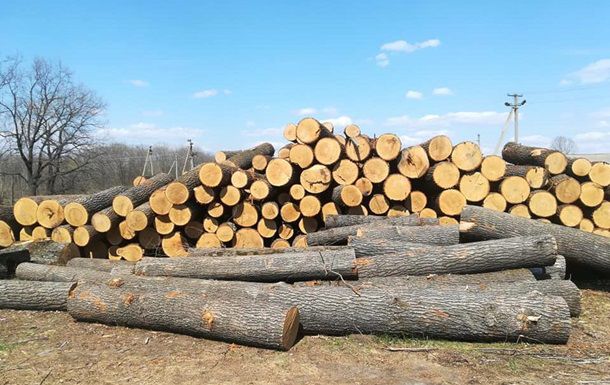
One recent case, according to the prosecutor’s office, involved three men attempting to steal over 4,000 cubic meters of timber in the Anenii Noi district. This is equivalent to approximately 4,000 or 12,000 felled trees for young and mature forests, respectively, corresponding to 0.4 or 1.5 hectares of continuous forest, and valued at 2–4 million lei. For the damage caused, they received a fine of only 67,500 lei! It turns out that minimal fines create favorable conditions for forest theft in Moldova.

On the Moldsilva website, the latest research dates back to 2010, indicating that the organization is likely significantly lagging behind the constantly changing climate indicators.

The organization also faces constant criticism from experts and citizens due to the lack of transparent reporting: how much timber has been cut and where was it sold? What is the quantity in hectares, and does the number of planted hectares exceed the number of felled ones?

Citizens’ and experts’ concerns were confirmed by the latest external audit at the end of 2023, when the Court of Accounts examined the use of 50.2 million lei allocated to Moldsilva. The audit revealed:

  • Lack of clear criteria for firewood distribution, leading to multiple family members and individuals with alternative heating sources being included in the recipient lists.

  • Some enterprises, such as the “State Road Administration,” did not report the volumes of harvested timber and its distribution.

  • The firewood pricing mechanism was deemed defective, contributing to unjustified price increases and reduced fuel accessibility for the population.

Some examples worldwide inspire hope, but overall, the situation is deteriorating.

In Brazil, thanks to the new government’s efforts, deforestation in the Amazon basin decreased by 62% over the year. However, in the Cerrado savanna—another important biome—deforestation rates increased by 68%. Indonesia, which previously succeeded in curbing deforestation, is again showing growth—57% in one year.

Experts emphasize: voluntary measures are ineffective; strict regulation and international funding for forest protection are required. The EU plans to introduce a ban on importing products associated with deforestation—coffee, cocoa, furniture.

In Moldova, with the lowest afforestation rates in Europe, no new bans are being introduced, and instead, oaks continue to be cut for furniture factories and domestic production.

While there are initiatives aimed at forest restoration, the national afforestation campaign aims to increase forest cover to 15% of the country’s total area (currently about 11%). Experts note that this is insufficient—there is a need to tighten responsibility for illegal logging and strengthen land use control.

Some experts and eco-activists even call for a complete ban on logging across the country for the next 10 years.

The Ministry of Ecology does not comment on these statements; however, the refusal of logging is one of the main goals of COP29, of which the Republic of Moldova is a member. But whether Moldova actually aims to refuse logging is unknown! Officials have not commented on this conference goal.

We have only six years left until the global deadline—2030. If we continue to turn a blind eye to deforestation, Moldova risks losing its natural protection against droughts, erosion, and climate change.

Ancient Oaks of Moldova – Preserve or Cut Down?

Tag: sustainable development

In the Republic of Moldova, the active deforestation of ancient oak trees continues.

The logic seems simple: if a tree has reached a certain age, it can be cut down. However, such a policy has serious ecological consequences, which experts are warning about.

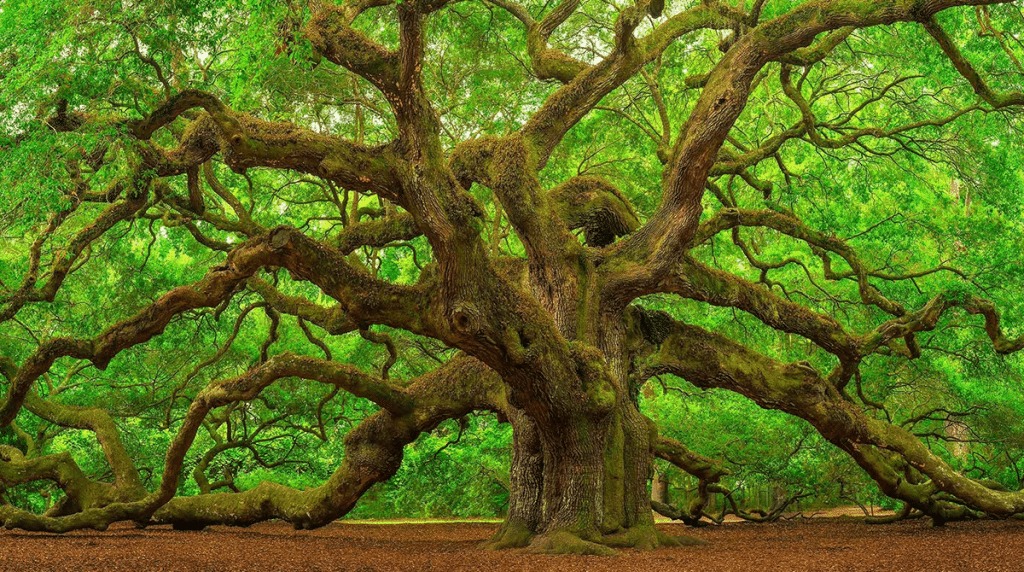
Doctor of Biological Sciences Ilia Trombitchi compares the current forestry approach to an absurd logic: trees are not pigs, and the older they are, the more benefits they bring to the ecosystem. This principle has long been recognized abroad. For example, in the USA, the US Forestry Service understands the importance of old trees in maintaining the hydrological regime in the context of climate change. There, the focus is on removing small and medium-sized trees to prevent wildfires and improve growing conditions for older trees. Moreover, the cut trees are given to companies for free, and they are even paid for their work.
In Moldova, however, the situation is the opposite: the older a tree is, the more likely it is to be cut down. This leads to the depletion of fauna – bats, dormice, and rare bird species disappear. Water sources dry up. A prime example is the Hârbovăț forest along the road to Bender.

Twenty to thirty years ago, oaks were massively cut down, leaving only a few trees for seeds. However, instead of a new oak forest appearing, acacia has spread, which does not contribute to the formation of groundwater. As a result, the region faces droughts, and the ecosystem becomes increasingly impoverished.

Such consequences require a revision of approaches to forest management. We need to change our priorities: instead of cutting down ancient oaks, we should invest in programs for their conservation and in sustainable forest management. Otherwise, the Republic of Moldova risks losing not only its forests but also its water resources, which are crucial for the country’s future.