Why River Channelization and “Cleaning” Are a Mistake for Chișinău and Moldova (Research-Based)

Tag: climate change

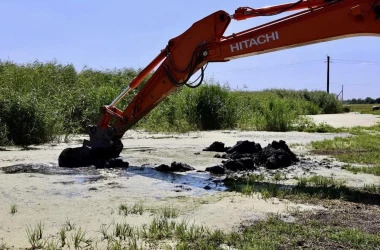
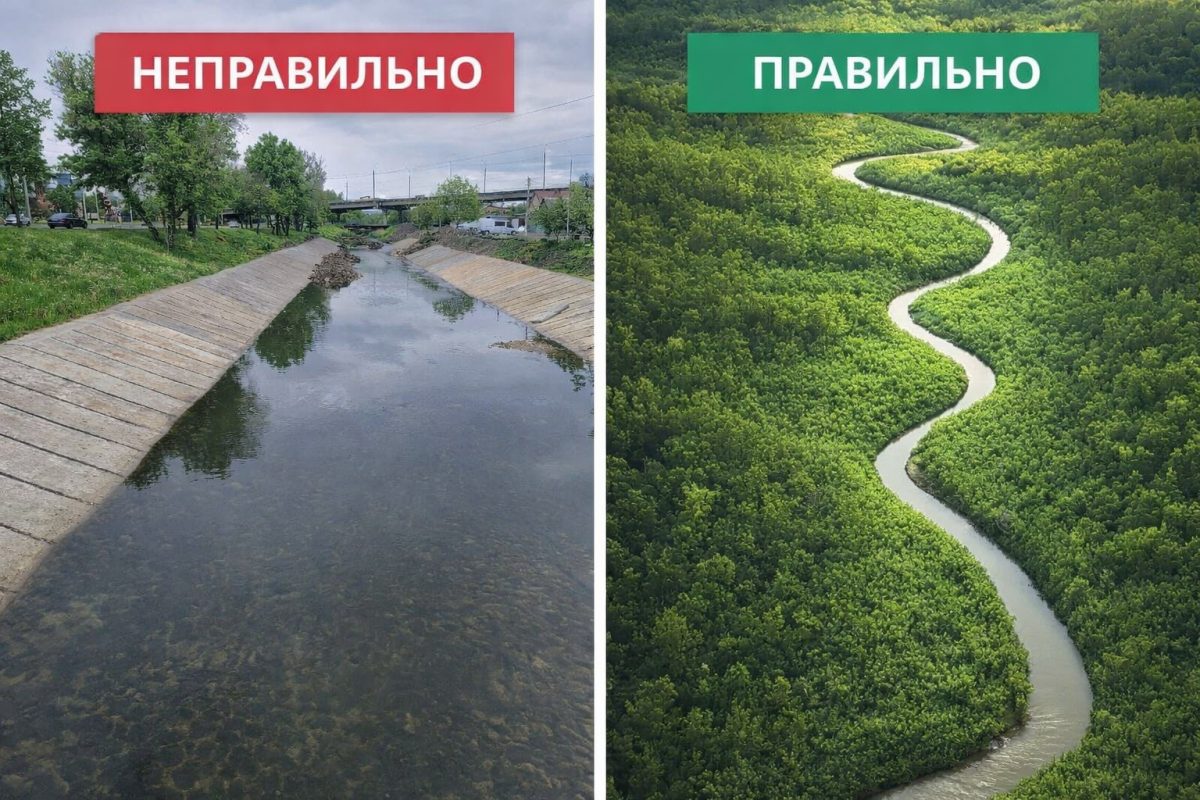
For decades, cities around the world—including Chișinău—have tried to “tame” rivers by encasing them in concrete and straightening their channels. It was believed that river canalization would prevent floods, improve drainage, and simplify urban development. However, modern research shows the opposite: concrete riverbeds do not solve the problem—they make it worse.
What happens when rivers are locked in concrete

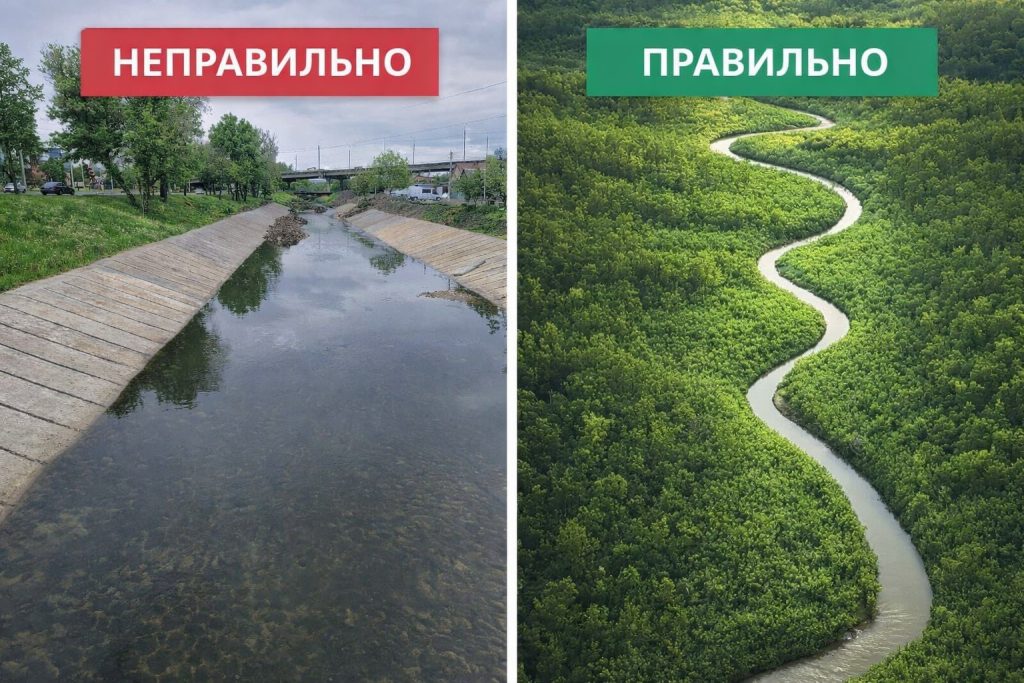
Hydrological studies by the US Geological Survey as early as the 20th century (Leopold & Wolman, 1960) demonstrated that when a river is confined by concrete banks and its channel is straightened, the flow velocity increases sharply. The river effectively turns into a pipe.

The same process is happening with the Bîc River in Chișinău.

During heavy rainfall, water can no longer spread across the floodplain or be absorbed by vegetation and soils. Instead, it rushes downstream at dangerous speeds.

More recent studies (Brody et al., 2019, Journal of Environmental Management) confirm that cities with heavily channelized rivers suffer greater flood damage—especially under extreme rainfall events, which are becoming more frequent due to climate change.

Concrete does not absorb water, does not filter it, and does not cool the city. It only accelerates the flow and transfers the problem further downstream.

Why are rivers “cleaned” if they flowed naturally for thousands of years?

The core problem is not the rivers themselves, but their straightening.

During the Soviet period, many river sections were straightened to expand agricultural land and to build highways, railways, and other infrastructure.

Today, “cleaning” 1 km of a river in Moldova costs between 800,000 and 1.5 million lei. And these works must be repeated again and again—the costs never end.

The only sustainable solution is restoring river meanders, not further deepening and straightening channels.

Why are rivers naturally meandering?

Rivers meander because this is nature’s way of dissipating water energy and balancing bank erosion with sediment deposition on floodplains.

Meanders:

  • slow down the flow,

  • reduce the risk of catastrophic floods,

  • support floodplain ecosystems.

Straightening rivers, by contrast, accelerates flow, dries out floodplains, destroys ecosystems, and shifts flood risk downstream.

What natural rivers do—and why it works

Rivers with natural banks, vegetation, and floodplains behave very differently.

The Intergovernmental Science-Policy Platform on Biodiversity and Ecosystem Services (IPBES, UN, 2019) shows that restored riverbanks, wetlands, and floodplains can:

  • reduce flood peaks by 20–40%,

  • slow water flow,

  • recharge groundwater,

  • filter pollutants before they enter the river.

This is exactly what the Bîc River and many small rivers of Moldova—including the Răut River and its tributaries—are lacking today.

Nature is cheaper than concrete

According to the World Bank (2019), every 1 euro invested in nature-based and sustainable infrastructure saves up to 4 euros in disaster recovery costs.

The OECD (2020) emphasizes that:

  • concrete solutions require constant repairs,

  • their costs increase with every extreme flood,

  • they adapt poorly to changing climate conditions.

For Chișinău, this means millions of lei spent not on urban development, but on dealing with the consequences of outdated approaches.

Restored rivers bring life back

Research by Palmer et al. (2010, Science) shows that river restoration leads to:

  • the return of fish,

  • increased bird populations,

  • recovery of pollinators,

  • improved water quality within 3–5 years.

For the Răut River and its tributaries, this is a real chance to restore ecosystem functions lost due to channel straightening, removal of riparian vegetation, and agricultural pressure.

River corridors are natural air conditioners for cities

Green zones along rivers are not a luxury—they are a climate necessity.

According to Urban Climate research (Gunawardena et al., 2017), green river corridors:

  • reduce air temperatures by 1–3°C,

  • mitigate the urban heat island effect.

For Chișinău, which increasingly suffers from summer heat, restoring the Bîc River is a matter of public health and comfort.

The world is changing its approach—Moldova should too

Around the world, cities are moving away from concrete:

  • Germany and the Netherlands implement the “Room for the River” policy,

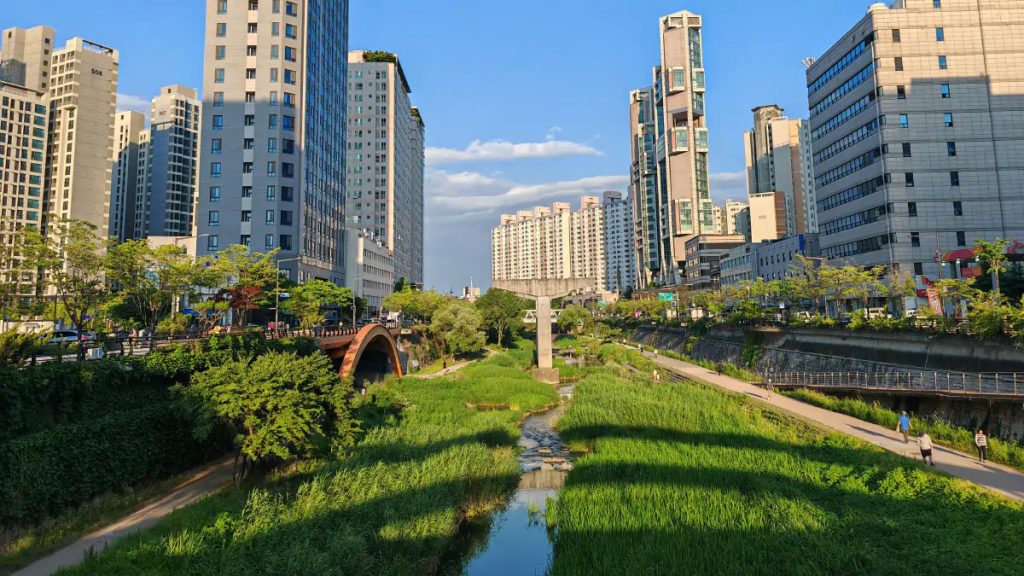
  • Seoul removed concrete and restored the Cheonggyecheon River,

  • France is investing heavily in the renaturalization of small rivers.
Farmers in Ethiopia Have Learned to Restore Forests and Earn Income from Carbon Credits

Tag: climate change

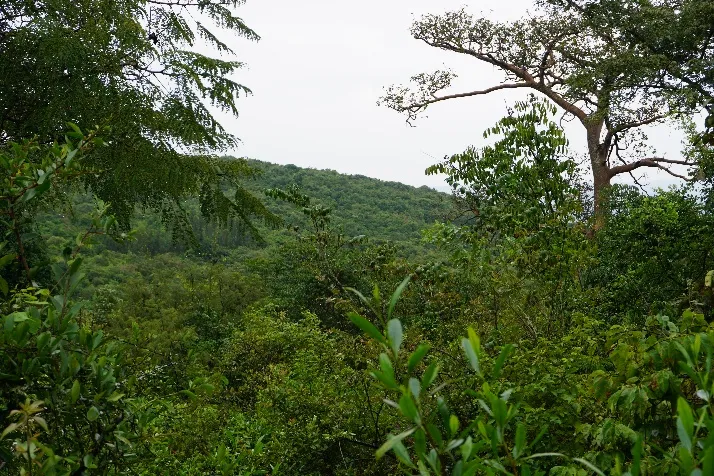
In southern Ethiopia, in the Humbo district, farmers have demonstrated that forest restoration can be not only an environmental effort but also an economically viable one. The story of this landscape shows how degraded mountain slopes were transformed into a source of sustainable income for local communities through collective action and carbon financing.

From Barren Mountains to a Living Forest

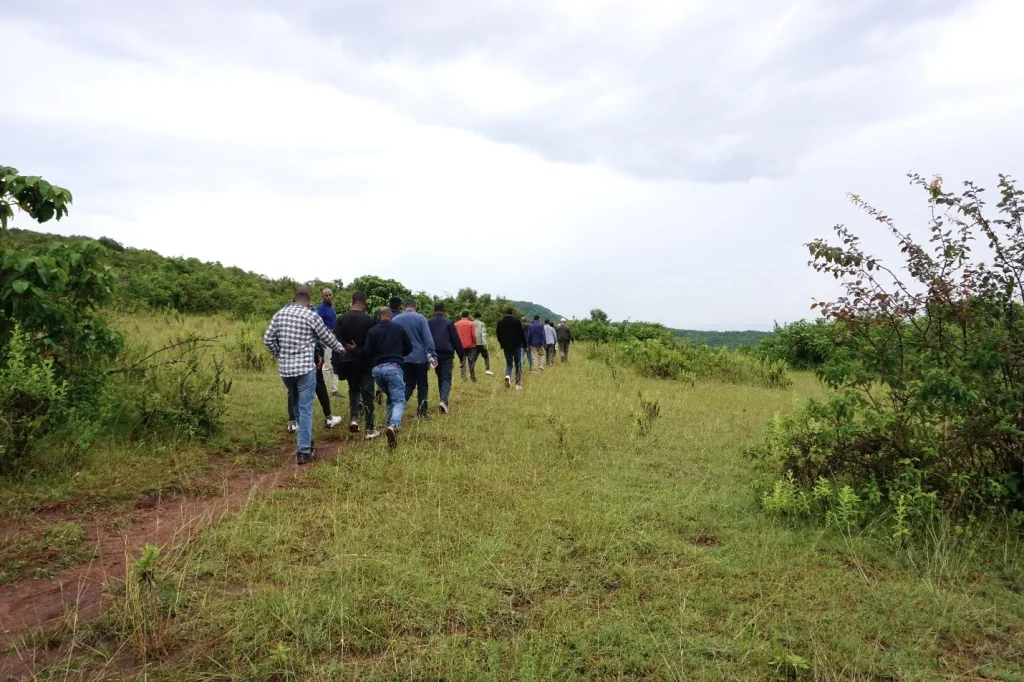
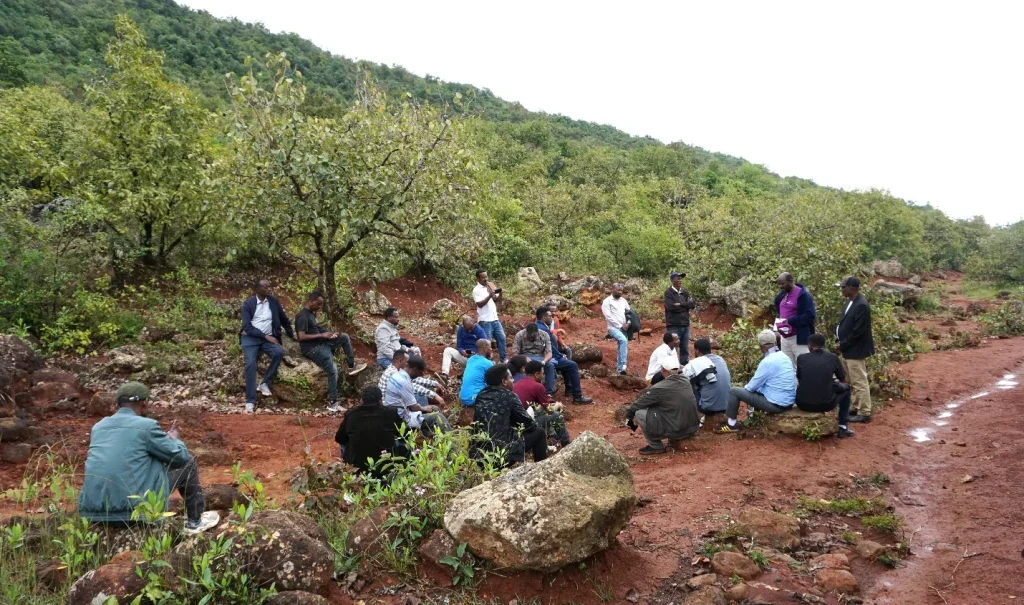
In 2005, the international organization World Vision launched an initiative in Humbo focused on farmer-managed natural forest regeneration. The project covered 2,728 hectares of severely degraded mountainous land. During the first month, specialists held consultations with local communities, paying particular attention to the poorest households that depended on charcoal production and fuelwood collection for survival.

To implement the project, seven cooperatives were established at the kebele level (local administrative units). Their members received training in basic forest management, while people dependent on forest exploitation were offered alternative sources of income. Over time, the cooperatives united into a single union, which today has 5,184 members, about 25% of whom are women.

Resistance, Threats, and First Successes

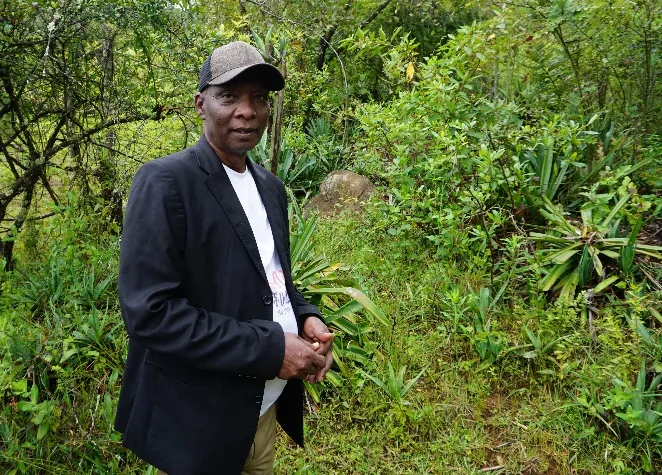
The path to forest restoration was far from easy. According to Mekonnen Gudjo, chairman of the Hobicha Bada Woyito Mountain Forest Development Cooperative, many residents initially opposed the restrictions.

“People did not want to lose free access to forest resources. When we tried to stop logging and livestock grazing, committee members were pressured and their crops were destroyed,” he recalls.

Tensions escalated to the point where one cooperative chairman was attacked and later died from his injuries. Only after the intervention of local authorities and the organization of security measures was it possible to protect the area and continue the project.

Today, the cooperative manages 372 hectares of restored forest. While it initially had only 25 members, it now includes 935. Some farmers were required by court order to leave land inside the fenced area, while others had to remove eucalyptus plantations that did not align with ecosystem restoration goals.

How Farmer-Managed Restoration Works

The core tool of the project was Farmer-Managed Natural Regeneration (FMNR). This approach is based on regenerating vegetation from living stumps, roots, and seeds. Farmers select the strongest shoots, carry out pruning, and guide tree growth to accelerate biomass accumulation. In addition, seedlings were raised in nurseries and supplementary planting was carried out in open areas.

According to World Vision staff member Mulugeta Zeleke, FMNR is “a low-cost, fast, and easily replicable method for restoring agricultural land, forests, and grazing areas.”

Results became visible within a few years: forest cover reduced the risk of flooding, stabilized rainfall patterns, improved groundwater levels, and even contributed to the return of natural springs. Wildlife returned to the area, and the local microclimate became cooler and more stable.

Carbon Credits: An Economic Turning Point

A major turning point came in 2012, when the Humbo cooperatives began receiving income from the sale of carbon credits. Prior to this, carbon market mechanisms were largely unknown in the Wolaita region, but the project quickly attracted attention and became a model for other communities across the country.

Revenue from carbon credits enabled the cooperative to establish a flour mill offering low prices to local residents, open an office, and rent warehouses and shops. Part of the income is provided to cooperative members as interest-free loans to support their livelihoods.

Each year, specialists measure carbon stocks at 85 sample plots measuring 20×20 meters across the project area. Although income from carbon credits fluctuates, its potential is clear: in 2024 the cooperative earned about 435,000 birr, while in 2025 revenues exceeded 5 million birr. In the near future, the cooperative plans to distribute 10,000 birr each to 500 members.

Lessons from Humbo

The Humbo experience shows that forest restoration is possible even under conditions of severe poverty and social conflict—provided that local communities are genuinely involved and benefits are distributed fairly.

“This project changed my understanding of what is possible. If people believe in an idea and feel ownership of it, they can achieve what seems impossible,” said Dr. Getachew Hiruy of the Commission for Development and Social Services.

How Moldova Can Learn from European Experiences in Combating Climate Change

Tag: climate change

The European Union has a positive influence on the Republic of Moldova, including in the field of environment and climate change.

This includes both political and technical assistance. Moldova does not have to act alone. It is appropriate to adopt European practices in the transition from a pollution-based, fossil fuel-dependent economy to a green and sustainable economy.

These statements were made by the national co-leader of the Green Agenda Project, Iordanca Rodica Iordanov, during the debate titled: “The readiness of the population and its willingness to support initiatives for Moldova’s green transition”, as reported by IPN.

“A green transition would mean adopting these experiences and also the regulatory and technical frameworks, adapted to Moldova’s context. We cannot copy them exactly, as we have our own national, geographical, and climatic particularities,” stated Iordanca Rodica Iordanov. She added that with the financial resources currently available, the Republic of Moldova will not be able to cope with this process—or will manage, but over a very long period. Under these circumstances, European support is essential. The EU supports Moldova in this process through various means, including grants and loans, the expert noted.

The lack of forests, according to Iordanca Rodica Iordanov, has a decisive impact on climate change. That is why a balance must be found between human comfort and the protection of ecosystems. When forests are cut down, it increases the risk of landslides, droughts, and torrential rains.

“There is also a noticeable trend nowadays. Every time there is an energy crisis, it is declared that there is not enough firewood and that citizens must be supported—so tree cutting is permitted. This approach is not constructive and does not support environmental protection or the reduction of climate change impacts,” emphasized the national co-leader of the Green Agenda Project.

During the debate, the results of a study conducted in the Republic of Moldova over six months were presented. 82% of respondents consider deforestation to be the main cause of climate change. 57% of those surveyed believe that both natural factors and human activity contribute to climate change.

The study was developed as part of the “Green Agenda” project implemented by the Stockholm Environment Institute and funded by the Swedish International Development Cooperation Agency, with AO EcoContact as the national implementing partner.

Eco-activists demand accountability in forest restoration projects

Tag: climate change

Moldova is about to receive 200 million euros for forest planting, and there are only two possible outcomes: either we become a beautiful, prosperous European country, or we’ll see neither the forests nor the money.

This opinion was expressed by eco-activist Vladislav Sandulyak, one of the leaders of the “Camp of Mother Earth” team and a student at the Faculty of Ecology at the Technical University of Moldova, as reported by Noi.md.

He noted that the audit reports of the Court of Accounts give strong reasons to doubt the activities of Moldsilva.

The most recent report points out issues such as: violations in the distribution of subsidies; lack of transparency and oversight; irregularities in the authorization of logging; non-transparent pricing; violations in the distribution of firewood; exceeding established limits; flaws in the pricing methodology; and breaches in the subsidy allocation mechanism.

“Illegal logging is a separate story altogether. The latest offenders who stole forest resources worth 2–4 million lei were fined just 67,500 lei. That means the state has created favorable conditions for forest theft, especially when foresters are paid miserable wages. I dare to say that if all these violations exist, they will also affect the 200 million euros in European credit funds,” emphasized the eco-activist and student.

According to him, such cases have already been reported in the press during sapling planting. For example, auditors visited the Vadul-lui-Vodă forestry district, where documents claimed 1,866 acacia trees had been planted on 0.8 hectares. However, auditors suspected that the work was not done. They presented slides with photos showing grass and trampled shrubs instead of forest and trees.

“Logically, it should be the minister’s job to restore order in the institutions under his authority, but instead, the minister is actively defending the Moldsilva agency, even recording videos to ‘debunk fakes’. In one of his videos, he holds up some papers, claiming they are permits for legal logging and saying the documents will be uploaded to Moldsilva’s website within a week. A month has passed — and the documents are still missing. Maybe some experts can explain why these documents aren’t made publicly available, or maybe the minister himself can clarify this?” said Vladislav Sandulyak.

He also pointed out that the agency’s website references its last study from 2010.

“As far as I understand, in light of global climate change, it is necessary to conduct a new study to determine exactly how much forest we can afford to cut and how much must be preserved due to global shifts. But Moldsilva is most likely still working under old Soviet systems, where the priority of state logic was to increase production and extract resources — not to adapt to drought. Maybe we can find experts or ask the minister whether the ministry plans to study recent climate trends and adjust logging accordingly to combat heat and drought?” asked the eco-activist.

According to him, if authorities claim they plan to plant many trees as a solution, it is already too late. The trees they plant now will yield results only decades from now.

“But we need action yesterday! That’s why preserving old trees — which are already providing shade and retaining soil moisture — is the only effective way to combat drought today, not 30 years from now,” emphasized Vladislav Sandulyak.

Deforestation Continues to Increase Despite Global Pledges. How Is Moldova Responding?

Tag: climate change

Recent months’ news warns of significant changes:

“We are facing a period of high temperatures that will last about 80 days,” noted expert Sergiu Dobrojan.

“The flow into the Moldovan segment of the Dniester remains at 100 m³/s,” shares observations from Doctor of Science Ilia Trombitsky.

It’s been over three years since the 2021 COP26 climate summit, where 140 countries, including Moldova, signed a declaration to halt global deforestation by 2030. However, recent data indicates the situation is worsening.

According to the Forest Declaration Assessment 2024, last year, 6.4 million hectares of forest were destroyed worldwide. Additionally, over 62 million hectares suffered degradation due to logging, infrastructure development, and fires. The primary causes include increased demand for meat, soy, palm oil, and nickel.

Moldova, although not among countries with tropical forests, also faces deforestation issues.

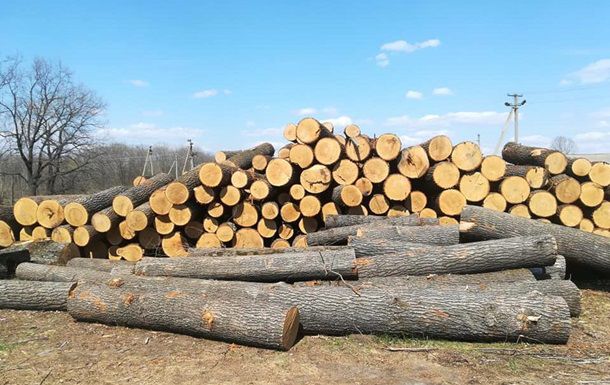
One recent case, according to the prosecutor’s office, involved three men attempting to steal over 4,000 cubic meters of timber in the Anenii Noi district. This is equivalent to approximately 4,000 or 12,000 felled trees for young and mature forests, respectively, corresponding to 0.4 or 1.5 hectares of continuous forest, and valued at 2–4 million lei. For the damage caused, they received a fine of only 67,500 lei! It turns out that minimal fines create favorable conditions for forest theft in Moldova.

On the Moldsilva website, the latest research dates back to 2010, indicating that the organization is likely significantly lagging behind the constantly changing climate indicators.

The organization also faces constant criticism from experts and citizens due to the lack of transparent reporting: how much timber has been cut and where was it sold? What is the quantity in hectares, and does the number of planted hectares exceed the number of felled ones?

Citizens’ and experts’ concerns were confirmed by the latest external audit at the end of 2023, when the Court of Accounts examined the use of 50.2 million lei allocated to Moldsilva. The audit revealed:

  • Lack of clear criteria for firewood distribution, leading to multiple family members and individuals with alternative heating sources being included in the recipient lists.

  • Some enterprises, such as the “State Road Administration,” did not report the volumes of harvested timber and its distribution.

  • The firewood pricing mechanism was deemed defective, contributing to unjustified price increases and reduced fuel accessibility for the population.

Some examples worldwide inspire hope, but overall, the situation is deteriorating.

In Brazil, thanks to the new government’s efforts, deforestation in the Amazon basin decreased by 62% over the year. However, in the Cerrado savanna—another important biome—deforestation rates increased by 68%. Indonesia, which previously succeeded in curbing deforestation, is again showing growth—57% in one year.

Experts emphasize: voluntary measures are ineffective; strict regulation and international funding for forest protection are required. The EU plans to introduce a ban on importing products associated with deforestation—coffee, cocoa, furniture.

In Moldova, with the lowest afforestation rates in Europe, no new bans are being introduced, and instead, oaks continue to be cut for furniture factories and domestic production.

While there are initiatives aimed at forest restoration, the national afforestation campaign aims to increase forest cover to 15% of the country’s total area (currently about 11%). Experts note that this is insufficient—there is a need to tighten responsibility for illegal logging and strengthen land use control.

Some experts and eco-activists even call for a complete ban on logging across the country for the next 10 years.

The Ministry of Ecology does not comment on these statements; however, the refusal of logging is one of the main goals of COP29, of which the Republic of Moldova is a member. But whether Moldova actually aims to refuse logging is unknown! Officials have not commented on this conference goal.

We have only six years left until the global deadline—2030. If we continue to turn a blind eye to deforestation, Moldova risks losing its natural protection against droughts, erosion, and climate change.

Why Is Moldova Poor? The Story of an Oak Tree Worth Its Weight in Gold!

Tag: climate change

The ecological treasures beneath our feet are often devalued.

Amid global warming, droughts, and social instability, environmental science student Vladislav Sanduleac shares a Facebook post with reflections that surprise with their precise calculations and obvious conclusions. He tells the story of one oak tree—a living symbol of sustainable wealth—that brings Moldova dozens of times more benefits than the timber it could be cut into.

“One mature Moldovan oak, around 100 years old, brings tremendous profit to our country and people:

It produces about 100–150 kg of oxygen per year, which is enough for 2–4 people annually. How much is a healthy life for 2–4 Moldovans worth? You decide.
In Moldovan lei, I found that a 10-liter medical oxygen tank costs about 5,000 lei. That makes it roughly 50,000 lei worth of oxygen per year. Or 5,000,000 lei over 100 years.” – notes Vladislav.

Just the oxygen alone turns the oak into real value. But there’s more.

“2. The oak is a natural air conditioner. It evaporates up to 400 liters of water per day in summer, cooling and humidifying the air for those same 2–4 Moldovans.
Let’s only count the summer—90 days.
400 liters = 40 lei/day. That’s 3,600 lei per year and 360,000 lei over 100 years.
An electric air conditioner using 10 kWh/day also costs about 40 lei/day. Again, that’s 3,600 lei per year and 360,000 lei over a century.”

This isn’t just shade—it’s a microclimate: free and irreplaceable.

The student continues:
“3. Its crown provides shade for up to 200 m² (2 ares) and cools the air under the tree by 3–7°C. That alone helps fight global warming and reduces the risk of heart attacks, strokes, and high blood pressure for those same 2–3 Moldovans.
And how much is another summer of life worth for someone in a risk group? In my opinion—priceless!!!”

It’s hard to argue—lives are saved under tree canopies. And so are soils and water.

“4. Oak roots retain and filter up to 1,000 liters of water per rainstorm and pull water from deep soil layers, increasing its moisture—crucial for our 2–4 Moldovans in an agrarian country.
Additionally, by slowing down rainwater runoff, the oak prevents soil erosion.
How much does it cost to dig a new well when the old one dries up in a village where 2–4 families relied on it?
Let’s add at least another 360,000 lei over 100 years of watering when the soil lacks moisture.”

The oak is an ecosystem, a soil protector, and a source of life.

“5. A single oak supports up to 500 species of insects, fungi, birds, and mosses. It’s a miniature ecosystem—from ants to owls.
Why? Because it produces 10,000–50,000 acorns annually and sets a generous table for squirrels, boars, birds, and deer.
I won’t even try to calculate that!
A sack of compost costs 250 lei.
An oak produces 5 cm of compost over 10 years and contributes 30–80 kg of organic fertilizer annually, rich in potassium, phosphorus, and nitrogen—fuel for soil microflora.”

And now the total—it’s astonishing:

“Over 100 years, at a minimum: 6,300,000 lei.
That’s about 3.5 kg of gold. Or roughly 1 kg of gold per Moldovan in our story’s 2–4 participants)))”

It sounds like a fairy tale, but it’s based on real data. And like in all fairy tales, there’s an antagonist—short-term thinking.

“And now, story number two, called 3.14-Z!!!
The forestry industry gets about 3 cubic meters of commercial wood from a 100-year-old oak.
After all the energy, labor, transport, sawing, and drying, they might get 12,000 lei per cubic meter—36,000 lei total.
But deducting all the costs leaves them with pennies.
And that’s why Moldova stays poor—with this kind of attitude toward its natural wealth!”

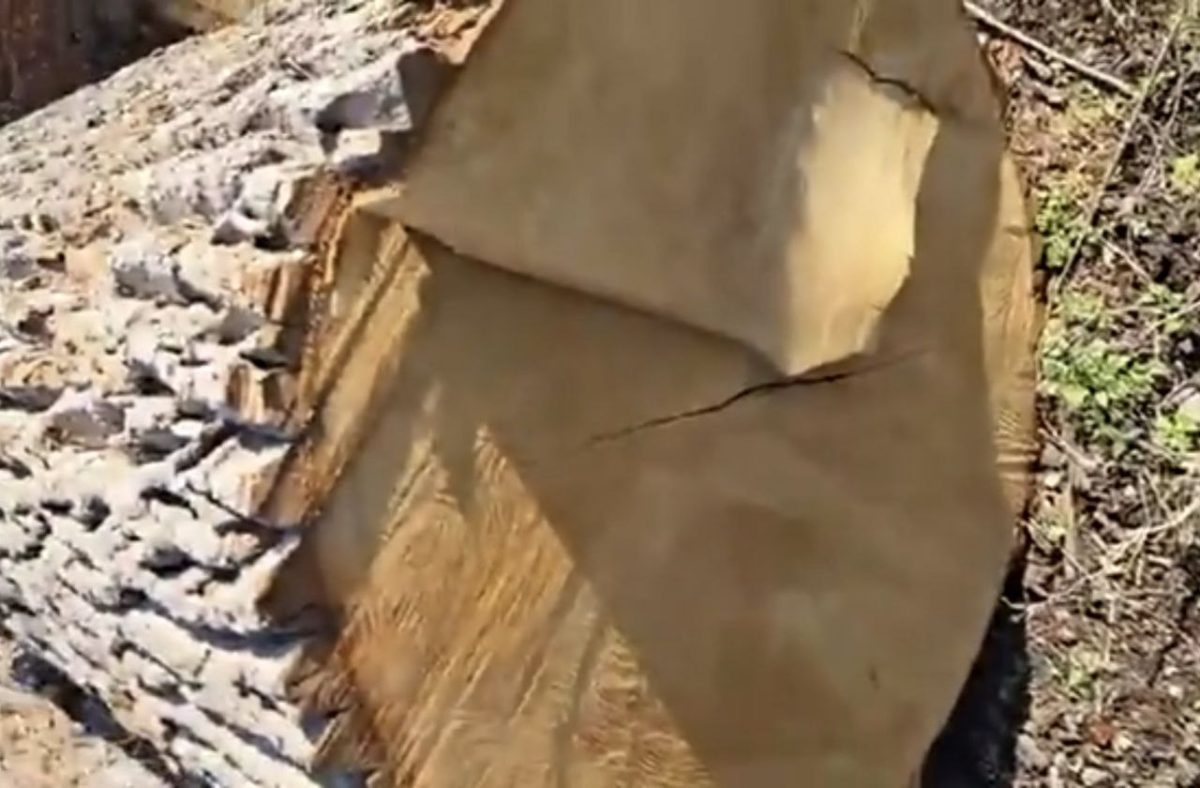
The photo added to the post was taken from V. Kostyuk’s blog.
“His video went so viral, it was impossible to ignore,” adds Vladislav.

This story isn’t just an environmentalist’s poetic vision—it’s a factual calculation of Moldova’s undervalued natural wealth.
Perhaps stories like this one can finally change the thinking of those making decisions about tree-cutting in Moldova today.

Ancient Oaks of Moldova – Preserve or Cut Down?

Tag: climate change

In the Republic of Moldova, the active deforestation of ancient oak trees continues.

The logic seems simple: if a tree has reached a certain age, it can be cut down. However, such a policy has serious ecological consequences, which experts are warning about.

Doctor of Biological Sciences Ilia Trombitchi compares the current forestry approach to an absurd logic: trees are not pigs, and the older they are, the more benefits they bring to the ecosystem. This principle has long been recognized abroad. For example, in the USA, the US Forestry Service understands the importance of old trees in maintaining the hydrological regime in the context of climate change. There, the focus is on removing small and medium-sized trees to prevent wildfires and improve growing conditions for older trees. Moreover, the cut trees are given to companies for free, and they are even paid for their work.
In Moldova, however, the situation is the opposite: the older a tree is, the more likely it is to be cut down. This leads to the depletion of fauna – bats, dormice, and rare bird species disappear. Water sources dry up. A prime example is the Hârbovăț forest along the road to Bender.

Twenty to thirty years ago, oaks were massively cut down, leaving only a few trees for seeds. However, instead of a new oak forest appearing, acacia has spread, which does not contribute to the formation of groundwater. As a result, the region faces droughts, and the ecosystem becomes increasingly impoverished.

Such consequences require a revision of approaches to forest management. We need to change our priorities: instead of cutting down ancient oaks, we should invest in programs for their conservation and in sustainable forest management. Otherwise, the Republic of Moldova risks losing not only its forests but also its water resources, which are crucial for the country’s future.