Beehive on the Balcony

Tag: green economy

🍯 “Beehive on the Balcony” — a project of support and sustainability.

We are launching a social project that combines two key goals:
💛 helping people
🌱 financial sustainability of environmental projects

We are the team of Pădurea Noastră (Our Forest) from Moldova.
We organize environmental actions, educational programs, create media content, and protect the environment on a legal level.

Today, our capacity largely depends on external funding.
To grow sustainably, we are creating our own source of income — both ecological and social at the same time.


🐝 Why a beekeeping project?

We are launching an apiary that will become:
— a financial foundation for the organization
— a platform for environmental education
— a tool to support people

The apiary will be located in a clean natural area —
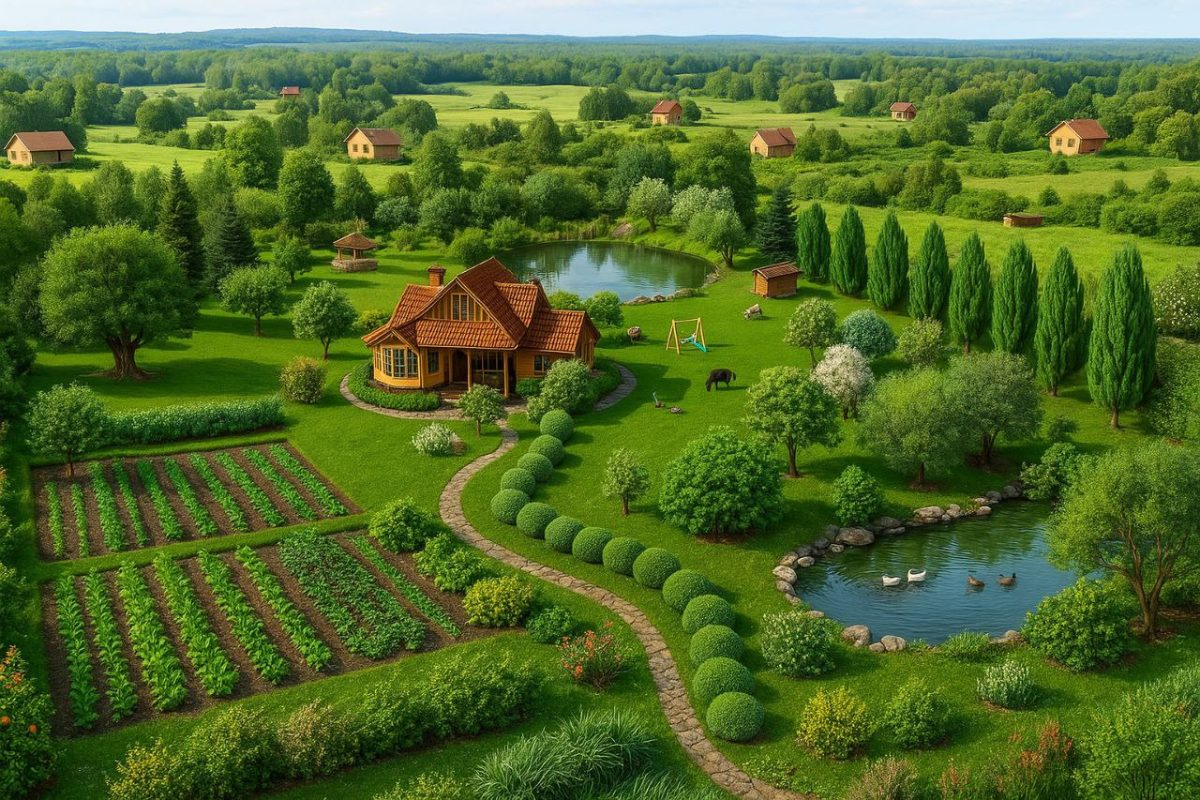
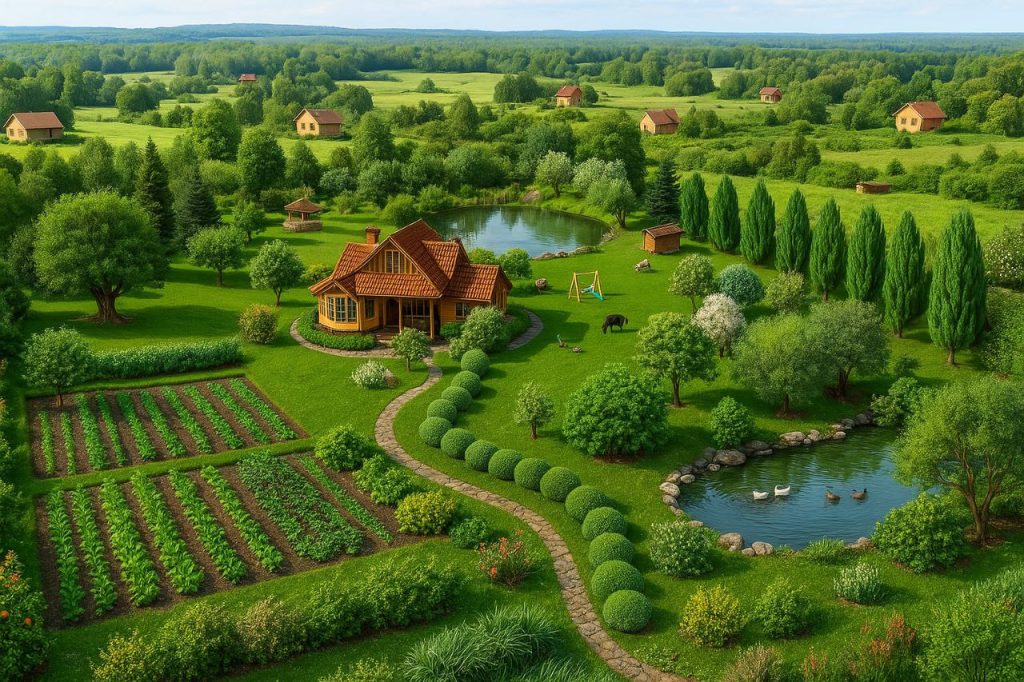
in the eco-settlement “Schiastlivoye,” in one of the homesteads near Moldova’s Codri forest 🌳

🐝 How does the project work?

We have created a format with a strong social impact:

👉 you make a donation
👉 we invest it in developing the apiary
👉 and distribute this year’s harvest as follows:

50% — for the development of environmental projects
50% — for vulnerable people in Moldova who need support:

Refugees
— single mothers
— large families
— elderly people
— people with disabilities

Cost of one hive is:

  • 175 euros or
  • 200 US dollars

💬 If you wish,
we can deliver honey to a specific person or family
you would like to support.

❓ Why is it called “Hive on the Balcony”?

We want to give urban residents the opportunity to have clean, natural products on their table without commercial markups —
as if the hive were right at their home.
Where exactly? On the balcony.

At the same time, through this project, we want to introduce people to eco-settlements and a nature-based lifestyle.

🌿 Why does it matter?

This is not just a donation.

It is a contribution that simultaneously:
— helps people here and now
— supports the development of our environmental projects 🌱

Products will be distributed throughout the year as they are harvested:
acacia honey, linden honey, wildflower honey,
as well as pollen, bee bread, and other bee products.


📊 Plans for this year

We plan to launch an apiary with 50 bee colonies.


🌱 About us

A.O. Pădurea Noastră (Our Forest) is an environmental and cultural organization in Moldova.

We combine:
— environmental protection activities
— educational projects
— cultural initiatives

👥 Our team includes 9 core members and more than 100 volunteers

More than 100 volunteers take part in large-scale activities:
forest clean-ups, tree planting, environmental projects,
as well as festivals of traditional culture and heritage,
where ecological awareness is integrated into cultural programs.

We also support eco-settlements in Moldova
and encourage moving from cities to rural areas.


📈 Our achievements:

• Over 20,000 kg of waste collected during 45 eco-actions (2022–2025)
• 10 “Clean Games” held with participation of 500 children and teenagers
• Illegal construction stopped in the Tsypova nature reserve
• Illegal logging and dumps identified
• Compensation secured for cutting down a fig garden in central Chișinău
• Organized the first environmental Reels blogging conference in Moldova

Eco-Settlement VS Village! A Shocking Difference in Environmental Friendliness

Tag: green economy

Environmental student Vladislav Sanduleac from UTM (Agrarian Campus) shared the results of his research conducted as part of his coursework. His conclusions turned out to be unexpected even for himself.

“I’ve been under the impression of my findings for a week now since finishing my coursework. I’m especially pleased with the knowledge I’m gaining at the university. It turns out that ecology is a very precise science that allows us to evaluate the state of the environment in numbers and coefficients, and accurately determine the degree of pollution and ways to solve problems,” said Vladislav.

According to the student, thanks to this knowledge he realized how much the profession of an ecologist is in demand in the modern world:

“For any village or business, it is possible to create an environmental project that can help attract funding to improve the living environment. It’s a real tool for change.”

Vladislav also highlighted the importance of training at UTM:
“I advise young people to pay attention to this field. The university has retained a strong teaching staff that continues the best traditions of the former Agrarian University,” he emphasized.


Village: Numbers That Shock

The main theme of Vladislav’s coursework was the study of the environmental situation of a Moldovan village. The results were surprising.

“You’d think that a village is about nature and ecology. But when I started calculating the indicators, the picture turned out to be completely different,” the student shared.

He found that a typical village with 1,000 households produces about 700 tons of manure per year.
“This could become valuable fertilizer if a composting system worked. But in reality, most of the manure ends up in the soil and pollutes well water. Part of it is taken to landfills, where it mixes with plastic and chemicals, poisons the soil, and often smolders or burns,” Vladislav explained.

The situation is worsened by the uncontrolled use of pesticides, which leads to mass deaths of bees.

“The village lacks biodiversity: there are mainly fruit trees, walnut trees, and gardens. Forest plants and animals simply have nowhere to live. Deep plowing and the absence of shelterbelts contribute to erosion — fertility is carried away by wind and rain,” he added.


Eco-Settlement: European Standards on Moldovan Soil

Comparing the situation to an eco-settlement, Vladislav saw a fundamentally different picture.

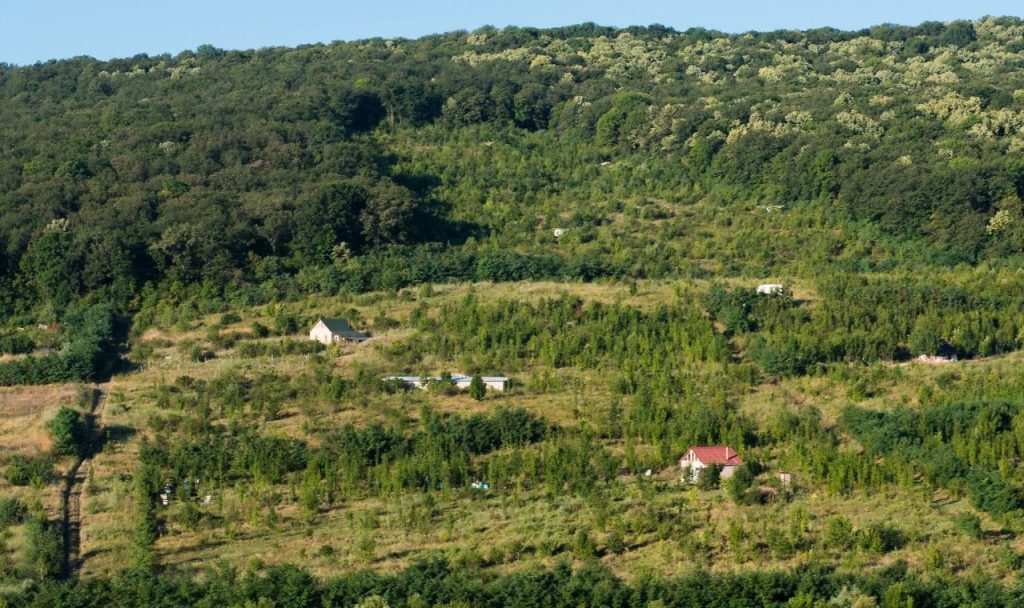
“An eco-settlement of 40 hectares, where about 20 families manage plots ranging from 1 to 2.7 hectares, became for me an example of harmony with nature,” he noted.

According to him:
Two-thirds of each plot’s area is occupied by permaculture forest gardens, where biodiversity thrives, including species from the Red Book.

The soil is not plowed and is protected by vegetation from erosion. On some plots, terracing has been applied, and aquatic ecosystems have been created for birds and fish.

There are no landfills or large cattle in the settlement, so there is no soil pollution from waste.
No pesticides or chemicals are used — natural fertilizers and bio-organisms are applied.
Beekeeping is developed, which has a positive effect on plant pollination.

“This example embodies the highest European standards: in climate change adaptation, biodiversity enhancement, and the greening of human life. This experience needs to be studied and spread throughout the country,” believes Vladislav Sanduleac.

Ecological Settlement in Moldova: An Example for the Entire Country

Tag: green economy

In today’s context, as the issue of sustainable development and environmental protection becomes increasingly relevant, academic circles are producing studies that describe unique examples of successful implementation of ecological projects.

One such example is the ecological settlement in Codreanca commune, Strășeni district, described in detail in the year project of Vladislav Sanduleac, an ecology student at the Technical University of Moldova (“The characteristics of environmental components and protection measures for certain resources in Codreanca commune, Strășeni district”, 2025).

According to the author’s research, the ecological settlement project in Codreanca was initiated in 2003. Today, on an area of 40 hectares, about 20 families manage homesteads based on the principles of permaculture and biodiversity restoration. Each family owns between 1 and 2.7 hectares of land, creating so-called homesteads that combine traditional agricultural practices with modern ecological approaches.

The ecology student explains the scientific origin of the term “ecological settlement”: “The term Ecological Settlement was introduced into scientific discourse by Professor George Ramsey of the Georgia Institute of Technology in his 1978 presentation ‘Application of Passive Energy for the Artificial Environment’ at the First World Energy Conference, organized by the Association of Energy Engineers. Ramsey argued that the problems related to excessive energy use are not about technology, but about the lifestyle of the population.”

In his work, Vladislav Sanduleac also presents some historical data about the development of ecological settlements in Moldova and worldwide: “In 1991, the Global Ecovillage Network (GEN) was created. In 2001, GEN obtained special consultative status with the UN Economic and Social Council (UN-ECOSOC) and became a partner of the United Nations Institute for Training and Research.”

“Today, various countries have enacted laws that encourage the development of ecological settlements, and over 10,000 such settlements have been registered under cooperative, biodiversity protection, non-profit, and urban planning legislation in Europe, America, and Australia. In addition, in Russia, in 2013, the Belgorod region adopted a regional law on family homesteads that regulates the free allocation of 1-hectare land plots for a period of 49 years for the creation of sustainable family farms,” explains the author.

Vladislav Sanduliac also provides some data: “In the territory of the ecological settlement in Codreanca commune, over the course of 20 years, plots with permaculture forest-gardens have formed, where plantations cover between 15% and 60% of the land, matching the best afforestation rates in European countries. No pesticides or chemical fertilizers are used, beekeeping is actively developing, and organic waste is composted and used as fertilizer.”

Special attention in the project is given to the conservation and increase of local species of flora and fauna. The territory of the settlement has become a refuge for pheasants, quails, hares, hedgehogs, as well as rare plant species listed in Moldova’s Red Book.

An equally important aspect, according to Vladislav Sanduleac, is the use of solar energy: solar power stations have been installed on the territory, ensuring the settlement’s energy autonomy.

The analytical part of the study highlights that the ecological settlement in Codreanca fully complies with international environmental conventions, including the Convention on Biological Diversity and the UN Framework Convention on Climate Change. Moreover, the project is part of the Global Ecovillage Network, which confirms its international recognition.

In his work, Vladislav Sanduleac formulates concrete recommendations for the Codreanca village administration. The experience of the ecological settlement in Codreanca commune can serve as a foundation for similar initiatives across Moldova, contributing to nature restoration, the development of the green economy, and the formation of new environmental awareness in the country. For Codreanca, it can also be the basis for the development of ecological tourism.

This project demonstrates that sustainable development is possible even in small rural communities if the efforts of residents, local authorities, and the ecological community are united.

The full version of the study can be consulted at the link:

drive.google.com

Why Is Moldova Poor? The Story of an Oak Tree Worth Its Weight in Gold!

Tag: green economy

The ecological treasures beneath our feet are often devalued.

Amid global warming, droughts, and social instability, environmental science student Vladislav Sanduleac shares a Facebook post with reflections that surprise with their precise calculations and obvious conclusions. He tells the story of one oak tree—a living symbol of sustainable wealth—that brings Moldova dozens of times more benefits than the timber it could be cut into.

“One mature Moldovan oak, around 100 years old, brings tremendous profit to our country and people:

It produces about 100–150 kg of oxygen per year, which is enough for 2–4 people annually. How much is a healthy life for 2–4 Moldovans worth? You decide.
In Moldovan lei, I found that a 10-liter medical oxygen tank costs about 5,000 lei. That makes it roughly 50,000 lei worth of oxygen per year. Or 5,000,000 lei over 100 years.” – notes Vladislav.

Just the oxygen alone turns the oak into real value. But there’s more.

“2. The oak is a natural air conditioner. It evaporates up to 400 liters of water per day in summer, cooling and humidifying the air for those same 2–4 Moldovans.
Let’s only count the summer—90 days.
400 liters = 40 lei/day. That’s 3,600 lei per year and 360,000 lei over 100 years.
An electric air conditioner using 10 kWh/day also costs about 40 lei/day. Again, that’s 3,600 lei per year and 360,000 lei over a century.”

This isn’t just shade—it’s a microclimate: free and irreplaceable.

The student continues:
“3. Its crown provides shade for up to 200 m² (2 ares) and cools the air under the tree by 3–7°C. That alone helps fight global warming and reduces the risk of heart attacks, strokes, and high blood pressure for those same 2–3 Moldovans.
And how much is another summer of life worth for someone in a risk group? In my opinion—priceless!!!”

It’s hard to argue—lives are saved under tree canopies. And so are soils and water.

“4. Oak roots retain and filter up to 1,000 liters of water per rainstorm and pull water from deep soil layers, increasing its moisture—crucial for our 2–4 Moldovans in an agrarian country.
Additionally, by slowing down rainwater runoff, the oak prevents soil erosion.
How much does it cost to dig a new well when the old one dries up in a village where 2–4 families relied on it?
Let’s add at least another 360,000 lei over 100 years of watering when the soil lacks moisture.”

The oak is an ecosystem, a soil protector, and a source of life.

“5. A single oak supports up to 500 species of insects, fungi, birds, and mosses. It’s a miniature ecosystem—from ants to owls.
Why? Because it produces 10,000–50,000 acorns annually and sets a generous table for squirrels, boars, birds, and deer.
I won’t even try to calculate that!
A sack of compost costs 250 lei.
An oak produces 5 cm of compost over 10 years and contributes 30–80 kg of organic fertilizer annually, rich in potassium, phosphorus, and nitrogen—fuel for soil microflora.”

And now the total—it’s astonishing:

“Over 100 years, at a minimum: 6,300,000 lei.
That’s about 3.5 kg of gold. Or roughly 1 kg of gold per Moldovan in our story’s 2–4 participants)))”

It sounds like a fairy tale, but it’s based on real data. And like in all fairy tales, there’s an antagonist—short-term thinking.

“And now, story number two, called 3.14-Z!!!
The forestry industry gets about 3 cubic meters of commercial wood from a 100-year-old oak.
After all the energy, labor, transport, sawing, and drying, they might get 12,000 lei per cubic meter—36,000 lei total.
But deducting all the costs leaves them with pennies.
And that’s why Moldova stays poor—with this kind of attitude toward its natural wealth!”

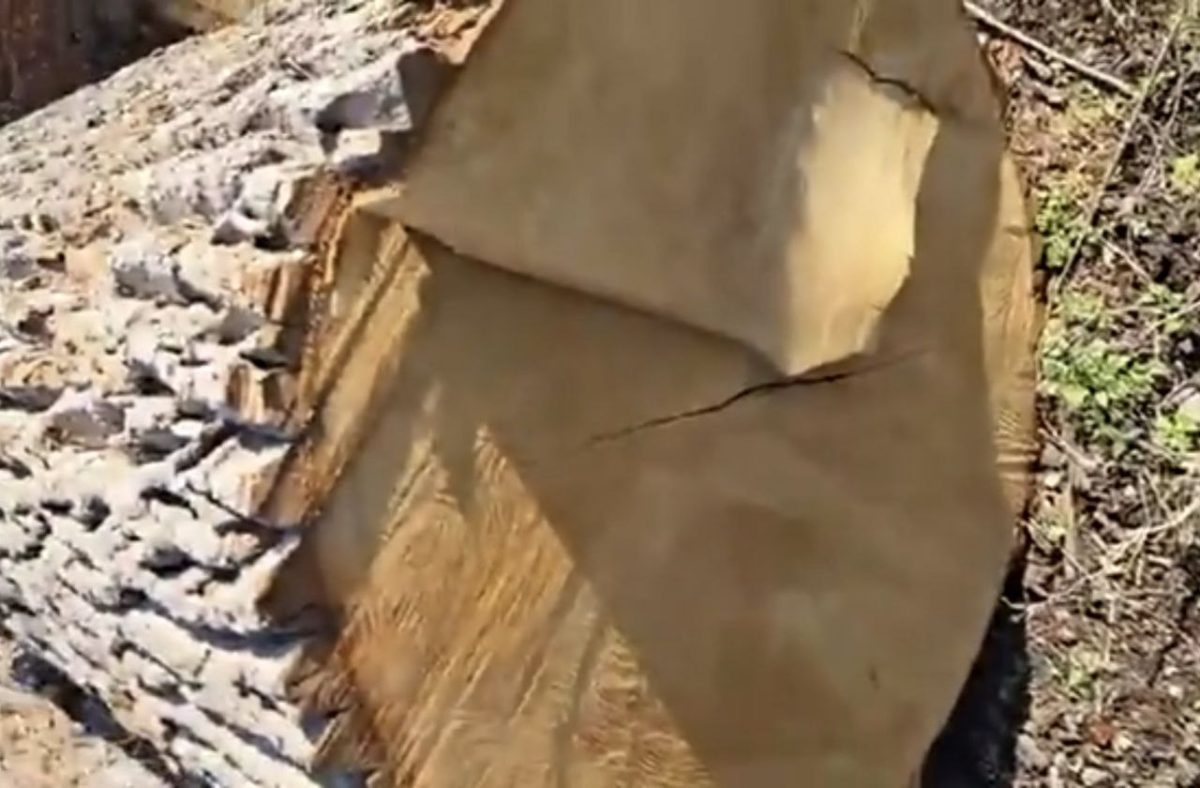
The photo added to the post was taken from V. Kostyuk’s blog.
“His video went so viral, it was impossible to ignore,” adds Vladislav.

This story isn’t just an environmentalist’s poetic vision—it’s a factual calculation of Moldova’s undervalued natural wealth.
Perhaps stories like this one can finally change the thinking of those making decisions about tree-cutting in Moldova today.