Chisinau Municipal Services Have Started Cutting Down Dead Trees, Not Living Ones

Tag: tree planting

“Pădurea Noastră” Calls on Citizens to Help Protect Green Spaces

At last, the removal of dead and hazardous trees has begun in Chisinau—an issue the environmental organization “Pădurea Noastră” has been highlighting for a long time. Activists express hope that municipal services will continue this work and put an end to the practice of cutting down healthy trees, thus preserving the city’s green areas.

“We have been heard! We hope they will keep up the good work and stop cutting living trees,” say representatives of the organization.

According to “Pădurea Noastră,” tree removal operations are currently underway, including in the Buiucani district, where municipal workers are removing dangerous dead trunks.

The organization urges city residents to join the joint effort to protect living trees by helping authorities focus specifically on dead and hazardous trees. To this end, “Pădurea Noastră” asks citizens to send photos and locations of dead trees around Chisinau. The collected data will be regularly forwarded to Î.M. “Asociația de gospodărire a spațiilor verzi” to compile lists of necessary work.

Thus, as the ecologists emphasize, this effort will not only make the streets safer by removing dangerous branches but also preserve healthy trees, ensuring Chisinau enjoys clean air and shade amid climate change challenges.

On Forestry Higher Education and Afforestation in Moldova – Victor Sfeclă

Tag: tree planting

How is forestry higher education developing in Moldova, and what progress has been made in afforestation?

University lecturer and engineer Victor Sfeclă, Vice Dean of the Faculty of Agricultural, Forestry and Environmental Sciences at UTM, speaks openly about the future of Moldova’s forests and the importance of training specialists in this field.

10 Million Steps for Ecology — A Unique Project by Moldovan Eco-Activists

Tag: tree planting

An unusual initiative has started from Moldova — 10 Million Steps for Ecology. Two Moldovan activists are walking over 500 km across Turkey to raise funds for planting 2025 trees in Moldova.

Their route — the famous Lycian Way — marks the first stage of a large-scale campaign. Through this journey, the initiators aim to mobilize people to donate for saplings and invite everyone to join planting events alongside volunteers from the initiative “Plantăm fapte bune în Moldova / Parcurile Viitorului” — a team that has been restoring forests and saving rivers through cleanups and tree planting for many years.

The initiative is open to all: anyone can contribute — by donating or by participating in the #NumărăPașii challenge, a collective action aimed at symbolically reaching 10 million steps for nature.

We spoke with the initiators of the campaign. Here’s what they shared:

🟢 Who are you?
We are the administrators of the Telegram channel Friends MD, created to help people connect with each other for any kind of request. For over a year, our channel has united people across the country — whether for friendship, helping the lonely or newcomers to Moldova, or for large initiatives, charity actions, or simply interesting ideas.

🟢 What do you want to achieve?
On a larger scale, we want as many people as possible to learn about our project. It has already helped thousands make friends, find partners, fulfill dreams, or gather people around their causes.

Currently, within a charity campaign, we launched a challenge with our followers: the goal is to collectively walk 10,000,000 steps, sharing progress on social media to draw attention to environmental issues.
[Link to post]

As administrators, we decided to fully commit: we set off on foot along the Lycian Way in Turkey to attract even more attention and make a significant contribution to the common cause.

🟢 How did the idea to raise money for trees come up?
While preparing for the initiative, we asked ourselves: What real impact can we make, beyond raising awareness?

We began looking for volunteers already involved in hands-on environmental action — and found the organization Parcurile Viitorului ([Facebook link]).

We spoke with one of their coordinators, Petru. He told us that several years ago, a group of enthusiasts began planting forests in the Vadul lui Vodă area.

The initiative has gradually grown, attracting more and more participants. Now, they continue planting trees across the country on their own. Currently, they’re working to save the Bălțata River — cleaning it from trash and planting trees along its banks.

🟢 How exactly can people help?
We asked Petru: “What do you need the most?”
He replied: volunteers for planting and funds for buying saplings.

So we divided our campaign into two stages:
— During the hike and challenge, we’re collecting donations for saplings, which we’ll fully transfer to Petru and his team;
— Then we’ll organize a tree planting day and invite everyone to join us.

Everything will be documented through photos and videos to raise further awareness and inspire more good deeds.

🟢 What kind of trees will be planted?
That part is entirely up to the Parcurile Viitorului team. They have the experience and know which tree species are suitable and how to plant them properly.

🟢 Who will plant the trees?
We, together with our followers and anyone inspired by this initiative. The planting will be guided by experienced volunteers from Parcurile Viitorului.

🟢 Have you done similar projects before?
Yes. Over the past year, we’ve organized many volunteer and cleanup actions.

Our greatest achievement is the elimination of an illegal landfill in Valea Morilor Park ([link]), which we cleaned up with volunteers from the NGOs Pădurea Noastră and TRADIȚII, collecting and removing over 500 bags of waste.

Also, through our channel, followers organized various charity events:
— supporting animal shelters,
— planting trees,
— psychological support forums for vulnerable people,
and much more.

🟢 Why are you doing this?
The Friends MD project has been running for over a year and has helped many people bring their ideas to life and find like-minded individuals. We share requests from active people with a wide audience, believing that supporting good initiatives can change the country for the better.

But not everyone sees the value of our resource. That’s why we decided to lead by example — to show that the power of community can create large-scale projects, uniting people through a simple call to action.

What we’re doing — anyone can do. Or even more — using our platform.

🟢🟢🟢 How can Ecopresa readers help?
Right now, the most important thing is spreading the word — so it reaches everyone who cares about deforestation and environmental issues.

Even subscribing and sharing is already a huge contribution:
Instagram: @moldova_friends

Those who are able are invited to donate for saplings and prepare to join us in planting — shoulder to shoulder with our followers.

People in Need Moldova has highly praised the environmental efforts of the public association “Pădurea Noastră”

Tag: tree planting

“We are proud of our partners who make a significant contribution to cleaning Moldova’s forests and planting trees. These actions bring hope and strengthen collective responsibility,” the organization stated.

🌍 On the occasion of Earth Day, People in Need congratulated everyone and emphasized that it is a moment to reflect on the responsibility humanity holds towards the planet. In this context, the international organization highlighted the contribution of the Moldovan environmental initiative “Pădurea Noastră” and the partner project “Tabăra Mamei Pământ” to environmental protection.

♻️ According to People in Need representatives, Earth Day is not only a symbolic gesture, but also a call to action for the entire civil society.
“Let us work together to develop bold initiatives for the sustainable use of natural resources and the prevention of environmental issues that impact our present and future,” they said.

🌱 The work of “Pădurea Noastră”, aimed at combating forest pollution and restoring green areas, has received support within the framework of the regional project “Resilience of Civil Society in the Eastern Partnership Countries”, implemented by People in Need, with financial support from the European Union and co-financing from the Ministry of Foreign Affairs of the Czech Republic through the Transition Program.

🔵 Supporting such initiatives highlights the importance of uniting the efforts of local communities, civil organizations, and international partners to protect nature and ensure a sustainable future for Moldova.

How to Reforest All of Moldova

Tag: tree planting

The President of Moldova, Maia Sandu, wants to plant a lot of forests in the country and has proposed a very ambitious program. However, currently, Moldova is planting only half the amount of forest planned in the program, while deforestation is happening at twice the rate of afforestation.

This issue was highlighted by an eco-activist, a student of the Faculty of Ecology at the Technical University of Moldova, and co-founder of the public organization Pădurea Noastră, as reported by Noi.md.

According to him, although President Sandu is the first among all previous presidents to genuinely care about and want to save Moldova’s nature, her efforts are not yet enough to match the reality on the ground.

The eco-activist pointed out that the president’s plan relies on the people, which is why she organizes the Forest Festival and various PR campaigns to promote tree planting.

“But our people are considered among the poorest in Europe, and our country also has the least amount of forest compared to other European nations. How can the poorest people plant the largest amount of forest in the shortest time? Yet, this is exactly what is needed to adapt to climate change: severe droughts and monsoon rains. The forest is the only thing that can deal with these challenges! There is only one answer: it must be profitable for the people! The poorest people can plant the most forests only if it is highly beneficial for them. And there is only one way to make it beneficial: the planted forest must become private property,” emphasized Vladislav Sanduliak.

According to him, there are historical precedents for this. For example, the American Homestead Act was passed in 1862, during the U.S. Civil War. Around 1.6 million people received land for free out of a total population of 31 million at the time. In total, 10% of U.S. land was given to citizens under homesteads.

This led to a rapid expansion of the middle class, which significantly influenced the country’s economic growth. Over 40 years, the U.S. population grew from 31 million to 76 million. By the end of the program in 1976, the U.S. population had reached approximately 218 million.

Historical records, including the book Not Just a Life, describe how a family that acquired land under the program became wealthy by producing and selling maple syrup and other forest products.

“There are many such examples in history where governments grant land to people for free for private use: the New Zealand Land Act of 1860, Japan’s post-war land redistribution reform of 1946, and others. A modern version of the Homestead Act has been developed in some regions of Russia. But today’s lawmakers have gone further, refining key aspects of the relationship between the state and its citizens,” said the eco-activist, who is one of the leaders of the environmental movement Tabor of Mother Earth.

He explained that, under the modern version of the law, a family—just like in the American Homestead era—can receive at least one hectare of land for free, and it is granted for lifetime use. However, to prevent land speculation, it cannot be sold. This way, the government protects its land assets.

If a person takes free land, they cannot divide and resell it under a different status. The land can only be passed down as a single unit to their heirs and cannot be rented out.

In exchange, the government fully exempts all products grown on these homesteads from taxes. The American law had the same provision, and as history shows, tax-free production from these lands only strengthened the state and led to rapid population growth. The modern Homestead Act even specifies what should be cultivated on the land.

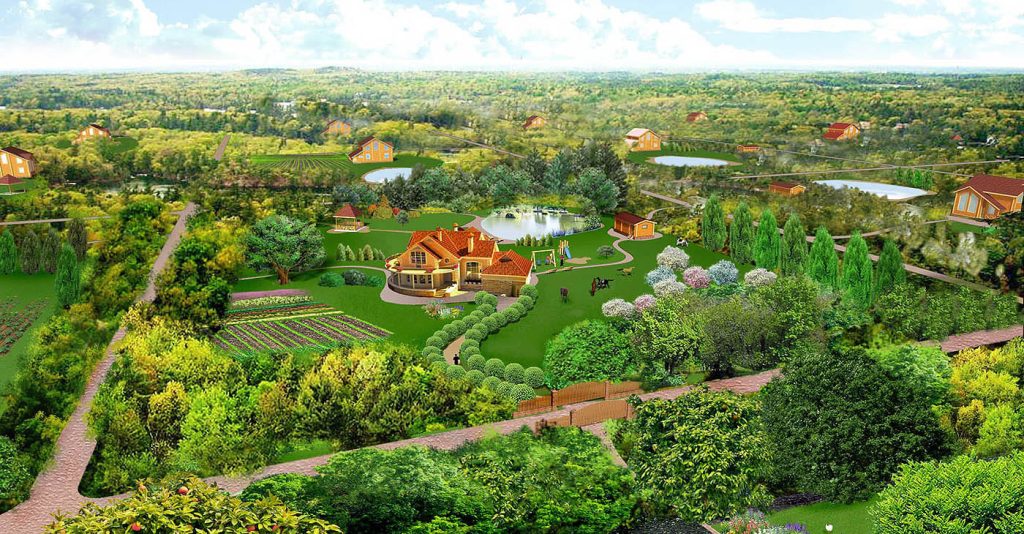
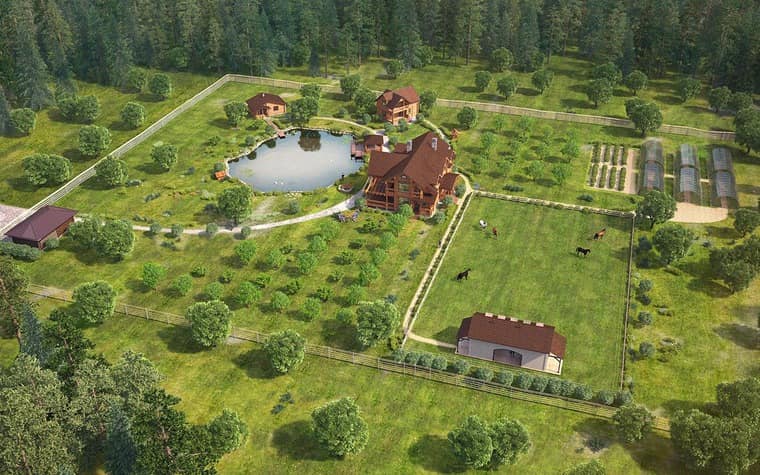
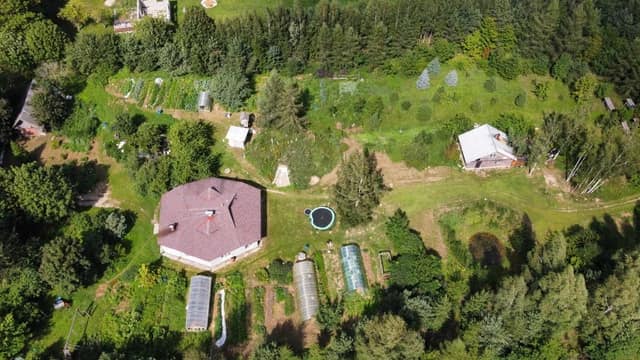
Planting must follow the core principles of permaculture—sustainable agriculture with minimal environmental impact. Specifically, two-thirds of the land should be planted with a mixed forest containing at least 350 different species of trees and shrubs, one-third should be used for a mixed orchard, and the remaining land should be allocated for a vegetable garden, a pond, and buildings. The plot must also have a living hedge to protect the homestead and attract birds. In all cases, such measures contribute to economic and demographic growth, strengthen the middle class, and improve the overall well-being of the population.

“If every Moldovan plants just one hectare of forest (which is manageable for a single family), we will have 2 million hectares of forest. Given that Moldova’s total land area is 3.4 million hectares, this would bring forest coverage to 59%, reaching the levels of some of the most forested European countries. Even if only 10% of Moldovans take land, as in the American Homestead era, that would still result in at least 200,000 hectares of new forest—achieved not through government spending, but through private family investment,” emphasized Vladislav Sanduliak.

He noted that families can and will plant forests if they are given favorable conditions. And granting land for free as private property, with no taxes on its production, is the best incentive for every Moldovan family.

“The Homestead Act is the best way to regulate a beneficial relationship between the state and every Moldovan family,” concluded the eco-activist.