For Moldovans, the best place for recreation is the Codrii and their biodiversity (Study)

Tag: Reforestation

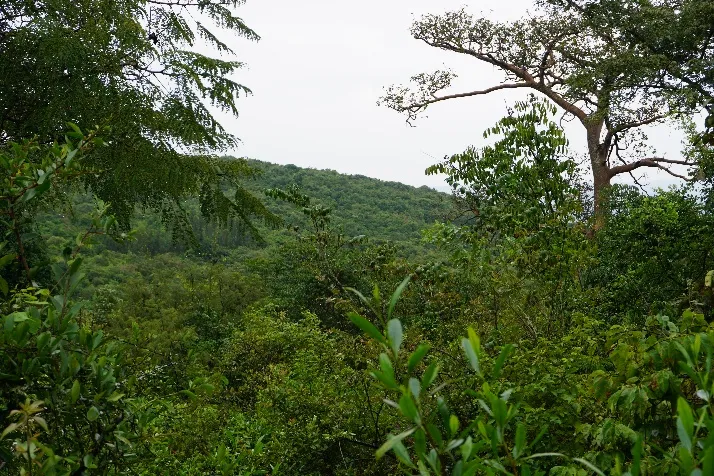
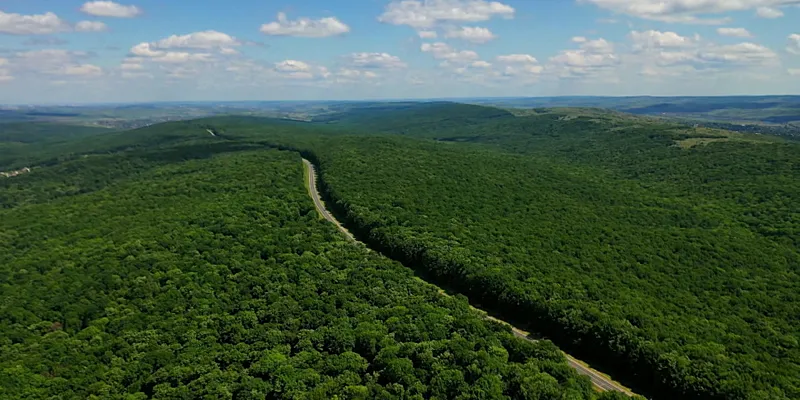
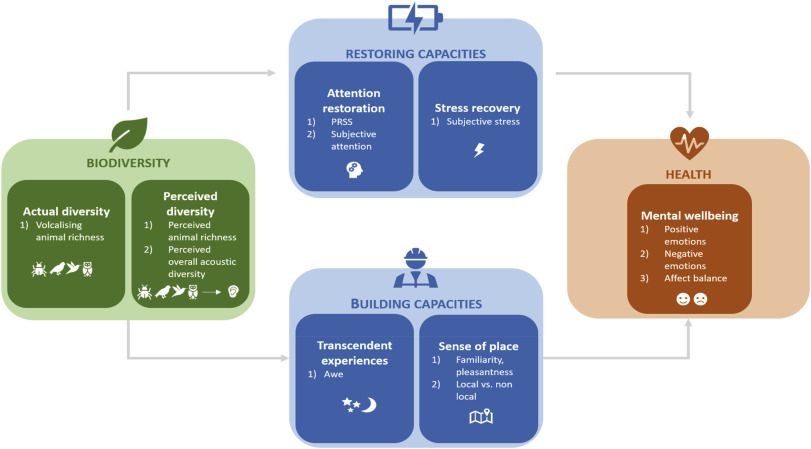
Resting in Moldova’s Codrii forests can be not just pleasant, but truly healing—and in some cases even more beneficial for mental health than traveling abroad. This conclusion is supported by the results of a new scientific study on the impact of natural sounds and biodiversity on human well-being.
Why the Codrii?

The study found that soundscapes of local forests have a stronger positive effect on the human psyche than the sounds of “exotic” natural environments. This means that for people living in Moldova, native forests—such as the Codrii—may be the most restorative.

Key findings:

  • Sounds of local forests improve mental well-being more than sounds of unfamiliar ecosystems
  • The greater the diversity of animals, the stronger the feeling of harmony and even awe
  • Perceiving rich wildlife is directly linked to improved mood
  • However, “chaotic” acoustic diversity (without understanding its meaning) can, on the contrary, create tension

In other words, it’s not just the number of sounds that matters, but their naturalness, familiarity, and connection to living nature.

Biodiversity is the key to inner calm

Humans are evolutionarily connected to their natural environment. The sounds of birds, insects, and rustling leaves create a sense of safety and belonging. That is why forests rich in biodiversity can:

  • reduce stress levels
  • improve concentration
  • restore emotional balance

The Codrii are one of the few regions in Moldova where relatively high species diversity is still preserved. This makes them not only ecologically valuable but also psychologically important for people.

Acacia plantations are good for firewood, but do they improve mental health?

It is important to address a separate issue relevant to the Republic of Moldova: the large-scale planting of acacia trees.

Although acacia is often used for rapid greening efforts, it is important to understand that monocultures are not real forests.

Such plantations:

  • have low biodiversity

  • create poor soundscapes

  • do not form a complete ecosystem

  • may cause a feeling of monotony in people

The study indirectly confirms this: when the sound environment is not perceived as “alive” and rich, it does not provide psychological comfort.

Implications for reforestation

If Moldova wants not just to “plant trees,” but truly restore nature and improve people’s quality of life, it is necessary to:

  • create mixed forests rather than monocultures
  • consider the diversity of plant and animal species
  • build resilient ecosystems
  • preserve local natural communities

Biodiversity is not a luxury—it is the foundation of both environmental and human health.

How the study was conducted

The experiment involved 195 students from Germany. They were asked to listen to recordings of forest soundscapes:

  • with low and high levels of animal sounds
  • from local (temperate) and non-local (tropical) forests

Researchers analyzed:

  • emotional responses
  • stress and well-being levels
  • sense of “place attachment”
  • perception of sound diversity

Main scientific conclusions:

  • Forests richer in animal sounds triggered stronger positive emotions
  • Local forests were perceived as more pleasant and restorative
  • Perceived biodiversity was more important than its objective level
  • Overly complex but “unfamiliar” sound environments reduced comfort

Researchers emphasize that it is not enough to increase diversity—it must be ecologically meaningful and perceptible to humans.


In conclusion, the Codrii are not just a green area on the map. They are a place where nature can truly heal—through sound, atmosphere, and biodiversity.

And perhaps the best отдых for Moldovans is not a flight to another country, but a return to their own nature.

🔗 Study link:
https://www.sciencedirect.com/science/article/pii/S0272494426001088
Farmers in Ethiopia Have Learned to Restore Forests and Earn Income from Carbon Credits

Tag: Reforestation

In southern Ethiopia, in the Humbo district, farmers have demonstrated that forest restoration can be not only an environmental effort but also an economically viable one. The story of this landscape shows how degraded mountain slopes were transformed into a source of sustainable income for local communities through collective action and carbon financing.

From Barren Mountains to a Living Forest

In 2005, the international organization World Vision launched an initiative in Humbo focused on farmer-managed natural forest regeneration. The project covered 2,728 hectares of severely degraded mountainous land. During the first month, specialists held consultations with local communities, paying particular attention to the poorest households that depended on charcoal production and fuelwood collection for survival.

To implement the project, seven cooperatives were established at the kebele level (local administrative units). Their members received training in basic forest management, while people dependent on forest exploitation were offered alternative sources of income. Over time, the cooperatives united into a single union, which today has 5,184 members, about 25% of whom are women.

Resistance, Threats, and First Successes

The path to forest restoration was far from easy. According to Mekonnen Gudjo, chairman of the Hobicha Bada Woyito Mountain Forest Development Cooperative, many residents initially opposed the restrictions.

“People did not want to lose free access to forest resources. When we tried to stop logging and livestock grazing, committee members were pressured and their crops were destroyed,” he recalls.

Tensions escalated to the point where one cooperative chairman was attacked and later died from his injuries. Only after the intervention of local authorities and the organization of security measures was it possible to protect the area and continue the project.

Today, the cooperative manages 372 hectares of restored forest. While it initially had only 25 members, it now includes 935. Some farmers were required by court order to leave land inside the fenced area, while others had to remove eucalyptus plantations that did not align with ecosystem restoration goals.

How Farmer-Managed Restoration Works

The core tool of the project was Farmer-Managed Natural Regeneration (FMNR). This approach is based on regenerating vegetation from living stumps, roots, and seeds. Farmers select the strongest shoots, carry out pruning, and guide tree growth to accelerate biomass accumulation. In addition, seedlings were raised in nurseries and supplementary planting was carried out in open areas.

According to World Vision staff member Mulugeta Zeleke, FMNR is “a low-cost, fast, and easily replicable method for restoring agricultural land, forests, and grazing areas.”

Results became visible within a few years: forest cover reduced the risk of flooding, stabilized rainfall patterns, improved groundwater levels, and even contributed to the return of natural springs. Wildlife returned to the area, and the local microclimate became cooler and more stable.

Carbon Credits: An Economic Turning Point

A major turning point came in 2012, when the Humbo cooperatives began receiving income from the sale of carbon credits. Prior to this, carbon market mechanisms were largely unknown in the Wolaita region, but the project quickly attracted attention and became a model for other communities across the country.

Revenue from carbon credits enabled the cooperative to establish a flour mill offering low prices to local residents, open an office, and rent warehouses and shops. Part of the income is provided to cooperative members as interest-free loans to support their livelihoods.

Each year, specialists measure carbon stocks at 85 sample plots measuring 20×20 meters across the project area. Although income from carbon credits fluctuates, its potential is clear: in 2024 the cooperative earned about 435,000 birr, while in 2025 revenues exceeded 5 million birr. In the near future, the cooperative plans to distribute 10,000 birr each to 500 members.

Lessons from Humbo

The Humbo experience shows that forest restoration is possible even under conditions of severe poverty and social conflict—provided that local communities are genuinely involved and benefits are distributed fairly.

“This project changed my understanding of what is possible. If people believe in an idea and feel ownership of it, they can achieve what seems impossible,” said Dr. Getachew Hiruy of the Commission for Development and Social Services.

10 Million Steps for Ecology — A Unique Project by Moldovan Eco-Activists

Tag: Reforestation

An unusual initiative has started from Moldova — 10 Million Steps for Ecology. Two Moldovan activists are walking over 500 km across Turkey to raise funds for planting 2025 trees in Moldova.

Their route — the famous Lycian Way — marks the first stage of a large-scale campaign. Through this journey, the initiators aim to mobilize people to donate for saplings and invite everyone to join planting events alongside volunteers from the initiative “Plantăm fapte bune în Moldova / Parcurile Viitorului” — a team that has been restoring forests and saving rivers through cleanups and tree planting for many years.

The initiative is open to all: anyone can contribute — by donating or by participating in the #NumărăPașii challenge, a collective action aimed at symbolically reaching 10 million steps for nature.

We spoke with the initiators of the campaign. Here’s what they shared:

🟢 Who are you?
We are the administrators of the Telegram channel Friends MD, created to help people connect with each other for any kind of request. For over a year, our channel has united people across the country — whether for friendship, helping the lonely or newcomers to Moldova, or for large initiatives, charity actions, or simply interesting ideas.

🟢 What do you want to achieve?
On a larger scale, we want as many people as possible to learn about our project. It has already helped thousands make friends, find partners, fulfill dreams, or gather people around their causes.

Currently, within a charity campaign, we launched a challenge with our followers: the goal is to collectively walk 10,000,000 steps, sharing progress on social media to draw attention to environmental issues.
[Link to post]

As administrators, we decided to fully commit: we set off on foot along the Lycian Way in Turkey to attract even more attention and make a significant contribution to the common cause.

🟢 How did the idea to raise money for trees come up?
While preparing for the initiative, we asked ourselves: What real impact can we make, beyond raising awareness?

We began looking for volunteers already involved in hands-on environmental action — and found the organization Parcurile Viitorului ([Facebook link]).

We spoke with one of their coordinators, Petru. He told us that several years ago, a group of enthusiasts began planting forests in the Vadul lui Vodă area.

The initiative has gradually grown, attracting more and more participants. Now, they continue planting trees across the country on their own. Currently, they’re working to save the Bălțata River — cleaning it from trash and planting trees along its banks.

🟢 How exactly can people help?
We asked Petru: “What do you need the most?”
He replied: volunteers for planting and funds for buying saplings.

So we divided our campaign into two stages:
— During the hike and challenge, we’re collecting donations for saplings, which we’ll fully transfer to Petru and his team;
— Then we’ll organize a tree planting day and invite everyone to join us.

Everything will be documented through photos and videos to raise further awareness and inspire more good deeds.

🟢 What kind of trees will be planted?
That part is entirely up to the Parcurile Viitorului team. They have the experience and know which tree species are suitable and how to plant them properly.

🟢 Who will plant the trees?
We, together with our followers and anyone inspired by this initiative. The planting will be guided by experienced volunteers from Parcurile Viitorului.

🟢 Have you done similar projects before?
Yes. Over the past year, we’ve organized many volunteer and cleanup actions.

Our greatest achievement is the elimination of an illegal landfill in Valea Morilor Park ([link]), which we cleaned up with volunteers from the NGOs Pădurea Noastră and TRADIȚII, collecting and removing over 500 bags of waste.

Also, through our channel, followers organized various charity events:
— supporting animal shelters,
— planting trees,
— psychological support forums for vulnerable people,
and much more.

🟢 Why are you doing this?
The Friends MD project has been running for over a year and has helped many people bring their ideas to life and find like-minded individuals. We share requests from active people with a wide audience, believing that supporting good initiatives can change the country for the better.

But not everyone sees the value of our resource. That’s why we decided to lead by example — to show that the power of community can create large-scale projects, uniting people through a simple call to action.

What we’re doing — anyone can do. Or even more — using our platform.

🟢🟢🟢 How can Ecopresa readers help?
Right now, the most important thing is spreading the word — so it reaches everyone who cares about deforestation and environmental issues.

Even subscribing and sharing is already a huge contribution:
Instagram: @moldova_friends

Those who are able are invited to donate for saplings and prepare to join us in planting — shoulder to shoulder with our followers.

How to Reforest All of Moldova

Tag: Reforestation

The President of Moldova, Maia Sandu, wants to plant a lot of forests in the country and has proposed a very ambitious program. However, currently, Moldova is planting only half the amount of forest planned in the program, while deforestation is happening at twice the rate of afforestation.

This issue was highlighted by an eco-activist, a student of the Faculty of Ecology at the Technical University of Moldova, and co-founder of the public organization Pădurea Noastră, as reported by Noi.md.

According to him, although President Sandu is the first among all previous presidents to genuinely care about and want to save Moldova’s nature, her efforts are not yet enough to match the reality on the ground.

The eco-activist pointed out that the president’s plan relies on the people, which is why she organizes the Forest Festival and various PR campaigns to promote tree planting.

“But our people are considered among the poorest in Europe, and our country also has the least amount of forest compared to other European nations. How can the poorest people plant the largest amount of forest in the shortest time? Yet, this is exactly what is needed to adapt to climate change: severe droughts and monsoon rains. The forest is the only thing that can deal with these challenges! There is only one answer: it must be profitable for the people! The poorest people can plant the most forests only if it is highly beneficial for them. And there is only one way to make it beneficial: the planted forest must become private property,” emphasized Vladislav Sanduliak.

According to him, there are historical precedents for this. For example, the American Homestead Act was passed in 1862, during the U.S. Civil War. Around 1.6 million people received land for free out of a total population of 31 million at the time. In total, 10% of U.S. land was given to citizens under homesteads.

This led to a rapid expansion of the middle class, which significantly influenced the country’s economic growth. Over 40 years, the U.S. population grew from 31 million to 76 million. By the end of the program in 1976, the U.S. population had reached approximately 218 million.

Historical records, including the book Not Just a Life, describe how a family that acquired land under the program became wealthy by producing and selling maple syrup and other forest products.

“There are many such examples in history where governments grant land to people for free for private use: the New Zealand Land Act of 1860, Japan’s post-war land redistribution reform of 1946, and others. A modern version of the Homestead Act has been developed in some regions of Russia. But today’s lawmakers have gone further, refining key aspects of the relationship between the state and its citizens,” said the eco-activist, who is one of the leaders of the environmental movement Tabor of Mother Earth.

He explained that, under the modern version of the law, a family—just like in the American Homestead era—can receive at least one hectare of land for free, and it is granted for lifetime use. However, to prevent land speculation, it cannot be sold. This way, the government protects its land assets.

If a person takes free land, they cannot divide and resell it under a different status. The land can only be passed down as a single unit to their heirs and cannot be rented out.

In exchange, the government fully exempts all products grown on these homesteads from taxes. The American law had the same provision, and as history shows, tax-free production from these lands only strengthened the state and led to rapid population growth. The modern Homestead Act even specifies what should be cultivated on the land.

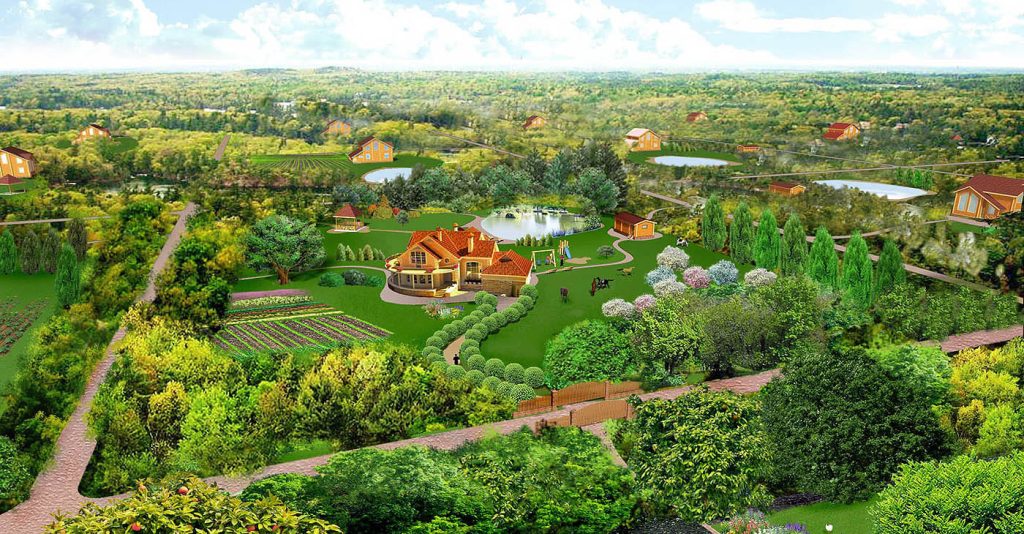
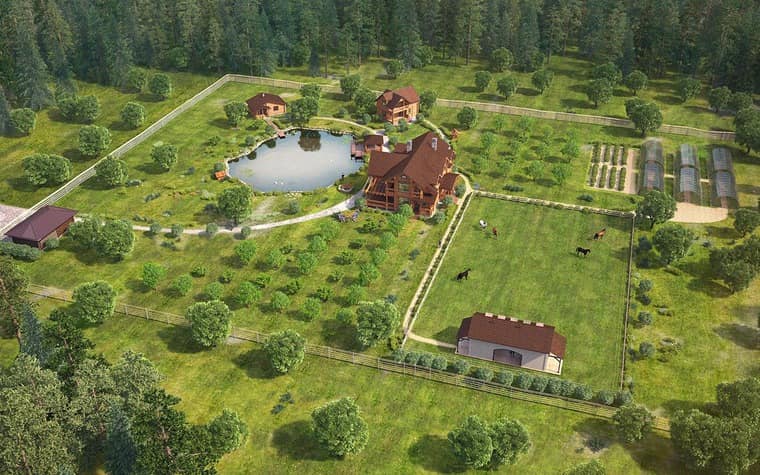
Planting must follow the core principles of permaculture—sustainable agriculture with minimal environmental impact. Specifically, two-thirds of the land should be planted with a mixed forest containing at least 350 different species of trees and shrubs, one-third should be used for a mixed orchard, and the remaining land should be allocated for a vegetable garden, a pond, and buildings. The plot must also have a living hedge to protect the homestead and attract birds. In all cases, such measures contribute to economic and demographic growth, strengthen the middle class, and improve the overall well-being of the population.

“If every Moldovan plants just one hectare of forest (which is manageable for a single family), we will have 2 million hectares of forest. Given that Moldova’s total land area is 3.4 million hectares, this would bring forest coverage to 59%, reaching the levels of some of the most forested European countries. Even if only 10% of Moldovans take land, as in the American Homestead era, that would still result in at least 200,000 hectares of new forest—achieved not through government spending, but through private family investment,” emphasized Vladislav Sanduliak.

He noted that families can and will plant forests if they are given favorable conditions. And granting land for free as private property, with no taxes on its production, is the best incentive for every Moldovan family.

“The Homestead Act is the best way to regulate a beneficial relationship between the state and every Moldovan family,” concluded the eco-activist.

2025 Forum of Environmental NGOs: Sustainable Development Strategies for Moldova

Tag: Reforestation

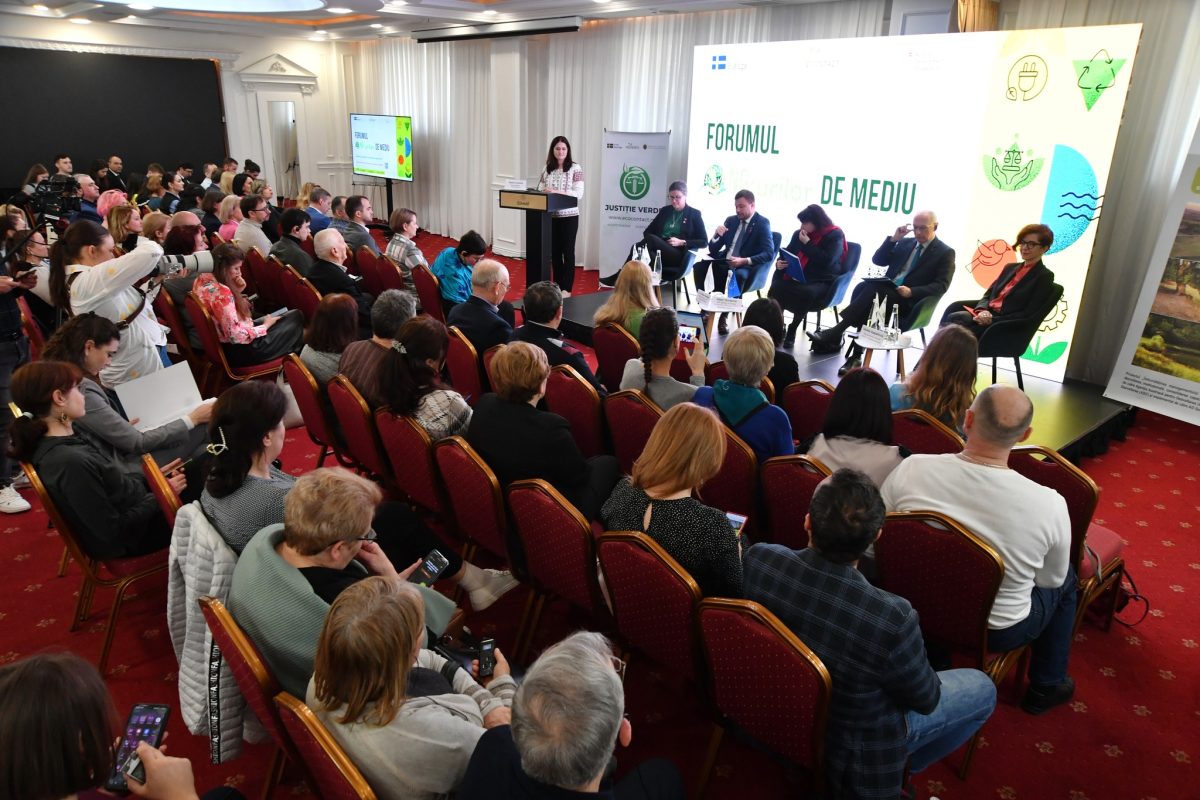
The Environmental NGOs Forum was held in Chișinău, gathering leaders in the field of environmental protection.

The event was organized by EcoContact, with financial support from Sweden and co-financed by the Austrian Development Agency. The forum was dedicated to strengthening cooperation between civil society, authorities, the private sector, and development partners to protect the environment in Moldova.

Under the slogan “We think sustainably, we act responsibly,” the most important environmental issues were discussed, including the rational use of natural resources, effective environmental protection policies, and the need for coordination among all sectors. Among the topics discussed were water resource management, green transition, sustainable reforestation, forest ecosystem protection, and strategies for adapting to climate change.

Key figures attended the event, including the Minister of Environment, Sergiu Lazarencu, and the ambassadors of Sweden and Austria to the Republic of Moldova. The importance of the media’s role in ecological education was also emphasized.

Pădurea Noastră was also among the participants, actively supporting nature protection and sustainable development initiatives in the country.