Evidence of Fig Orchard Logging Submitted to Chisinau Police

Tag: Ecology

Residents of the capital and environmental activists are closely monitoring the situation surrounding the so-called fig orchard, which, according to them, once stood in the center of Chisinau and was illegally cut down.

However, an official environmental inspector, who was contacted online, claims that this orchard never existed and that he found no signs of logging at the site.

According to environmental activist Vladislav Sanduliak, the young inspector requested clear evidence proving both the existence of the orchard and the fact of its destruction. The inspector stated that he personally visited the site and did not see a single tree stump. Moreover, when he inquired at the swimming pool area near the alleged logging site, he was told that no one knew about the orchard and that no trees had been cut down there.

The inspector indicated that without concrete evidence—photos or videos directly documenting the logging process—he would be unable to open an official case. Despite the journalist providing “before and after” images sourced online, this was deemed insufficient.

In this context, representatives of the public organization “Pădurea Noastră” are calling on anyone with information, photos, or video materials to send them in and support the investigation. In their view, the situation is perplexing, creating the impression that the residents of the capital are slowly being “led around by the nose.”

They also do not rule out the possibility that there may be a single beneficiary of the logging who is likely taking steps to “resolve the issue.” Activists emphasize that they have neither financial backing nor administrative resources—they are simply ordinary citizens who submitted a request to the Ministry of Environment, which became the catalyst for the inspection to begin.

It is noted that without an official complaint, the case would not have moved forward. According to the activists, all the articles and protests in the press merely create the illusion of an investigation, while in reality, no action is taken without a formal complaint from citizens. This situation is likely the same in other cases of illegal logging within the city and throughout Moldova.

The journalist calls on readers to help: to gather evidence, request CCTV footage from the police, and provide witness testimony confirming that the orchard existed and has now been destroyed. It is important for people to unite so that the inspectorate can conduct a thorough investigation.

Official Update on the Fig Orchard Logging Case

The public organization “Pădurea Noastră” has sent an official request to the Ministry of Environment regarding the alleged illegal logging of a fig orchard (Ficus carica) in the center of Chisinau.

In accordance with Law No. 148/2023 on Access to Information of Public Interest, an official response was received from the Ministry of Environment:

“The Ministry, through the Environmental Protection Agency, has reviewed your request and informs you that the logging of fig trees was carried out without the necessary authorization documents required by current legislation. In the near future, the Environmental Inspectorate will send an official letter detailing the measures taken in this case.”

Currently, the organization “Pădurea Noastră” has submitted a complaint to the police commissariat to clarify the circumstances. A response has not yet been received.

The Area Around Tamara Spring Has Been Cleaned of Trash!

Tag: Ecology

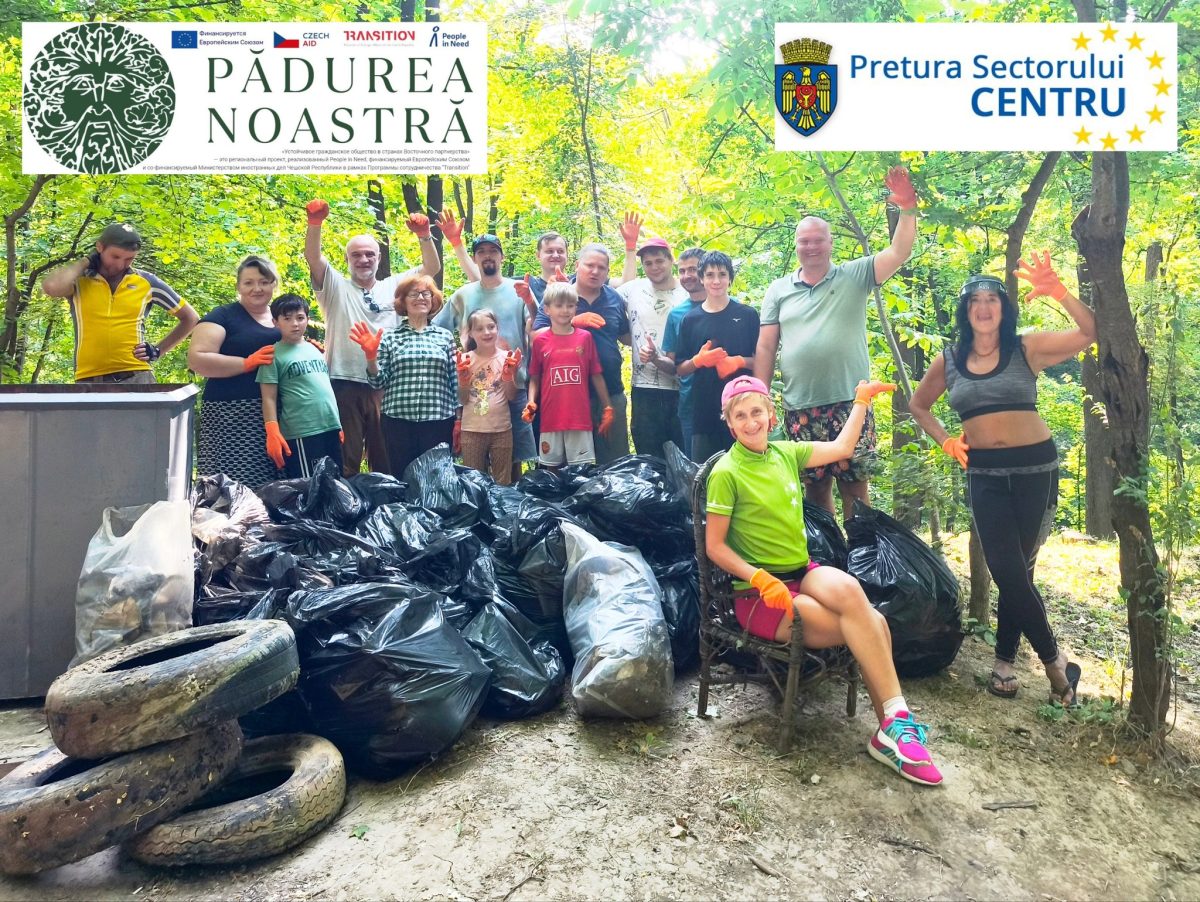
Eco-activists from the organization “Pădurea Noastră” gathered in Valea Morilor Park and carried out a large-scale cleanup of the forest surrounding Tamara Spring, as well as the spring itself — removing plastic and other waste.

The organizers express their sincere gratitude to every participant in the action — you are true heroes!

This time, the Pretura of the Centru sector provided volunteers with gloves, garbage bags, and wipes. Special thanks to Pretor Vlad Hîncu for his support and cooperation.

Separately, the “Pădurea Noastră” team thanks their main sponsor — People in Need Moldova and the project “Sustainable Civil Society in the Eastern Partnership Countries.” This regional project is implemented by People in Need, funded by the European Union, and co-financed by the Ministry of Foreign Affairs of the Czech Republic within the framework of the “Transition” Cooperation Program.

Chisinau Municipal Services Have Started Cutting Down Dead Trees, Not Living Ones

Tag: Ecology

“Pădurea Noastră” Calls on Citizens to Help Protect Green Spaces

At last, the removal of dead and hazardous trees has begun in Chisinau—an issue the environmental organization “Pădurea Noastră” has been highlighting for a long time. Activists express hope that municipal services will continue this work and put an end to the practice of cutting down healthy trees, thus preserving the city’s green areas.

“We have been heard! We hope they will keep up the good work and stop cutting living trees,” say representatives of the organization.

According to “Pădurea Noastră,” tree removal operations are currently underway, including in the Buiucani district, where municipal workers are removing dangerous dead trunks.

The organization urges city residents to join the joint effort to protect living trees by helping authorities focus specifically on dead and hazardous trees. To this end, “Pădurea Noastră” asks citizens to send photos and locations of dead trees around Chisinau. The collected data will be regularly forwarded to Î.M. “Asociația de gospodărire a spațiilor verzi” to compile lists of necessary work.

Thus, as the ecologists emphasize, this effort will not only make the streets safer by removing dangerous branches but also preserve healthy trees, ensuring Chisinau enjoys clean air and shade amid climate change challenges.

NGOs Warn: Proposed Changes to the Industrial Emissions Law Threaten Public Health and Environmental Protection

Tag: Ecology

Several non-governmental organizations in the Republic of Moldova have raised concerns about proposed amendments to Law No. 227/2022 on industrial emissions, warning that these changes could seriously impact air, water, and soil quality, as well as public health.

The warning comes in a statement prepared by EcoContact and signed by 30 NGOs (the list is being updated).

According to the document, the removal of key provisions and annexes from the law would allow polluting activities to operate without strict state control or environmental permits. Among the activities proposed to be excluded from the authorization regime are livestock farms, food industry units, water treatment plants, and the trade of chemicals and waste—all with a high potential for pollution.

Experts emphasize that if these amendments are adopted, many farms, factories, and industrial units will be able to operate without environmental authorization, making it more difficult for authorities to monitor and prevent pollution of water, air, and soil, thereby increasing risks to public health and the environment. Excluding these activities from Annex No. 2 and the complete removal of Annex No. 3 would create a dangerous legislative vacuum, weakening the state’s capacity to protect citizens’ right to a safe, healthy, and sustainable environment.

EcoContact highlights that the proposed amendments contradict European Union legislation already transposed into national law, as well as international agreements to which the Republic of Moldova is a party, endangering the country’s European integration process.

The document also points out that these changes are being advanced through an amendment to a draft law that has already passed the first reading, where the only link to the modified acts is the “environmental field,” without public consultation, engagement with local authorities, or a detailed analysis of environmental and health impacts. Specifically, the amendments to the Industrial Emissions Law were added to a draft law that initially only aimed to modify the Water Law No. 81 of March 19, 2025, already adopted in the first reading.

According to NGOs, this approach does not represent a simplification of the legal framework but rather a weakening of mechanisms to control and prevent pollution risks. A true simplification would involve legislative coherence, stakeholder consultations, and maintaining effective regulatory tools—elements missing from the current process.

Removing these regulations will reduce transparency and the ability of local authorities to fulfill their duties while limiting citizens’ right to be informed and involved in environmental decision-making.

In conclusion, the NGOs recommend that the authorities retain all control and authorization rules for activities with pollution risks and ensure broad public consultation before modifying environmental legislation.

It is worth noting that yesterday, June 24, 2025, the Cabinet of Ministers approved the Single Opinion on the amendments to the draft law modifying the Water Law No. 272/2011. The government’s opinion confirms that the changes to Law No. 227/2022 on industrial emissions constitute a new legislative initiative requiring adoption in two readings, recommending the consideration of Constitutional Court jurisprudence.

The documents can be accessed here:

A Large-Scale Cleanup Took Place at Ghidighici Beach

Tag: Ecology

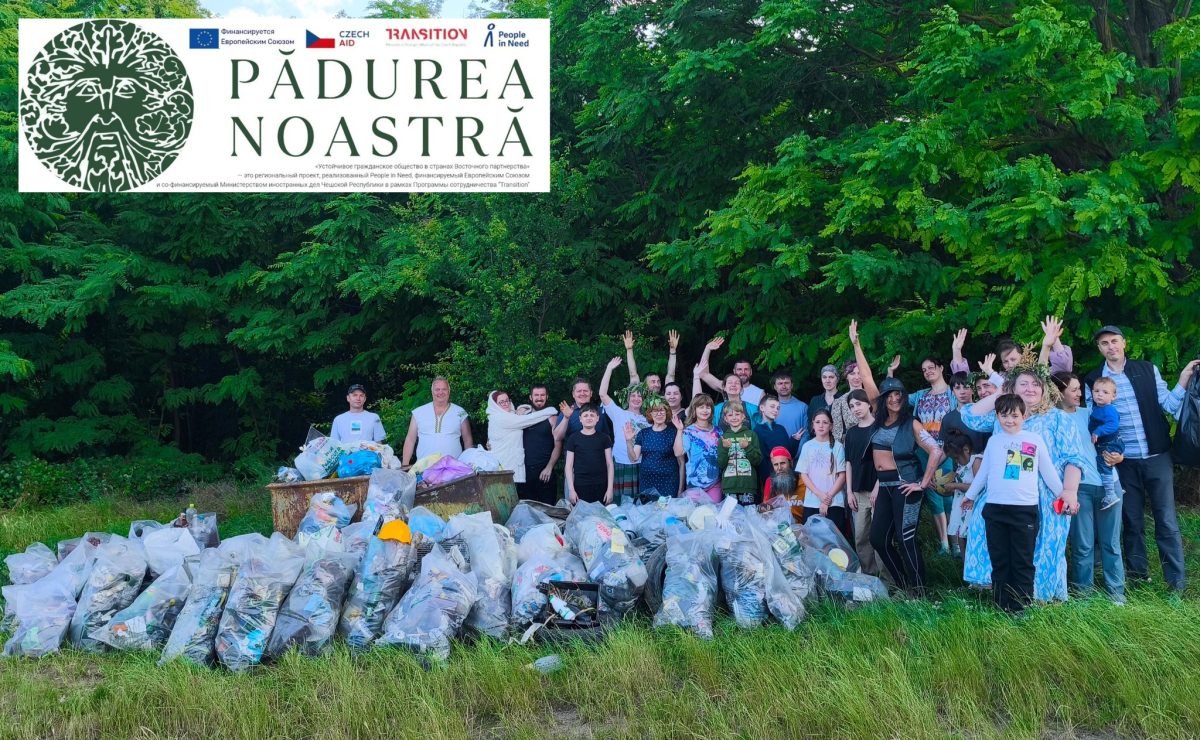
The environmental organization “Pădurea Noastră” carried out its largest cleanup of the year, clearing the central beach and the surrounding forest area of the Ghidighici reservoir in Chișinău.

This location is known for accumulating large amounts of waste for two main reasons: the careless attitude of visitors and the lack of attention from the city administration. Although the municipality does not consider this area a proper recreation and tourism zone and does not invest in its maintenance, city residents continue to spend their leisure time there.

“It is clear that something needs to be done about this,” the organizers stated.

New volunteers from Moldova and Ukraine joined the action, giving the event a humanitarian dimension as well. Participants combined the cleanup with celebrating the Summer Solstice in the traditional Slavic-Moldovan style of Kupala-Sânziene, offering Ukrainian guests an atmosphere that reminded them of home and their traditions.

A total of 52 people took part in the cleanup, and as the organizers noted, it was “a truly warm and unifying event.”

The team extends special thanks to their sponsors, whose support made this celebration of cleanliness possible. The event was supported by the project “Sustainable Civil Society in the Eastern Partnership Countries,” implemented by People in Need, funded by the European Union, and co-financed by the Ministry of Foreign Affairs of the Czech Republic within the framework of the “Transition” cooperation program. In Moldova, the project is implemented by People in Need Moldova.

On Forestry Higher Education and Afforestation in Moldova – Victor Sfeclă

Tag: Ecology

How is forestry higher education developing in Moldova, and what progress has been made in afforestation?

University lecturer and engineer Victor Sfeclă, Vice Dean of the Faculty of Agricultural, Forestry and Environmental Sciences at UTM, speaks openly about the future of Moldova’s forests and the importance of training specialists in this field.

Eco-Settlement VS Village! A Shocking Difference in Environmental Friendliness

Tag: Ecology

Environmental student Vladislav Sanduleac from UTM (Agrarian Campus) shared the results of his research conducted as part of his coursework. His conclusions turned out to be unexpected even for himself.

“I’ve been under the impression of my findings for a week now since finishing my coursework. I’m especially pleased with the knowledge I’m gaining at the university. It turns out that ecology is a very precise science that allows us to evaluate the state of the environment in numbers and coefficients, and accurately determine the degree of pollution and ways to solve problems,” said Vladislav.

According to the student, thanks to this knowledge he realized how much the profession of an ecologist is in demand in the modern world:

“For any village or business, it is possible to create an environmental project that can help attract funding to improve the living environment. It’s a real tool for change.”

Vladislav also highlighted the importance of training at UTM:
“I advise young people to pay attention to this field. The university has retained a strong teaching staff that continues the best traditions of the former Agrarian University,” he emphasized.


Village: Numbers That Shock

The main theme of Vladislav’s coursework was the study of the environmental situation of a Moldovan village. The results were surprising.

“You’d think that a village is about nature and ecology. But when I started calculating the indicators, the picture turned out to be completely different,” the student shared.

He found that a typical village with 1,000 households produces about 700 tons of manure per year.
“This could become valuable fertilizer if a composting system worked. But in reality, most of the manure ends up in the soil and pollutes well water. Part of it is taken to landfills, where it mixes with plastic and chemicals, poisons the soil, and often smolders or burns,” Vladislav explained.

The situation is worsened by the uncontrolled use of pesticides, which leads to mass deaths of bees.

“The village lacks biodiversity: there are mainly fruit trees, walnut trees, and gardens. Forest plants and animals simply have nowhere to live. Deep plowing and the absence of shelterbelts contribute to erosion — fertility is carried away by wind and rain,” he added.


Eco-Settlement: European Standards on Moldovan Soil

Comparing the situation to an eco-settlement, Vladislav saw a fundamentally different picture.

“An eco-settlement of 40 hectares, where about 20 families manage plots ranging from 1 to 2.7 hectares, became for me an example of harmony with nature,” he noted.

According to him:
Two-thirds of each plot’s area is occupied by permaculture forest gardens, where biodiversity thrives, including species from the Red Book.

The soil is not plowed and is protected by vegetation from erosion. On some plots, terracing has been applied, and aquatic ecosystems have been created for birds and fish.

There are no landfills or large cattle in the settlement, so there is no soil pollution from waste.
No pesticides or chemicals are used — natural fertilizers and bio-organisms are applied.
Beekeeping is developed, which has a positive effect on plant pollination.

“This example embodies the highest European standards: in climate change adaptation, biodiversity enhancement, and the greening of human life. This experience needs to be studied and spread throughout the country,” believes Vladislav Sanduleac.

Ecological Settlement in Moldova: An Example for the Entire Country

Tag: Ecology

In today’s context, as the issue of sustainable development and environmental protection becomes increasingly relevant, academic circles are producing studies that describe unique examples of successful implementation of ecological projects.

One such example is the ecological settlement in Codreanca commune, Strășeni district, described in detail in the year project of Vladislav Sanduleac, an ecology student at the Technical University of Moldova (“The characteristics of environmental components and protection measures for certain resources in Codreanca commune, Strășeni district”, 2025).

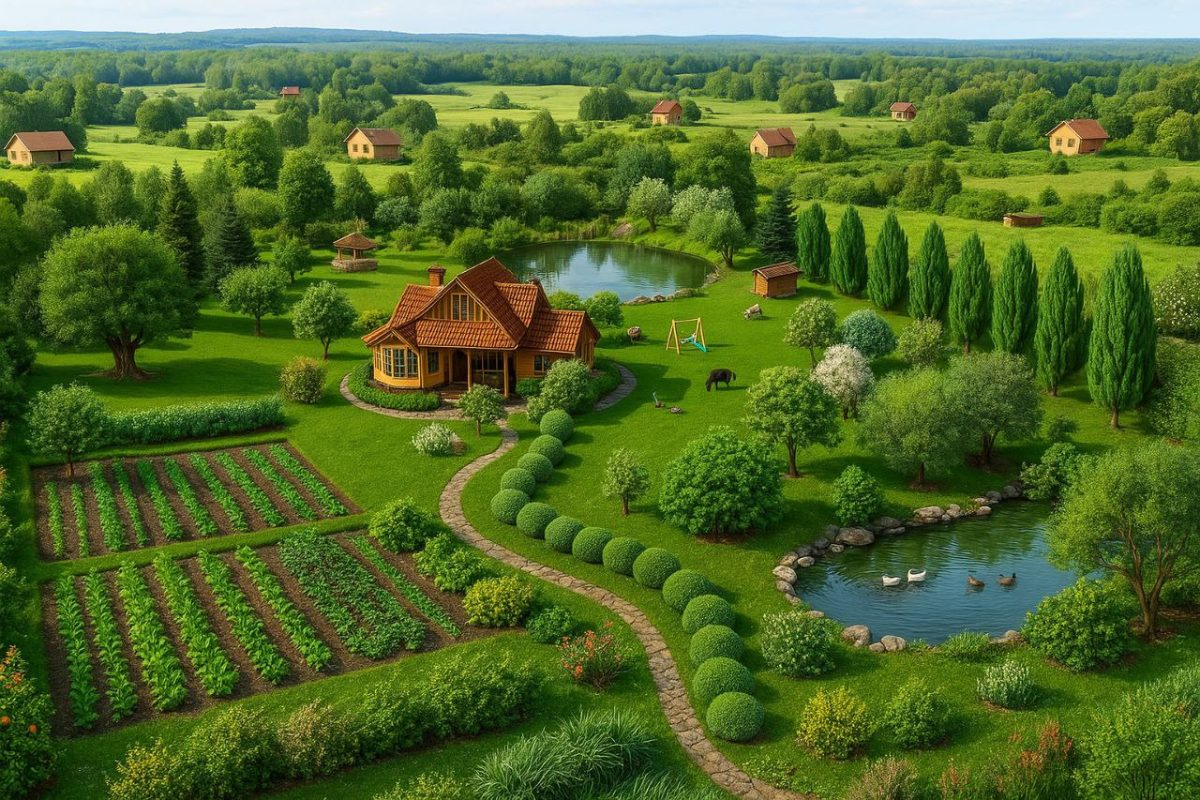
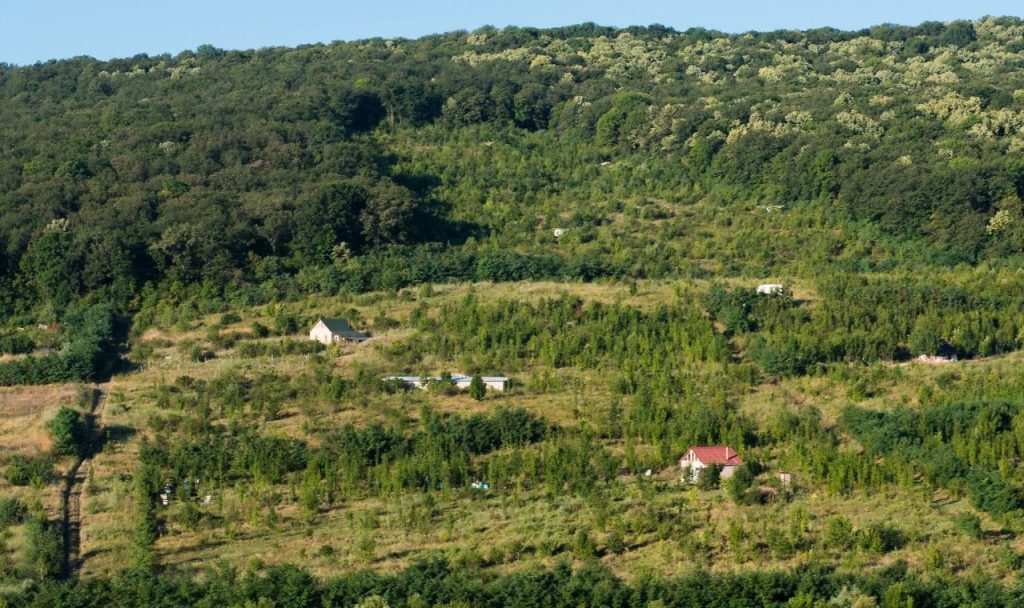
According to the author’s research, the ecological settlement project in Codreanca was initiated in 2003. Today, on an area of 40 hectares, about 20 families manage homesteads based on the principles of permaculture and biodiversity restoration. Each family owns between 1 and 2.7 hectares of land, creating so-called homesteads that combine traditional agricultural practices with modern ecological approaches.

The ecology student explains the scientific origin of the term “ecological settlement”: “The term Ecological Settlement was introduced into scientific discourse by Professor George Ramsey of the Georgia Institute of Technology in his 1978 presentation ‘Application of Passive Energy for the Artificial Environment’ at the First World Energy Conference, organized by the Association of Energy Engineers. Ramsey argued that the problems related to excessive energy use are not about technology, but about the lifestyle of the population.”

In his work, Vladislav Sanduleac also presents some historical data about the development of ecological settlements in Moldova and worldwide: “In 1991, the Global Ecovillage Network (GEN) was created. In 2001, GEN obtained special consultative status with the UN Economic and Social Council (UN-ECOSOC) and became a partner of the United Nations Institute for Training and Research.”

“Today, various countries have enacted laws that encourage the development of ecological settlements, and over 10,000 such settlements have been registered under cooperative, biodiversity protection, non-profit, and urban planning legislation in Europe, America, and Australia. In addition, in Russia, in 2013, the Belgorod region adopted a regional law on family homesteads that regulates the free allocation of 1-hectare land plots for a period of 49 years for the creation of sustainable family farms,” explains the author.

Vladislav Sanduliac also provides some data: “In the territory of the ecological settlement in Codreanca commune, over the course of 20 years, plots with permaculture forest-gardens have formed, where plantations cover between 15% and 60% of the land, matching the best afforestation rates in European countries. No pesticides or chemical fertilizers are used, beekeeping is actively developing, and organic waste is composted and used as fertilizer.”

Special attention in the project is given to the conservation and increase of local species of flora and fauna. The territory of the settlement has become a refuge for pheasants, quails, hares, hedgehogs, as well as rare plant species listed in Moldova’s Red Book.

An equally important aspect, according to Vladislav Sanduleac, is the use of solar energy: solar power stations have been installed on the territory, ensuring the settlement’s energy autonomy.

The analytical part of the study highlights that the ecological settlement in Codreanca fully complies with international environmental conventions, including the Convention on Biological Diversity and the UN Framework Convention on Climate Change. Moreover, the project is part of the Global Ecovillage Network, which confirms its international recognition.

In his work, Vladislav Sanduleac formulates concrete recommendations for the Codreanca village administration. The experience of the ecological settlement in Codreanca commune can serve as a foundation for similar initiatives across Moldova, contributing to nature restoration, the development of the green economy, and the formation of new environmental awareness in the country. For Codreanca, it can also be the basis for the development of ecological tourism.

This project demonstrates that sustainable development is possible even in small rural communities if the efforts of residents, local authorities, and the ecological community are united.

The full version of the study can be consulted at the link:

drive.google.com

Green trees are being cut down, while dry and dangerous ones are left standing

Tag: Ecology

Spații Verzi is cutting down green trees in Chișinău — claiming they are protecting residents from falling trees.

At the same time, many completely dried-out trees, which pose a real danger, are not being removed.

Eco-activists from the organization Pădurea Noastră conducted a quick inspection of Valea Morilor Park and found at least 30 dangerous dry trees that urgently need to be cut down.

Instead, Spații Verzi continues to cut down green trees and says they are working for our safety.

Here are the geo-tags of all the dry trees, along with photos. You can check it yourself! The eco-activists plan to send this list to the Environmental Inspection and collect information on all dry trees in other parks around Chișinău. They also issued a public statement: “Don’t cut down the living trees — cut down the dry ones!”

The first two dry and most dangerous trees — next to which a children’s event was held — are located here: maps.app.goo.gl

3. maps.app.goo.gl

4. maps.app.goo.gl

5. maps.app.goo.gl

6. maps.app.goo.gl

7. maps.app.goo.gl

8. maps.app.goo.gl

9. maps.app.goo.gl

10.11. maps.app.goo.gl

12-14 maps.app.goo.gl

15. maps.app.goo.gl

16.17. maps.app.goo.gl

18-20. maps.app.goo.gl

21. maps.app.goo.gl

22. maps.app.goo.gl

 23. maps.app.goo.gl

24. maps.app.goo.gl

25.26. maps.app.goo.gl

27. maps.app.goo.gl

28. maps.app.goo.gl

29.30 maps.app.goo.gl

10 Million Steps for Ecology — A Unique Project by Moldovan Eco-Activists

Tag: Ecology

An unusual initiative has started from Moldova — 10 Million Steps for Ecology. Two Moldovan activists are walking over 500 km across Turkey to raise funds for planting 2025 trees in Moldova.

Their route — the famous Lycian Way — marks the first stage of a large-scale campaign. Through this journey, the initiators aim to mobilize people to donate for saplings and invite everyone to join planting events alongside volunteers from the initiative “Plantăm fapte bune în Moldova / Parcurile Viitorului” — a team that has been restoring forests and saving rivers through cleanups and tree planting for many years.

The initiative is open to all: anyone can contribute — by donating or by participating in the #NumărăPașii challenge, a collective action aimed at symbolically reaching 10 million steps for nature.

We spoke with the initiators of the campaign. Here’s what they shared:

🟢 Who are you?
We are the administrators of the Telegram channel Friends MD, created to help people connect with each other for any kind of request. For over a year, our channel has united people across the country — whether for friendship, helping the lonely or newcomers to Moldova, or for large initiatives, charity actions, or simply interesting ideas.

🟢 What do you want to achieve?
On a larger scale, we want as many people as possible to learn about our project. It has already helped thousands make friends, find partners, fulfill dreams, or gather people around their causes.

Currently, within a charity campaign, we launched a challenge with our followers: the goal is to collectively walk 10,000,000 steps, sharing progress on social media to draw attention to environmental issues.
[Link to post]

As administrators, we decided to fully commit: we set off on foot along the Lycian Way in Turkey to attract even more attention and make a significant contribution to the common cause.

🟢 How did the idea to raise money for trees come up?
While preparing for the initiative, we asked ourselves: What real impact can we make, beyond raising awareness?

We began looking for volunteers already involved in hands-on environmental action — and found the organization Parcurile Viitorului ([Facebook link]).

We spoke with one of their coordinators, Petru. He told us that several years ago, a group of enthusiasts began planting forests in the Vadul lui Vodă area.

The initiative has gradually grown, attracting more and more participants. Now, they continue planting trees across the country on their own. Currently, they’re working to save the Bălțata River — cleaning it from trash and planting trees along its banks.

🟢 How exactly can people help?
We asked Petru: “What do you need the most?”
He replied: volunteers for planting and funds for buying saplings.

So we divided our campaign into two stages:
— During the hike and challenge, we’re collecting donations for saplings, which we’ll fully transfer to Petru and his team;
— Then we’ll organize a tree planting day and invite everyone to join us.

Everything will be documented through photos and videos to raise further awareness and inspire more good deeds.

🟢 What kind of trees will be planted?
That part is entirely up to the Parcurile Viitorului team. They have the experience and know which tree species are suitable and how to plant them properly.

🟢 Who will plant the trees?
We, together with our followers and anyone inspired by this initiative. The planting will be guided by experienced volunteers from Parcurile Viitorului.

🟢 Have you done similar projects before?
Yes. Over the past year, we’ve organized many volunteer and cleanup actions.

Our greatest achievement is the elimination of an illegal landfill in Valea Morilor Park ([link]), which we cleaned up with volunteers from the NGOs Pădurea Noastră and TRADIȚII, collecting and removing over 500 bags of waste.

Also, through our channel, followers organized various charity events:
— supporting animal shelters,
— planting trees,
— psychological support forums for vulnerable people,
and much more.

🟢 Why are you doing this?
The Friends MD project has been running for over a year and has helped many people bring their ideas to life and find like-minded individuals. We share requests from active people with a wide audience, believing that supporting good initiatives can change the country for the better.

But not everyone sees the value of our resource. That’s why we decided to lead by example — to show that the power of community can create large-scale projects, uniting people through a simple call to action.

What we’re doing — anyone can do. Or even more — using our platform.

🟢🟢🟢 How can Ecopresa readers help?
Right now, the most important thing is spreading the word — so it reaches everyone who cares about deforestation and environmental issues.

Even subscribing and sharing is already a huge contribution:
Instagram: @moldova_friends

Those who are able are invited to donate for saplings and prepare to join us in planting — shoulder to shoulder with our followers.